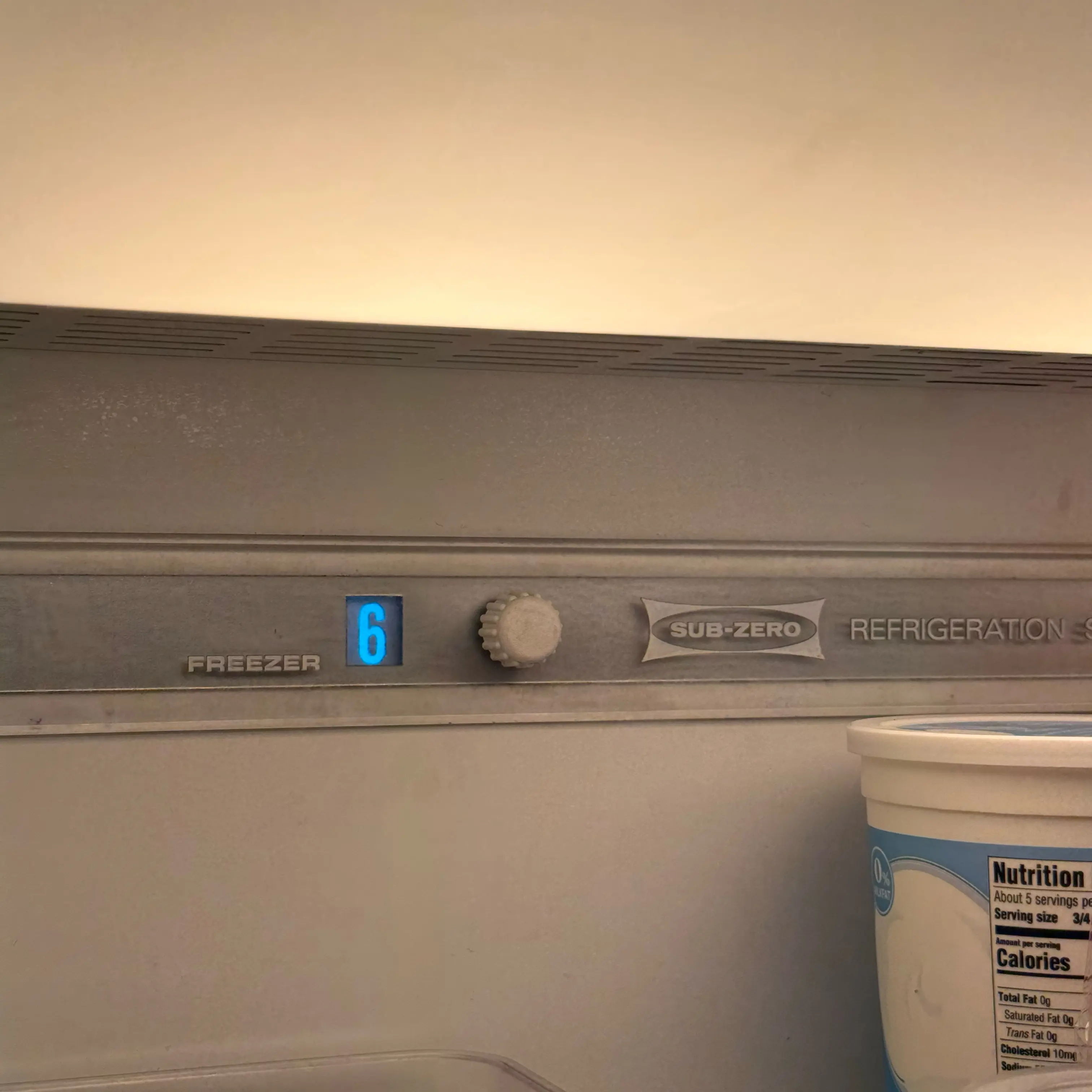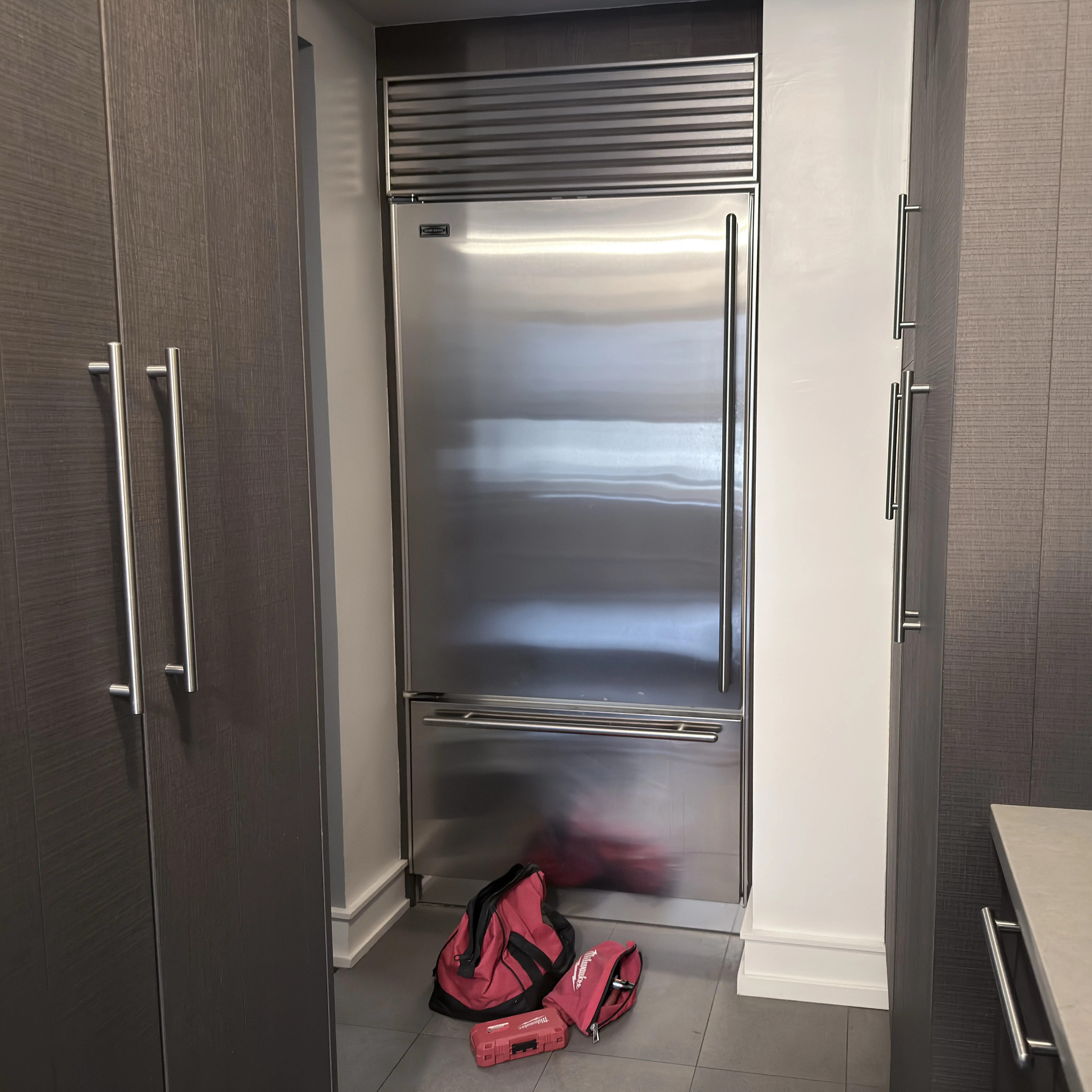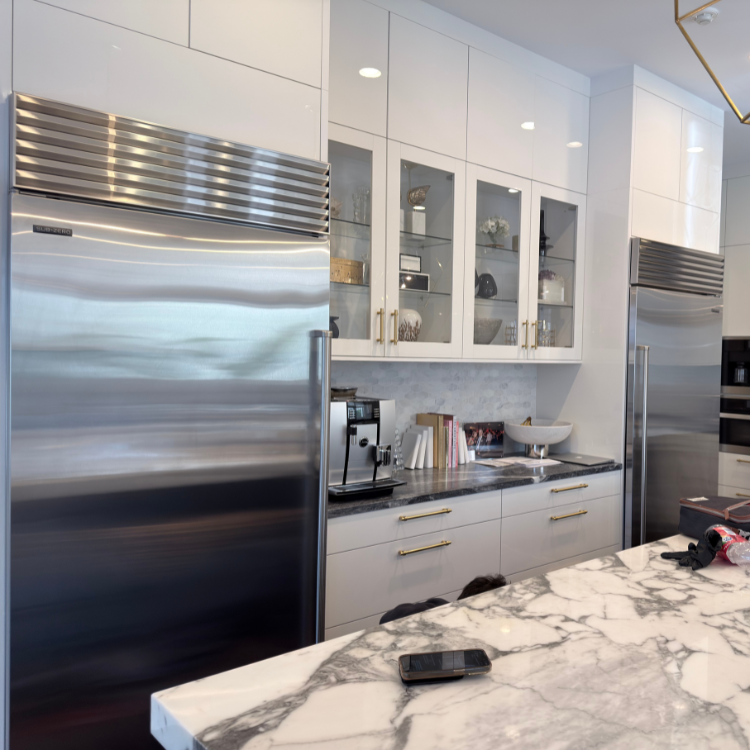


If a Sub-Zero shows EC50 with Service flashing, check actual refrigerator temperature before clearing anything. Sub-Zero defines EC50 as excessive refrigerator compressor run; if temperatures are high, preserve the code and schedule diagnosis. If temperatures are near normal, clean the condenser, verify door and airflow conditions, then clear the code only as Sub-Zero instructs. Stop resetting if EC50 or Service returns, temperatures rise, or food is warming.
Sub-Zero EC50 Temperature-First Triage Map
EC50 is a temperature-first decision, not a clear-first decision. The first useful branch is whether the refrigerator is warm now or close to normal after a real thermometer check.
- Refrigerator temperature is high: Treat EC50 as active cooling evidence. Photograph the display, record temperatures, protect food, and schedule diagnosis instead of clearing the code.
- Refrigerator temperature is near normal: Clean the condenser, verify the door can close fully, confirm lower airflow is not blocked, then clear EC50 only after those checks.
- EC50 returns after clearing: Stop resetting. The control is still seeing excessive refrigerator run behavior and the return pattern matters for service.
- Service flashes without EC50: Use the exact displayed message. General Service flashing can follow a similar condenser and door check, but it is not the same evidence as EC50.
- Vacuum Condenser appears instead: Treat it as related airflow or efficiency evidence, not as the same code. Monitor actual temperatures after cleaning.
- Designer, Integrated, or custom toe-kick installation: Check that the kickplate and lower airflow path are not sealed by cabinetry, rugs, storage, panels, or renovation changes.
What EC50 Means
Sub-Zero identifies EC50 as excessive refrigerator compressor run. That means the refrigerator side has run longer than expected while trying to satisfy temperature. It does not prove a bad compressor, sealed-system failure, board failure, fan failure, or thermistor failure by itself.
The likely system branch depends on temperature and context. A dirty condenser, restricted cabinet airflow, door or drawer leakage, repeated door openings, warm food loading, condenser fan trouble, sensor feedback, control interpretation, or refrigeration fault can all create excessive run behavior. EC40 is the related freezer-side excessive run code; EC50 points the decision toward the refrigerator side.
Why The Code Should Not Be Cleared First
Sub-Zero's EC50 guidance says to clear the code only if temperatures are near normal. If temperatures are high, temperatures keep rising, or the code may be needed for service, clearing it removes useful evidence before the system is understood.
Use a separate thermometer before relying on the panel alone. FDA food-safety guidance says the refrigerator should be at 40 F or below and the freezer at 0 F; if perishable food has been too warm for too long, food safety comes before appliance troubleshooting.
Near-Normal Branch: Condenser, Door, And Airflow
- Condenser: Sub-Zero recommends condenser cleaning every six to twelve months, and more often with pets. Avoid bending aluminum fins.
- Chemicals: Sub-Zero says chemical cleaners and degreasers are not necessary and are not recommended for normal condenser cleaning.
- Door closure: Verify nothing is holding a door, drawer, shelf, or gasket from sealing fully.
- Lower airflow: Check the grille, kickplate, toe-kick, and undercounter openings for blocked air movement.
- Clearing EC50: After condenser cleaning, Sub-Zero says to hold the door ajar alarm key, the bell symbol, for 15 seconds on applicable controls, and only when temperatures are near normal.
Built-In And Custom-Cabinet Branch
EC50 matters on built-in, Designer, Integrated, Classic, 600, 700, and undercounter installations because the appliance depends on the cabinet opening and lower air path to reject heat. Sub-Zero specifically warns that Designer ID, IC, and IT products should not have the kickplate completely covered by a custom toe kick or enclosed in custom cabinetry.
In an apartment or custom kitchen, airflow can change after floor work, cabinet panel work, toe-kick skins, rugs, stored items, or renovation dust. A unit can look normal from the front while the lower air path is restricted enough to increase compressor run time.
Door And Usage Branch
A door problem does not have to look dramatic to contribute to EC50. A slightly blocked drawer, shelf contact, weak gasket contact, heavy grocery load, long door opening, warm containers, or repeated child traffic can make the refrigerator run longer. This branch is most useful when EC50 appeared after a party, delivery, cleaning, door alarm, or drawer issue.
If temperature recovers and EC50 does not return after safe maintenance, the event may explain the warning. If EC50 returns, the event explanation is no longer enough.
What Not To Do
- Do not clear EC50 before checking actual refrigerator temperature.
- Do not keep resetting the same returning code.
- Do not remove interior panels, evaporator covers, control covers, fans, wiring, compressors, or sealed-system parts.
- Do not test live voltage, thermistors, boards, relays, or fan circuits.
- Do not bend condenser fins or push debris deeper into the coil.
- Do not use chemical condenser cleaners for normal cleaning unless the product instructions specifically allow them.
- Do not force a built-in refrigerator out of cabinetry to inspect hidden airflow.
- Do not assume EC50 means the compressor itself is bad.
Safe Checks Before Service
- Display evidence: Photograph EC50 and Service before clearing.
- Temperature evidence: Record refrigerator and freezer temperatures with a separate thermometer.
- Food condition: Protect food first if temperatures are high or rising.
- Door evidence: Check whether a drawer, shelf, gasket, container, or door alarm event held the door open.
- Condenser evidence: Clean the condenser using the model-appropriate homeowner instructions.
- Airflow evidence: Confirm that lower grille, kickplate, toe-kick, and undercounter air paths are not blocked.
- Context evidence: Note power interruption, grocery loading, renovation dust, panel work, floor change, or recent movement.
- Return evidence: Clear only after near-normal temperatures and safe checks, then monitor temperature instead of treating a cleared display as a repair.
Stop Point
Stop homeowner checks and schedule diagnosis when refrigerator temperature is high, food is warming, EC50 returns after condenser and door checks, Service returns, temperatures rise after clearing, the condenser cannot be accessed safely, the unit is tightly built in with suspected blocked airflow, or any next step requires electrical, sealed-system, fan, sensor, control, or internal panel work.
What Diagnosis Has To Prove
- Heat load: Whether the cabinet is gaining heat from door leakage, warm loading, or room conditions.
- Heat rejection: Whether condenser airflow, cabinet airflow, fan operation, or dust load is forcing long run time.
- Air movement: Whether refrigerator-side evaporator airflow is moving cold air properly.
- Sensing: Whether thermistors and controls are interpreting cabinet temperature correctly.
- Refrigeration performance: Whether the sealed system and compressor can satisfy the refrigerator setpoint under normal load.
- Control command: Whether the control is commanding run time correctly or logging a false excessive-run condition.
Technician Handoff Data
- Model identity: Model and serial number, plus whether the unit is Classic, Designer, Integrated, 600/700 Series, undercounter, column, over-and-under, or side-by-side.
- Display identity: Exact wording, EC50 pattern, Service light behavior, Vacuum Condenser wording, EE warning, or any other code.
- Temperature pattern: Refrigerator and freezer thermometer readings, whether temperatures are rising, stable, or recovering.
- Maintenance state: Last condenser cleaning, visible dust, pets, construction dust, chemical use, and whether fins were bent.
- Cabinet context: Custom toe kick, grille coverage, panel work, floor changes, rugs, or stored items near the air path.
- Return pattern: Whether EC50 returned after clearing, how quickly it returned, and whether food warmed during the event.
Related Help that changes the diagnosis
- If the display says Vacuum Condenser rather than EC50, use Sub-Zero Vacuum Condenser flashing.
- If the freezer remains cold while the refrigerator warms, use Sub-Zero freezer cold but refrigerator warm.
- If moisture or frost follows a visible gasket gap, use Sub-Zero door seal problems; a frosted rear wall has its own frost-pattern diagnosis.
FAQ
What does Sub-Zero EC50 mean?
EC50 means excessive refrigerator compressor run. It points to the refrigerator side running longer than expected, but it does not prove a failed compressor by itself.
Should I clear EC50 right away?
No. Check actual refrigerator temperature first. If temperatures are high, preserve the code. If temperatures are near normal, clean condenser airflow and door conditions before clearing.
How do I clear Sub-Zero EC50?
Sub-Zero says that after condenser cleaning, press and hold the door ajar alarm key, the bell symbol, for 15 seconds on the control panel. Only do this when temperatures are near normal.
What if EC50 comes back after cleaning the condenser?
A returning EC50 means the appliance is still seeing excessive refrigerator run behavior. Stop clearing the code and schedule diagnosis.
Is EC50 the same as Vacuum Condenser?
No. They are related because both can involve airflow or cooling efficiency, but they are not the same display message. Use the exact wording on the control panel.
Can a custom toe kick cause EC50?
It can contribute. Sub-Zero warns that Designer ID, IC, and IT products should not have the kickplate completely covered by custom toe kick or enclosed cabinetry.
.jpeg)