
.JPEG)

Wolf GR Oven Will Not Ignite: CFH Sequence
Wolf GR oven not igniting? Read the exact Bake/Broil, CFH, purge and lockout sequence, the one allowed retry, and the stop-use boundary.
Wolf GR oven not igniting? Read the exact Bake/Broil, CFH, purge and lockout sequence, the one allowed retry, and the stop-use boundary.
.avif)
A current Wolf GR has a gas oven. If Bake or Broil does not establish flame, the oven has failed its gas-ignition attempt; turn the knob Off and do not keep cycling it.
Stop the oven immediately for gas odor, delayed or forceful ignition, abnormal flame, smoke, arcing, or any sign that flame did not establish cleanly. Those conditions cancel every operating check below. Do not wait through another sequence to collect more evidence.
If CFH slow-flashes after unsuccessful ignition attempts, or the one official post-flash cycle also fails, discontinue use of the failed oven mode. Do not keep alternating Bake and Broil or cycling the control until it lights.
Use the model label, not the appearance of the range. This page is for the current GR gas range oven. A Wolf DF range has gas surface burners but an electric oven and belongs to Wolf dual fuel range oven turns on but does not heat. Do not transfer GR purge, CFH, electrode, or DSI logic to a DF electric cavity.
Older R-series or other gas ovens may use different controls and sequences. Apply their exact manual rather than treating current GR timing as universal.
Record which mode was selected, whether CFH appeared or flashed, whether clicking occurred, whether flame established, and whether the surface burners operate. Do not keep a failed mode running simply to complete the comparison.
Wolf's current GR support describes a specific sequence:
1) A Bake or Broil burner should ignite within 40 seconds.
2) If the burner does not ignite within seven seconds, the oven automatically purges gas for 40 seconds and attempts to reignite.
3) Do not turn the knob back and forth during that automatic purge and retry. The useful observation is whether flame establishes and whether CFH changes.
4) If CFH flashes because ignition failed, Wolf directs the knob Off and back On, preferably after waiting for the flash. This is one official post-flash cycle, not permission for repeated attempts.
5) Slow-flashing CFH means two unsuccessful ignition attempts and safety lockout. Stop there and preserve the pattern for diagnosis.
If the burner lights promptly and the oven heats but food consistently cooks more on one side, use Wolf GR gas oven cooks unevenly side to side.
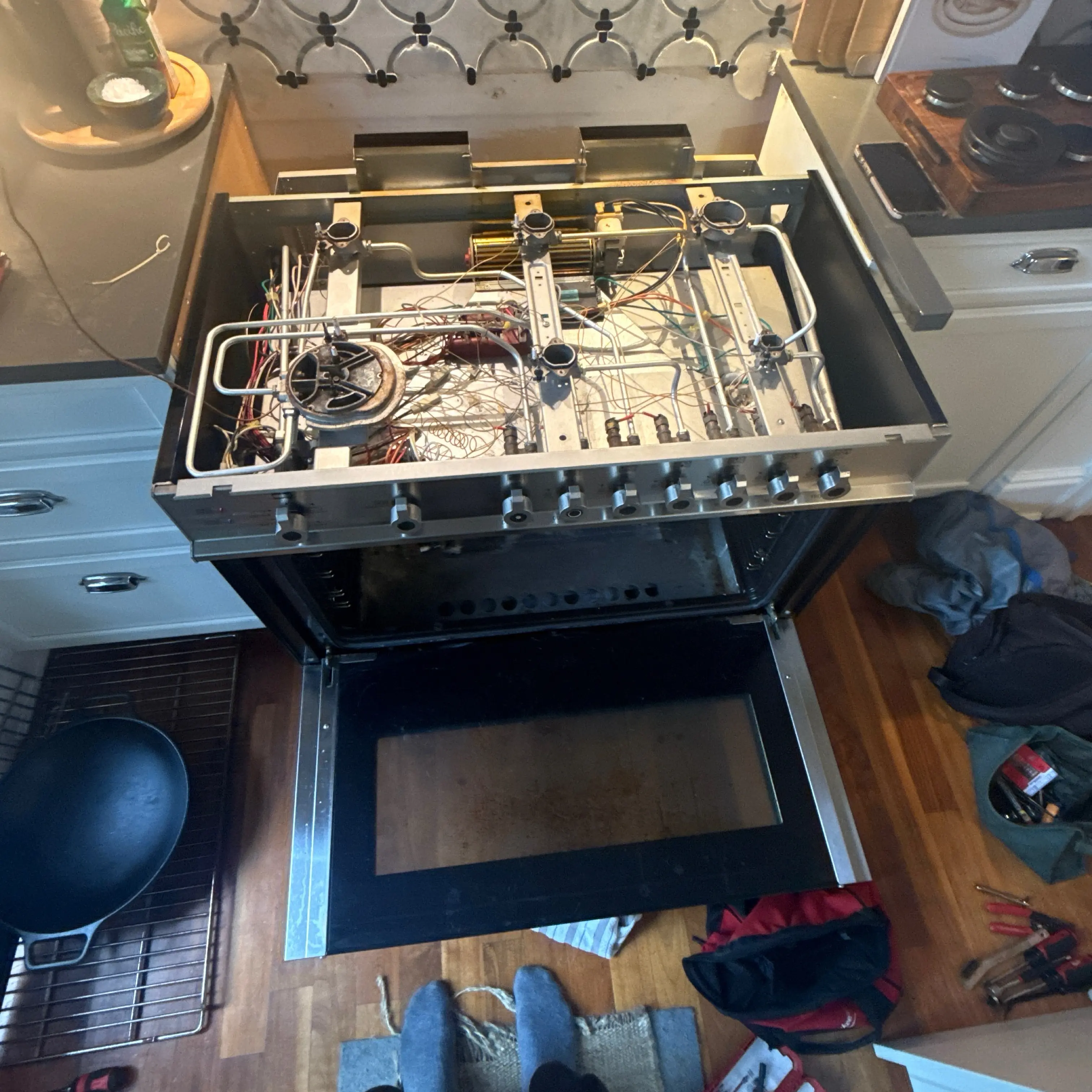
The technician must reproduce the exact GR sequence and verify the mode command, electrical input, spark and flame establishment, electrode and wire condition, gas delivery, valve or solenoid operation, thermostat input, direct-spark ignition output, and connections before naming a component.
Wolf says a whoosh may accompany successful GR burner ignition. A single whoosh can be normal when flame establishes promptly and cleanly. Any other ignition sound belongs under the Safety Gate rather than another comparison attempt.
Wolf cooking-system requests are considered in Brooklyn, Manhattan below 96th Street, and selected Queens routes; fuel connection, ventilation, cabinet clearance, and building access are confirmed before routing.
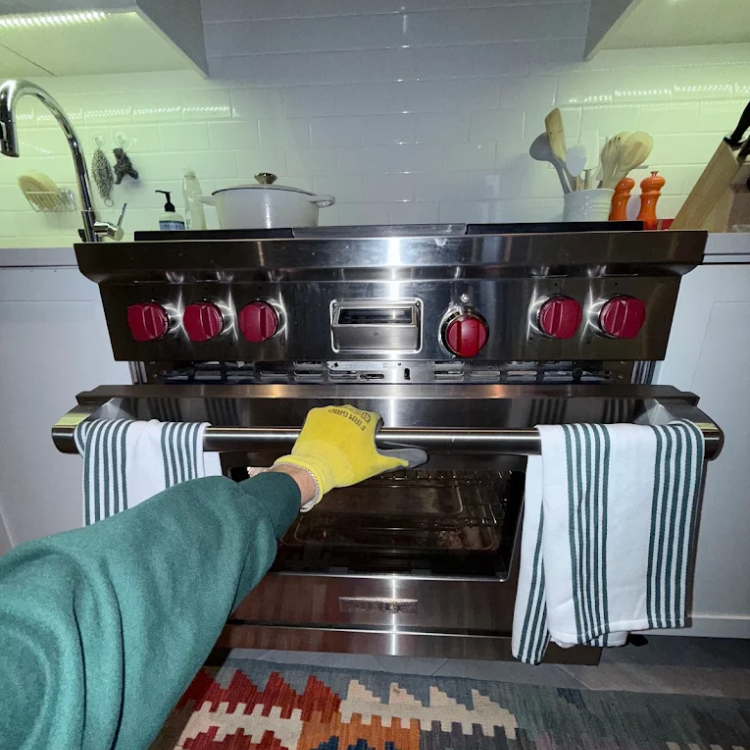
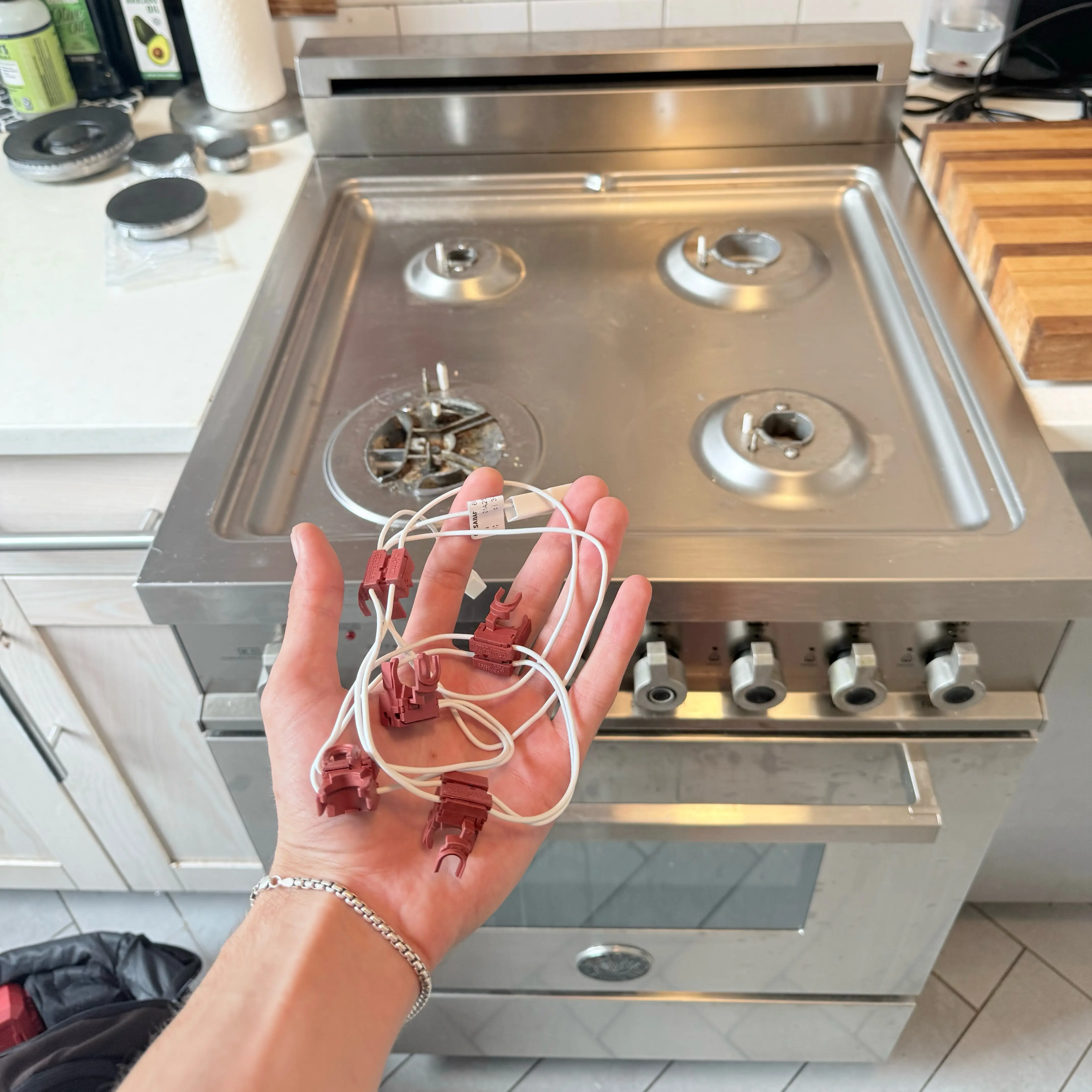

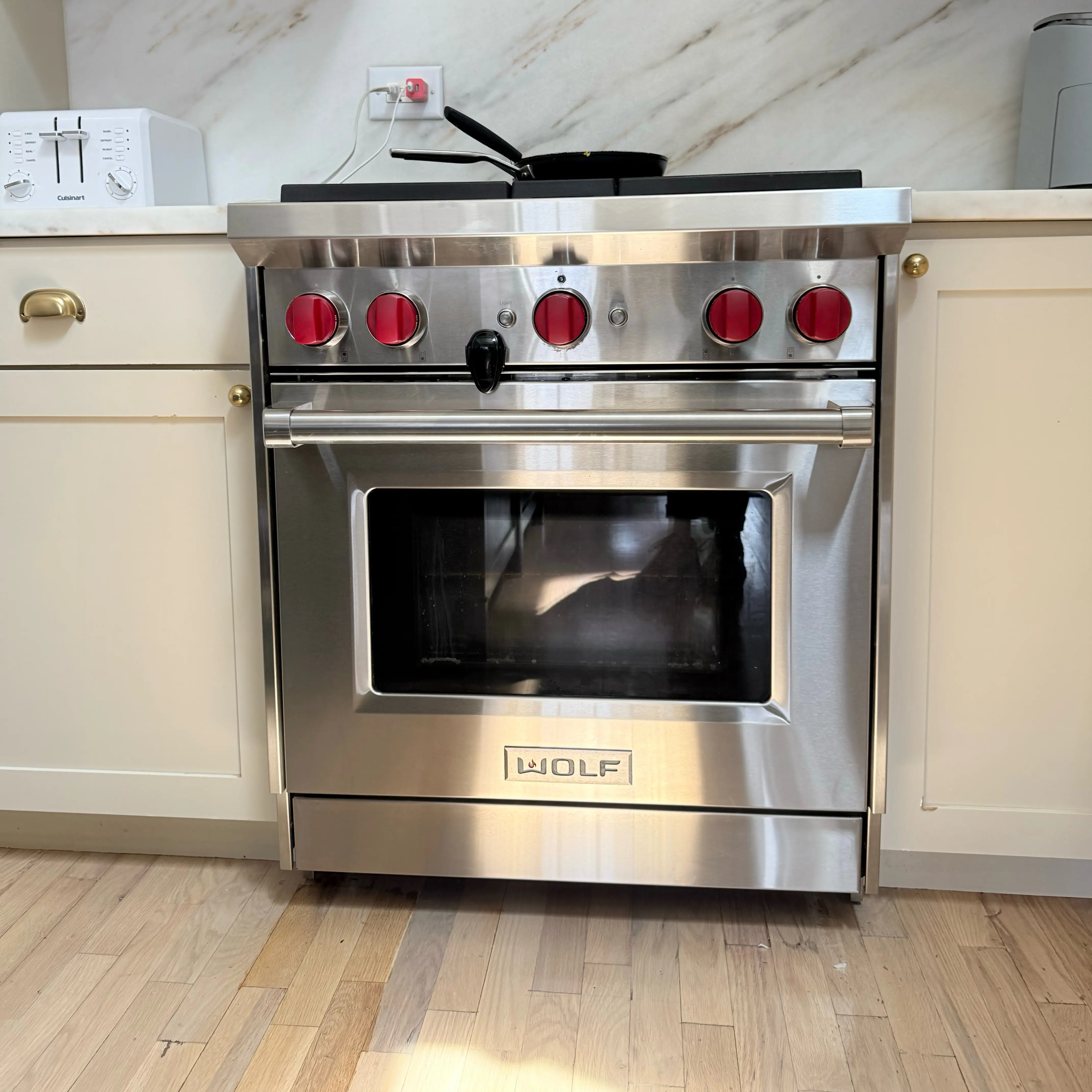
Technician experience standard: 4+ years of hands-on appliance repair per technician; senior technicians bring 8 and 16 years. Wolf intake starts with model prefix, fuel or induction platform, affected burner or cavity, and access. Independent service; no current manufacturer authorization implied. Our Wolf oven work includes a completed igniter replacement.

