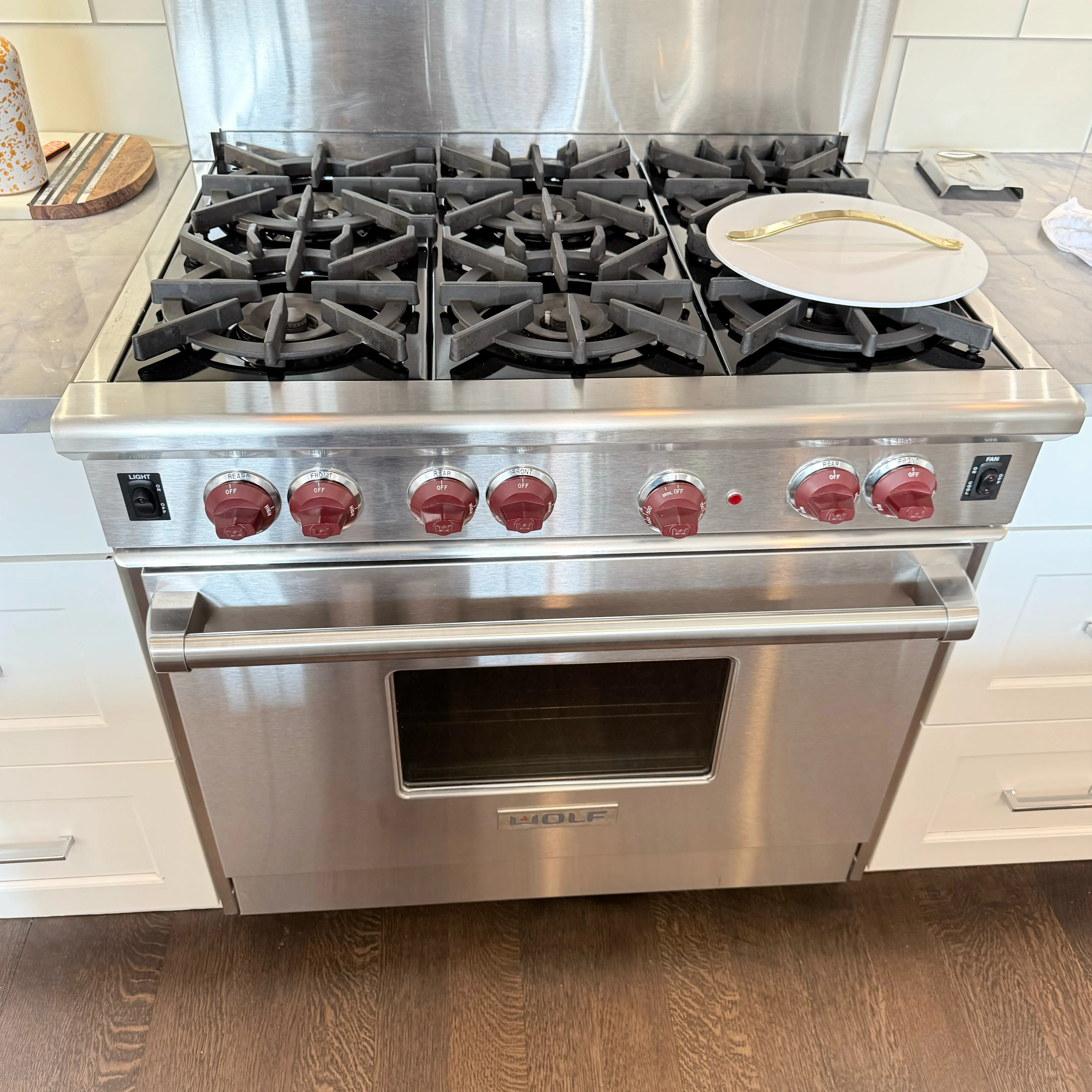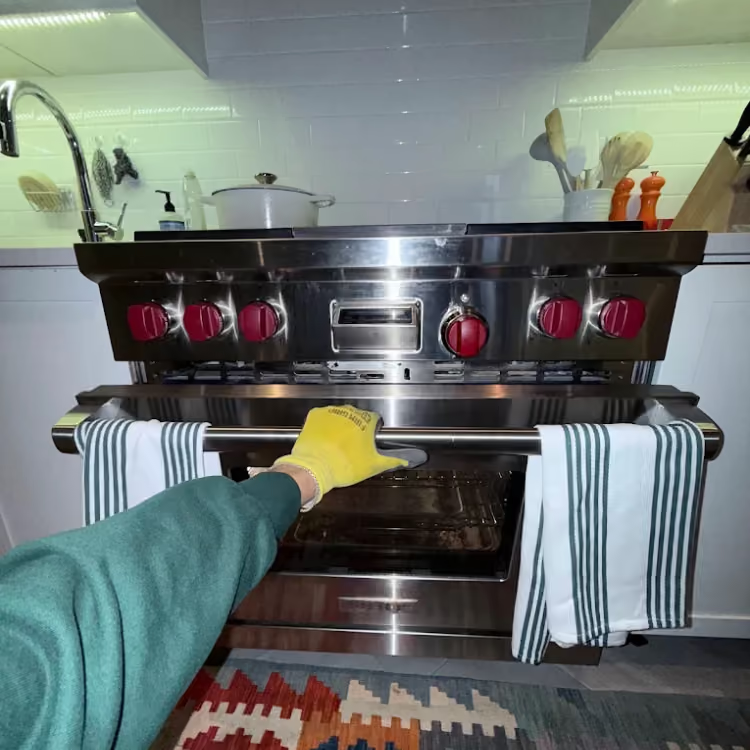

Most Common Reasons a Wolf Range Surface Burner Has No Spark
- Common electrical or ignition input is unavailable: Wolf surface igniters require electrical power even though the burners use gas. When every surface burner is silent, the mechanism may be loss of the model-required supply, a connection, or a shared ignition input. The useful visible clue is that no burner clicks; note whether other powered functions respond. Diagnosis must confirm the required supply, connections, and ignition-system input without assuming a spark module failed.
- One control is not producing spark at its burner: When other burners click and ignite but one stays silent, the range has some working ignition activity. A local switch, ignition channel, wiring, electrode, grounding, or model-specific assembly can prevent that burner from sparking. The useful visible clue is one silent control and whether its knob returns normally; do not force it. Diagnosis must reproduce the control input and verify safe ignition output, wiring, electrode condition, and grounding for that model.
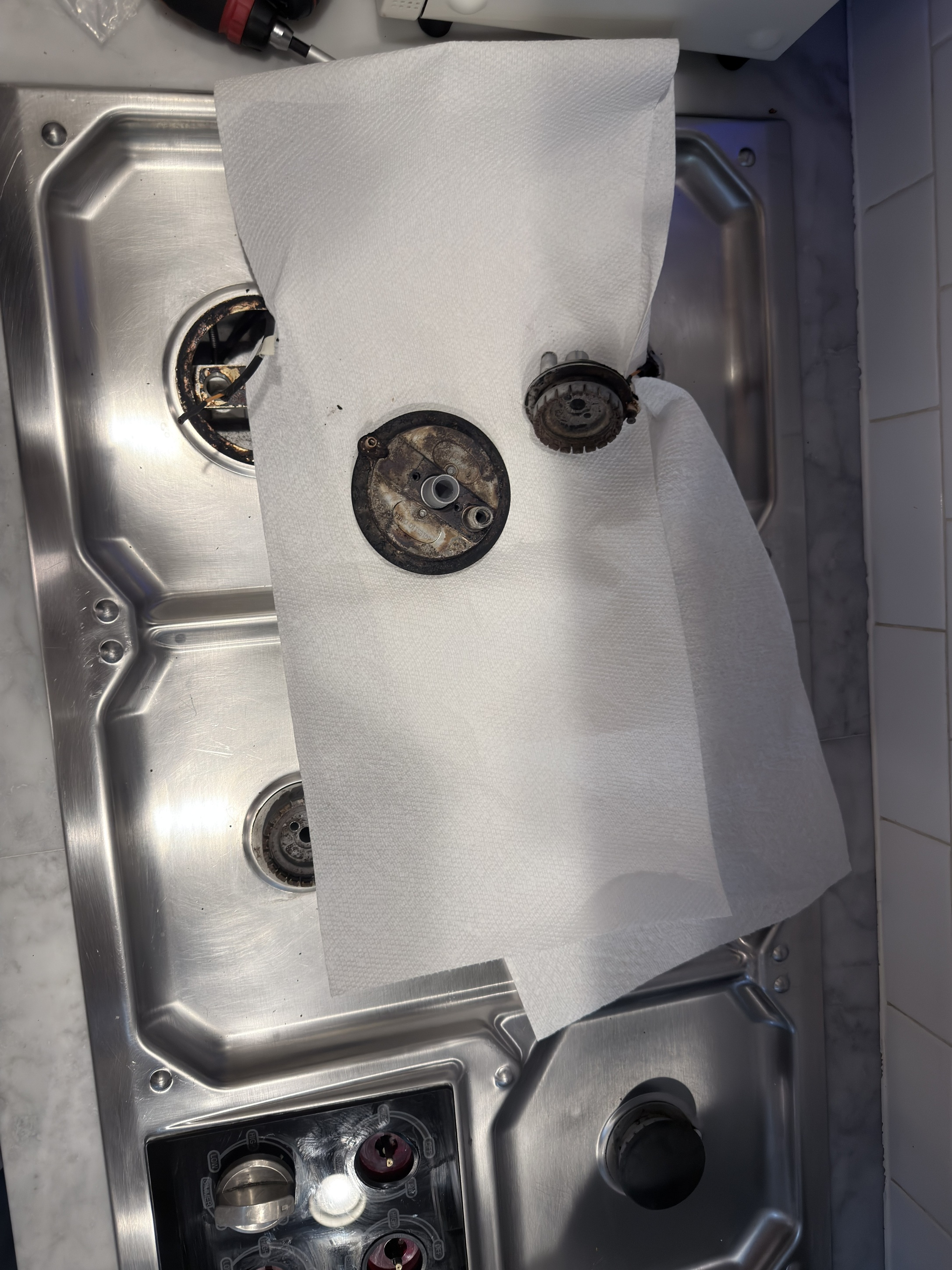
- Recent moisture, residue, or incorrect visible assembly is interfering with ignition: A spill, cleaning moisture, foil, residue, or a cap or ring that is not seated as the exact Wolf guide shows can disrupt the intended ignition area. The useful visible evidence is the timing after cleaning plus the condition of cool, owner-removable parts. Diagnosis must confirm cap, ring, burner-head, and electrode condition and geometry before replacing anything.
The correct gas type on a new installation still needs professional verification, but fuel type does not explain the absence of an electrical spark and is not a homeowner adjustment.
Safety Gate
Gas odor or gas escaping without ignition requires immediate exit, without checking controls or searching for a shutoff. Without those gas-leak warning signs, turn the control fully Off only if immediately safe and stop without retesting for delayed or forceful ignition, flame outside the ports, arcing, smoke, burning material, or a breaker trip.
For a suspected gas leak, avoid switches, flames, phones, fans, and appliance controls in the affected area. Leave immediately; call 911 and the gas utility from a safe location, follow the building’s gas-emergency procedure, and stay out until cleared. Do not continue with the checks below.
Safe Checks
- Model label: Use the model and serial label to identify whether the prefix is GR or DF. Removable burner parts vary by model.
- Cool visible condition: With every control Off and the surface cool, look for a recent spill, cleaning moisture, residue, foil in the burner pan, or a cap or ring that is visibly out of position.
- Approved removable parts: Clean, dry, and reseat only the parts the exact model guide assigns to the owner. Leave the burner base and internal openings alone.
- Knob return: Note whether the affected control returns normally without forcing it or removing it.
- One power reset: If there was no gas odor, trip, damage, wet electrical area, arcing, smoke, or other stop condition, turn power off for at least 30 seconds and restore it once. Do not repeat the reset if spark remains absent.
Choose the Correct Help Page
- A click or visible spark is present: If clicking continues, happens with the control off, or occurs without successful lighting, use Wolf gas surface burner keeps clicking.
- Flame establishes and clicking stops, but the flame is abnormal: Use Wolf range surface burner has an abnormal flame.
What Not to Do
- Do not light the burner with a match or lighter to see whether gas flows.
- Do not keep turning the knob after gas is released without ignition.
- Do not test live voltage, polarity, switches, wiring, electrodes, or the spark module.
- Do not remove the burner base, control panel, valves, regulator, or orifices.
- Do not transfer induction, oven-ignition, outdoor-grill, or legacy open-burner instructions to a GR or DF sealed surface burner.
What Diagnosis Must Confirm
- Model and burner: The exact model and affected burner.
- One versus all: Which burners click and which remain silent.
- Timing: Whether the symptom began after a spill, cleaning, installation, or fuel work.
- Control behavior: Whether the knob returns normally without forcing it.
- Reset result: What happened after the one allowed 30-second power reset.
The technician must then verify the model-required electrical input, control and switch response, ignition output, wiring, electrode and grounding condition, and model-specific burner assembly before naming a component.