.jpeg)


.avif)
Internal lint, blower-path, vent-transition, overheating, long-dry, odor, and airflow verification for NYC dryers.
Schedule Dryer Internal Lint and Vent Reset Service
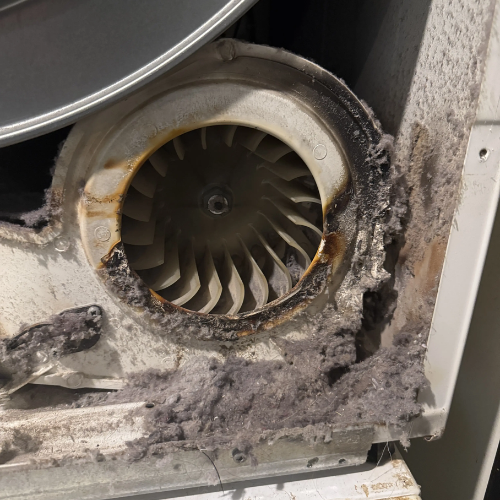
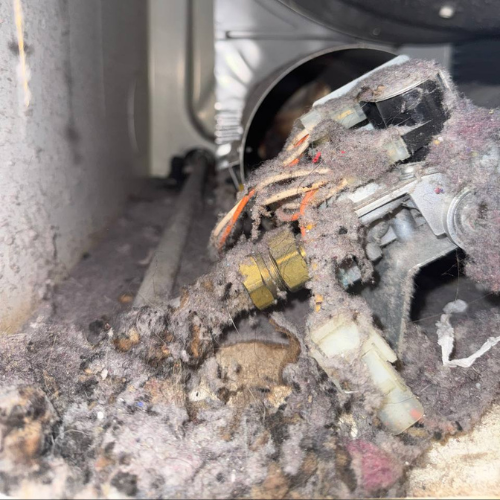
Dryer deep cleaning is for lint and airflow conditions beyond the lint screen: internal air passages, blower area, cabinet accumulation, the dryer-to-wall transition, and the accessible exhaust connection. The goal is to restore the serviceable airflow path and then verify heat and dry-time behavior, not to promise that vacuuming fixes every dryer complaint.
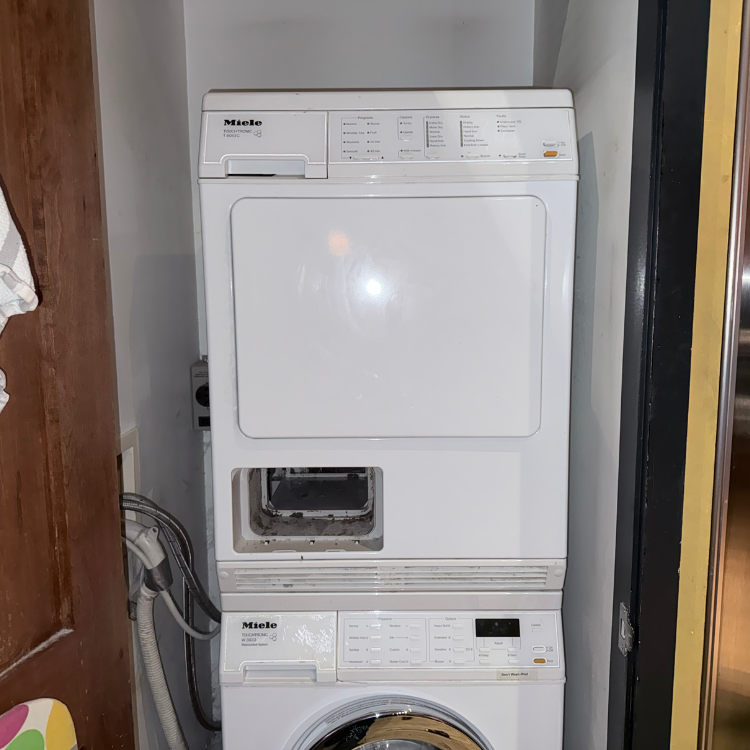
Volt & Vector reviews the dryer platform, installation, heat pattern, warning history, and vent route before movement. Vented gas or electric dryers, compact closet units, stacked installations, ventless condenser dryers, and heat-pump dryers do not share the same cleaning scope.
Is This the Right Repair Page?
- Use deep cleaning and vent reset when the dryer still runs but dry time has gradually increased, the cabinet is hotter than before, a lint or hot-dust odor appears, airflow warnings return, or visible internal and transition lint is the main concern.
- Use dryer repair for no start, no tumble, no heat, loud mechanical noise, control faults, or shutdown that remains after airflow conditions are separated.
- Use a qualified building-duct provider when the restriction lies in a long concealed, shared, roof, or exterior duct beyond the appliance and accessible transition.
- Use washing machine repair when loads enter the dryer unusually wet because the washer is not reaching full spin.
What the Symptom Changes
- Dry time worsened gradually: lint accumulation, a crushed transition, exterior termination, sensor contamination, washer spin, and load or cycle changes should be compared before a sudden heating failure is assumed.
- The cabinet or laundry closet becomes unusually hot: stop-use may be necessary. Internal airflow, blower path, transition, exhaust, heat cycling, and installation clearance need confirmation.
- A burning-lint or hot-dust odor appears: do not run another load. Lint near heat sources, a slipping drive part, wiring, foreign objects, and vent restriction require different responses.
- An airflow warning returns after the lint screen is cleaned: the restriction may be deeper in the dryer, transition, wall duct, exterior termination, or building exhaust. The warning does not identify which section is responsible.
- A ventless or heat-pump dryer is slow: filter, condenser or heat exchanger, condensate path, sensors, room airflow, load, and cycle design replace assumptions about an outdoor vent.
Safe Checks Before Service
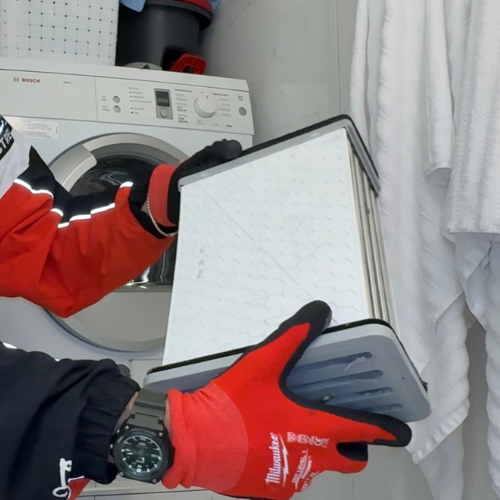
- Clean the owner-accessible lint filter and photograph any unusual lint, scorching, or residue.
- Record how long a normal load used to take and how long it takes now, plus whether the washer leaves clothes unusually wet.
- Note the exact airflow warning, shutdown timing, cabinet heat, and odor without running another unsafe test.
- Inspect only visible transition duct for crushing and an exterior outlet only when it is safely reachable.
- Send platform, model label, closet or stacked photos, and the visible vent route.
Do not open the dryer cabinet, defeat thermal protection, disconnect gas, perform energized electrical measurements, push a brush blindly into a shared duct, or use a leaf blower as proof of a clear vent. Do not move stacked equipment without a lifting and reconnection plan.
When to Stop Using the Dryer
Stop immediately for smoke, flame, burning-lint or electrical odor, gas odor, sparks, scorching, repeated shutdown with abnormal heat, or a damaged transition duct. CPSC guidance identifies lint in dryers and exhaust ducts as a fire concern; another test load is not a safe diagnostic step.
The U.S. Consumer Product Safety Commission dryer guidance is the public safety reference for lint-screen, dryer, and exhaust-duct fire prevention.
What the Service Should Confirm
The service should identify the platform and clean the agreed appliance-internal and accessible transition scope, then verify lint-screen condition, blower and air path, transition geometry, accessible exhaust flow, temperature behavior, moisture sensing, and dry-time response. Any no-heat, drive, electrical, gas, or control fault found during that work must remain a dryer-repair diagnosis rather than being hidden by cleaning.
The boundary with the building matters in NYC. A shared riser, concealed long run, inaccessible roof termination, booster fan, or building-owned duct may require separate access and provider authority. The handoff should state exactly which portion was inspected or cleaned and which portion remains unverified.