

.avif)
Front-load washer gasket, door-boot leak, trapped debris, mold residue, odor, seal-fit, and moisture-path service.
Get Help With Gasket Replacement.
Replace the Gasket, Not Just Wipe the Surface
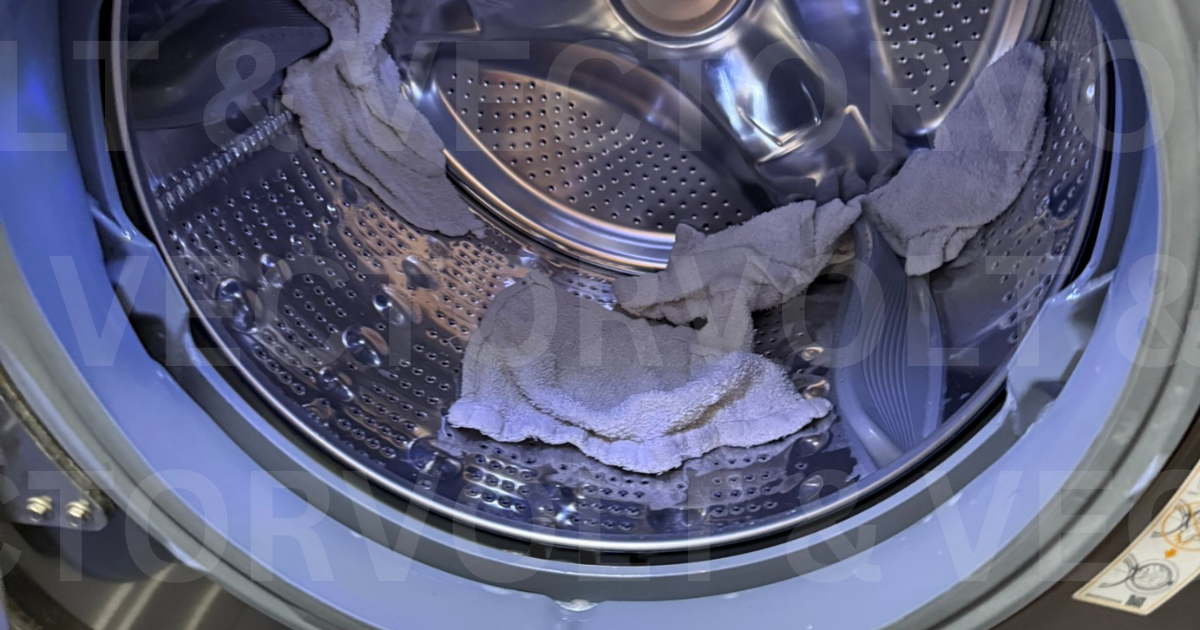
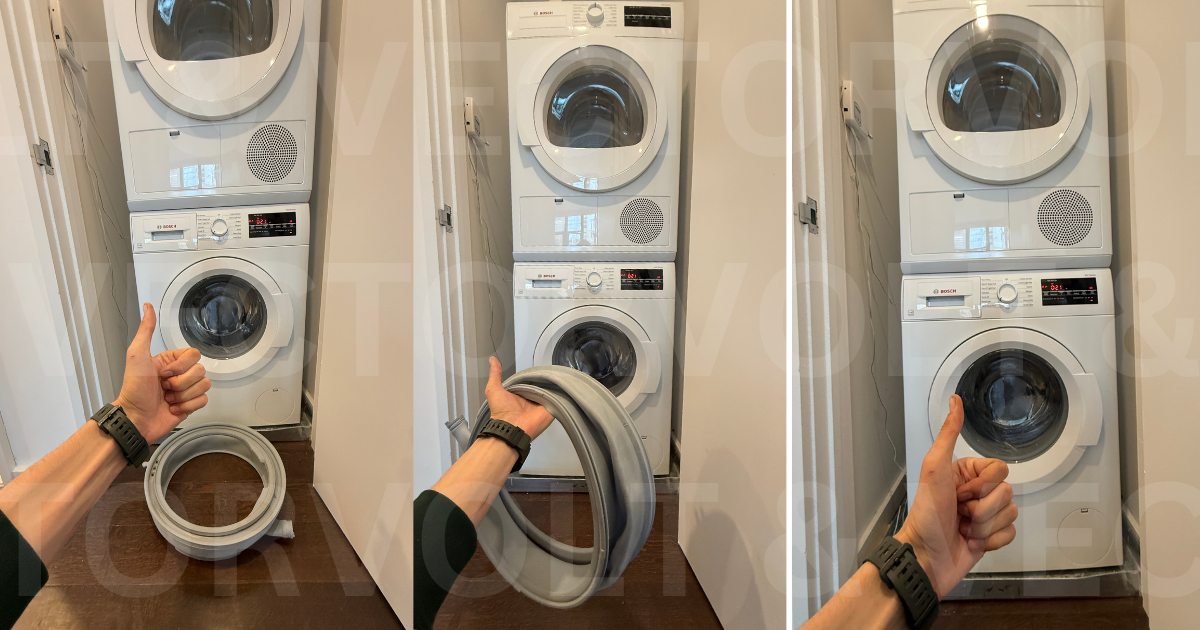
The rubber seal around a front-load washer’s opening is also called a door gasket, door boot, or door seal. Damage to this component can allow water to escape during operation.
Our replacement service removes the existing gasket and installs a new, model-compatible seal. We inspect the gasket’s condition and fit, discuss the reason for replacement, and confirm the work before proceeding.
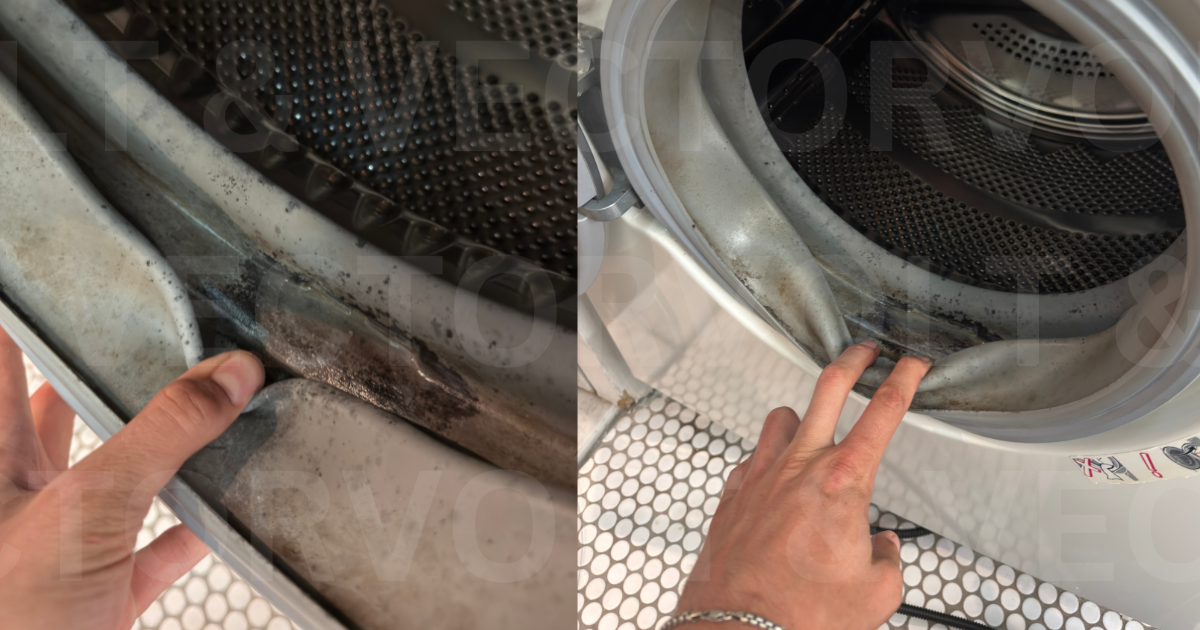
Visible mold or dark residue does not automatically mean the gasket has failed. Some surface contamination can be removed using the manufacturer’s approved cleaning method. A customer may still choose replacement when dissatisfied with the condition of the existing gasket, but cosmetic replacement is different from repairing a damaged seal.
For customers seeking a new gasket rather than a cleaning appointment, this service provides a clearly defined replacement scope.
What the Replacement Service Includes
- Model and part verification: identify the correct replacement gasket using the washer’s complete model information.
- Removal and preparation: remove the existing gasket and clean accessible seating surfaces as needed for installation.
- New gasket installation: fit the replacement seal and secure the retaining components.
- Post-repair testing: check door closure, gasket seating, and leakage during a controlled operational test.
Cleaning performed during installation is limited to the accessible areas needed for the replacement. It is not a whole-machine deep-cleaning or disinfection service.
Pricing and Installation Access
Gasket replacement labor starts at $495. Parts and applicable tax are additional.
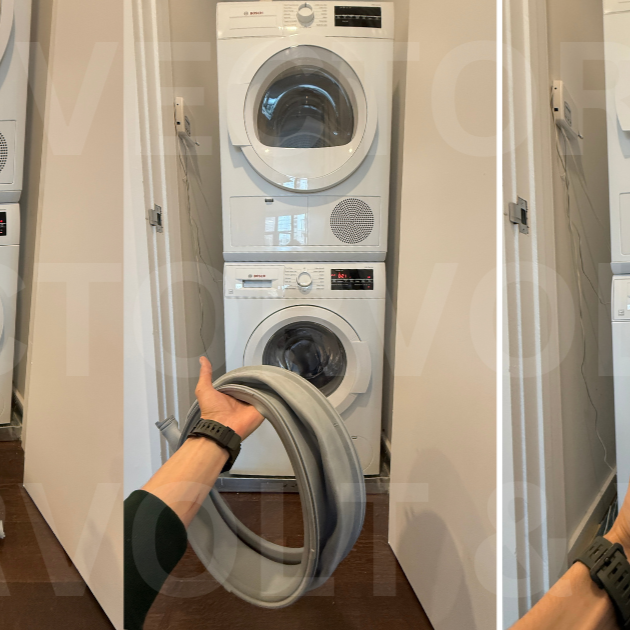
Final pricing depends on the washer model and the access required to complete the work. Please disclose stacked installations, laundry closets, cabinetry, or other access restrictions when requesting an estimate. Any additional access work must be included in the agreed scope.
The $99 diagnostic fee is credited toward your repair when you proceed. It is a diagnostic charge—not the price of gasket replacement.
We confirm the repair scope and price for your approval before replacement work begins.
A Door Leak Does Not Always Require a New Gasket
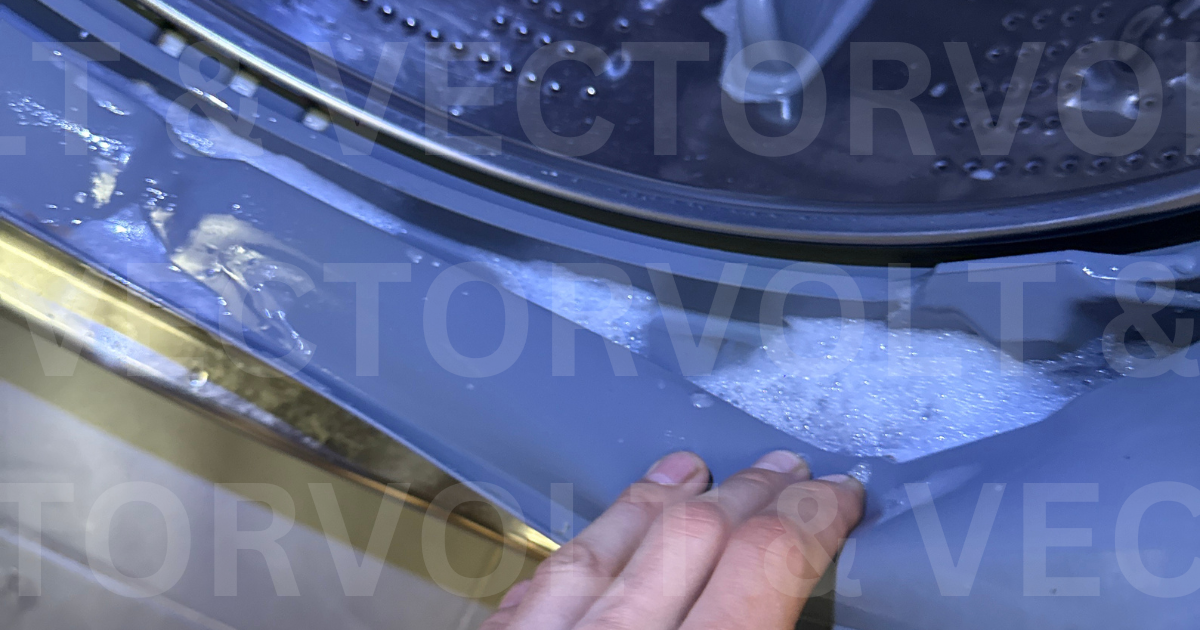
Water near the washer door does not, by itself, confirm a failed seal. Residue between the gasket and door glass can interfere with sealing, while excess detergent can cause leakage from the dispenser. The source should be checked before a replacement is recommended.
When the reported problem points to another component, we explain the findings and quote any additional repair separately. Gasket replacement is not presented as a solution for unrelated washer faults.
Frequently Asked Questions
Can you come just to clean mold off the gasket?
No. This service is for gasket replacement, not standalone cleaning, stain removal, or chemical mold treatment. Cleaning the accessible seating surfaces during replacement does not constitute a separate washer-cleaning service.
Does the $495 starting price include the new gasket?
No. $495 is the starting labor charge. The replacement gasket and applicable tax are additional. Your estimate identifies the charges before you approve the work.
Will a new gasket eliminate every washer odor?
Not necessarily. Replacing the gasket removes that component, but it does not clean the entire washer. Detergent residue, retained moisture, and buildup elsewhere in the machine may also require attention. We do not promise that gasket replacement alone will eliminate every odor.
Can you replace a gasket on a stacked or closet-installed washer?
Send a photograph showing the entire installation. We review the available access and confirm whether moving or unstacking equipment is necessary before agreeing on the work.
How should I care for the new gasket?
Follow the care instructions for your exact washer. Use only approved cleaning products and methods; aggressive cleaners can damage the rubber. For example, Bosch advises using a soft, damp cloth and avoiding abrasive, aggressive, or chlorine-containing cleaners on its washer seals.
Request a Gasket Replacement Estimate
Text (332) 333-1709 with your ZIP code, a clear photograph of the washer’s model label, photographs of the gasket, and a wider photograph showing the installation. Briefly explain whether the concern is a tear, leakage, staining, or a combination.
Service is available in Manhattan below 96th Street, Brooklyn, Astoria, and Long Island City, subject to address confirmation and appointment availability.
Replacement labor starts at $495. The gasket and applicable tax are additional.