Bosch oven not heating up? Diagnose gas vs electric, then follow an igniter first checklist. Covers broiler works but bake doesn’t, stuck on preheat, and after self clean.
Trusted by 1500+
communities and businesses

Bosch Oven Not Heating

Bosch Oven Not Heating

Bosch oven not heating is most often a gas bake igniter problem, especially when the broiler works but bake doesn’t, the oven is stuck on preheat, or preheat has gotten slow over time. This checklist walks through safe, no-disassembly checks to confirm gas vs electric, rule out mode and reset issues, and identify the symptom patterns that usually mean the igniter is weak, failed, or the post self clean state needs service.

Bosch Oven Not Heating: Real Troubleshooting (No Guesswork Parts-Swapping)

Quick Answers

  • Question: My Bosch oven powers on, but it won’t heat at all.
    Answer: On electric Bosch ovens, the top cause is a missing 240V leg (you still get lights/display on 120V). Next are a blown thermal cutout, failed relay/control, or an open heating circuit.
  • Question: Broil works, but Bake won’t heat.
    Answer: That usually points to the bake heating circuit: bake element, wiring to the element, or the bake relay output on the control board.
  • Question: Bake works, but Broil won’t heat.
    Answer: Most often the broil element or its relay/output is open, or the door switch/latch logic is preventing broil from energizing on some platforms.
  • Question: It starts preheating, then stalls and never reaches temperature.
    Answer: Common root causes are weak heating output (element degrading), temperature sensor drift, cooling fan/airflow problems causing control to limit heat, or a control issue that drops voltage to the element under load.
  • Question: Convection fan runs, but there’s no heat.
    Answer: Fan operation doesn’t prove heat output. This typically means the control isn’t energizing the heating circuit (relay/output, safety cutoff, or supply issue).
  • Question: Breaker trips when the oven tries to heat.
    Answer: Suspect a shorted heating element, damaged wiring/terminal block, or moisture/contamination in the element connections causing leakage to ground.
  • Question: It’s a Bosch gas range and the oven won’t heat.
    Answer: If the igniter doesn’t glow, it’s often igniter power/control. If it glows but no flame, the igniter may be weak (not drawing enough current to open the gas valve) or the gas valve is failing.
  • Question: There’s an error code on the display.
    Answer: Record the exact code and your full model number before resetting. Codes vary by series; the same code can mean different things across Bosch platforms.

Stop Now (Safety)

  • Burning smell, sparking, smoke, or repeated breaker trips: stop using it and cut power at the breaker.
  • Gas smell on a gas range: stop, ventilate, do not operate electrical switches, follow standard gas safety steps and get service.

Step 1: Identify what you actually have (this changes the diagnosis)

  • Built-in Bosch wall oven / electric range oven: typically 240V electric heat (bake and broil are electric).
  • Bosch gas range oven: bake is typically gas burner + igniter; broil may be gas or electric depending on model.
  • Fast confirmation: check the rating plate (door frame area) and whether the unit is on a 2-pole breaker (electric) or has a gas line (gas range).

Step 2: High-value checks you can do safely

  • Confirm you’re in a real heating mode: Bake or Broil (not Warm, Proof, or a timed/delay program).
  • Cancel anything timed: clear Delay Start, timers, or any programmed cooking cycle.
  • If a temperature probe is plugged in: remove it. A faulty probe can force the oven into odd temperature behavior on some models.
  • Make sure the door is fully closed and the latch isn’t stuck in a “clean/locked” position.
  • Power reset the right way: turn the oven off, then shut the breaker off for 2 minutes, then back on. If it fails again, note what changed (any code, fan behavior, clicking, etc.).
  • Check the breaker correctly (electric ovens): a Bosch electric oven needs both legs of the 240V supply. One leg can trip without looking “fully off.” Flip the 2-pole breaker fully off, then on.

What these checks tell you

  • Display works but no heat + breaker looks “fine” often still equals missing 240V.
  • No fan, no heat, dead controls: more like power supply or internal fuse.
  • Fan runs but no heat: more like control/relay/safety cutoff or open element.

Step 3: What a real on-site diagnosis verifies (the stuff that prevents wrong parts)

If you’re comfortable with electrical testing, this is what matters. If not, this is the checklist a competent tech should follow.

Electric Bosch ovens (240V):

  • Verify 240V at the terminal block and confirm both legs are present under load.
  • Verify the heating element circuit: element resistance (open = dead), and inspect terminals for heat damage.
  • Verify control output: whether the relay is actually sending voltage to the element during a heat call.
  • Check the oven temperature sensor (RTD) reading and compare to expected range at room temperature and when warmed.
  • Check thermal cutoff / high-limit continuity (a tripped/open cutoff prevents heat).
  • Inspect wiring harness for heat-brittle insulation, loose spade connectors, and arcing marks.

Bosch gas range ovens:

  • Watch the ignition sequence: does the igniter glow? how bright? does flame establish?
  • Measure igniter draw (weak igniters can glow but not open the valve).
  • Confirm gas supply and that the valve opens during a heat call.
  • Confirm the control is actually commanding bake (some failures are board/relay related even on gas).

Symptom to Diagnosis Map (what the symptom usually means, and how it’s confirmed)

  • Symptom: Display works, oven won’t heat at all
    Likely cause class: Missing 240V leg, open thermal cutoff, control not outputting, open heating circuit
    How we confirm on-site: Measure L1–L2 voltage under load, continuity checks on cutoff/element, verify relay output during heat call
  • Symptom: Bake won’t heat, Broil heats normally
    Likely cause class: Bake element open, bake relay/output failure, harness issue to bake element
    How we confirm on-site: Bake element resistance + voltage to bake element during bake command
  • Symptom: Broil won’t heat, Bake heats normally
    Likely cause class: Broil element open, broil relay/output failure, door switch logic issue
    How we confirm on-site: Broil element resistance + voltage to broil element during broil command; verify switch/latch state
  • Symptom: Heats very weak, takes forever to preheat
    Likely cause class: Element degradation, low supply voltage under load, sensor drift causing early cycling
    How we confirm on-site: Amp draw/voltage under load, element resistance trend, temp verification with a calibrated probe and control behavior
  • Symptom: Preheats, then stalls and never reaches set temp
    Likely cause class: Relay drops out under heat load, cooling/airflow issue, sensor feedback instability
    How we confirm on-site: Monitor relay output over time, verify fan operation/airflow, confirm sensor stability and cabinet temps
  • Symptom: Oven overshoots or swings wildly
    Likely cause class: Sensor drift, control algorithm reacting to bad feedback, airflow/door seal problems
    How we confirm on-site: Compare displayed temp vs measured, sensor resistance/response, check gasket/door alignment
  • Symptom: Breaker trips when heat starts
    Likely cause class: Shorted element, arcing terminal block, damaged wiring insulation to chassis ground
    How we confirm on-site: Insulation-to-ground testing, visual inspection for burn marks, isolate element and retest
  • Symptom: Clicking sounds but no heat
    Likely cause class: Relay engaging but no power delivered (supply issue) or open circuit beyond relay
    How we confirm on-site: Measure voltage at relay output and at the element simultaneously during command
  • Symptom: Error code appears when starting bake
    Likely cause class: Platform-specific sensor/control fault, latch/door logic, overtemp protection
    How we confirm on-site: Document code + model, check sensor circuit, verify latch/door switches, run service diagnostics if available
  • Symptom: Convection fan runs, but no heat in convection bake
    Likely cause class: Heating circuit not energized (relay/output/cutoff) or element open
    How we confirm on-site: Voltage to element during convection command, continuity of element/cutoffs
  • Symptom: Gas oven: igniter glows, no flame
    Likely cause class: Weak igniter (insufficient current), failing gas valve
    How we confirm on-site: Measure igniter current draw during ignition attempt, verify valve behavior
  • Symptom: Gas oven: no glow, no flame
    Likely cause class: No power to igniter (control/relay), open igniter, door/latch logic blocking heat
    How we confirm on-site: Voltage to igniter during bake call, igniter continuity, control outputs and safety interlocks

Example Scenarios (common patterns, no fluff)

  • Symptom: Oven lights up, won’t heat.
    What we checked: Supply legs at the terminal block.
    Root cause class: Missing 240V leg (half-power condition).
    How confirmed: L1–L2 not present under load; only one hot leg active.
    Fix path: Correct electrical supply/breaker/connection, then verify heat output.
  • Symptom: Broil works, bake dead.
    What we checked: Bake element resistance and voltage during bake command.
    Root cause class: Open bake element.
    How confirmed: Element measured open; no heat even with correct control output.
    Fix path: Replace bake element, verify preheat and cycling.
  • Symptom: Preheat stalls at a low temperature and never finishes.
    What we checked: Relay output stability and sensor readings over time.
    Root cause class: Control drops element voltage under sustained load.
    How confirmed: Voltage present briefly then disappears while the control still “calls” for heat.
    Fix path: Repair control/output path, then verify stable preheat.
  • Symptom: Breaker trips shortly after bake starts.
    What we checked: Element insulation-to-ground and wiring heat damage.
    Root cause class: Heating element leaking/shorting to chassis ground.
    How confirmed: Ground fault signature when the element heats.
    Fix path: Replace element and repair any heat-damaged wiring, verify no trip.
When to Stop DIY
  • You’ve verified the mode/settings and breaker reset and it still won’t heat.
  • You suspect a missing 240V leg but aren’t qualified to meter a live 240V circuit.
  • Breaker trips, you see heat damage at the terminal block, or there’s any burning smell.
  • Gas oven ignition is failing repeatedly.

Bosch Oven Not Heating Up: Troubleshooting Guide (Field Tested Checklist, Igniter First)

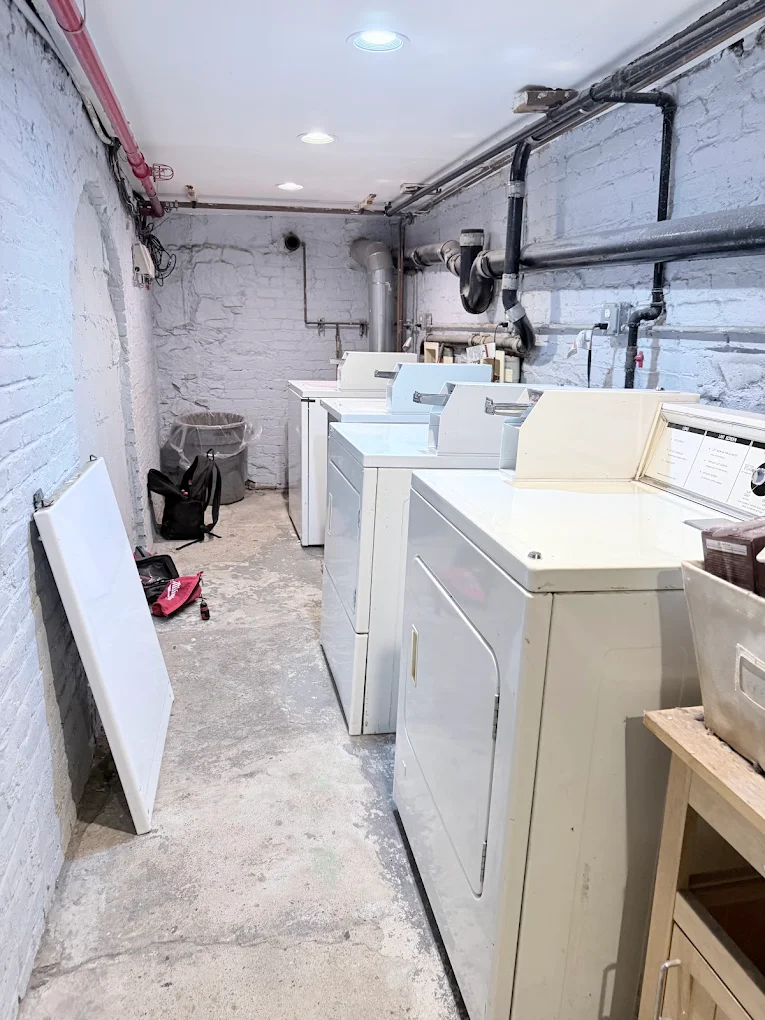
Basement laundry room with white washer and dryer, exposed pipes

David Rosenberg

Bright yellow five-pointed star on a white backgroundBright yellow five-pointed star on a white backgroundBright yellow five-pointed star on a white backgroundBright yellow five-pointed star on a white backgroundBright yellow five-pointed star on a white background

Homeowner, Park Slope

"It's hard to imagine a better, more communicative, more honest and more competent group of people than the absolute legends at Volt + Vector. They are the people you are looking for."

Bosch Oven Not Heating

Bosch oven not heating is most often a gas bake igniter problem, especially when the broiler works but bake doesn’t, the oven is stuck on preheat, or preheat has gotten slow over time. This checklist walks through safe, no-disassembly checks to confirm gas vs electric, rule out mode and reset issues, and identify the symptom patterns that usually mean the igniter is weak, failed, or the post self clean state needs service.

Bosch Oven Not Heating: Real Troubleshooting (No Guesswork Parts-Swapping)

Quick Answers

  • Question: My Bosch oven powers on, but it won’t heat at all.
    Answer: On electric Bosch ovens, the top cause is a missing 240V leg (you still get lights/display on 120V). Next are a blown thermal cutout, failed relay/control, or an open heating circuit.
  • Question: Broil works, but Bake won’t heat.
    Answer: That usually points to the bake heating circuit: bake element, wiring to the element, or the bake relay output on the control board.
  • Question: Bake works, but Broil won’t heat.
    Answer: Most often the broil element or its relay/output is open, or the door switch/latch logic is preventing broil from energizing on some platforms.
  • Question: It starts preheating, then stalls and never reaches temperature.
    Answer: Common root causes are weak heating output (element degrading), temperature sensor drift, cooling fan/airflow problems causing control to limit heat, or a control issue that drops voltage to the element under load.
  • Question: Convection fan runs, but there’s no heat.
    Answer: Fan operation doesn’t prove heat output. This typically means the control isn’t energizing the heating circuit (relay/output, safety cutoff, or supply issue).
  • Question: Breaker trips when the oven tries to heat.
    Answer: Suspect a shorted heating element, damaged wiring/terminal block, or moisture/contamination in the element connections causing leakage to ground.
  • Question: It’s a Bosch gas range and the oven won’t heat.
    Answer: If the igniter doesn’t glow, it’s often igniter power/control. If it glows but no flame, the igniter may be weak (not drawing enough current to open the gas valve) or the gas valve is failing.
  • Question: There’s an error code on the display.
    Answer: Record the exact code and your full model number before resetting. Codes vary by series; the same code can mean different things across Bosch platforms.

Stop Now (Safety)

  • Burning smell, sparking, smoke, or repeated breaker trips: stop using it and cut power at the breaker.
  • Gas smell on a gas range: stop, ventilate, do not operate electrical switches, follow standard gas safety steps and get service.

Step 1: Identify what you actually have (this changes the diagnosis)

  • Built-in Bosch wall oven / electric range oven: typically 240V electric heat (bake and broil are electric).
  • Bosch gas range oven: bake is typically gas burner + igniter; broil may be gas or electric depending on model.
  • Fast confirmation: check the rating plate (door frame area) and whether the unit is on a 2-pole breaker (electric) or has a gas line (gas range).

Step 2: High-value checks you can do safely

  • Confirm you’re in a real heating mode: Bake or Broil (not Warm, Proof, or a timed/delay program).
  • Cancel anything timed: clear Delay Start, timers, or any programmed cooking cycle.
  • If a temperature probe is plugged in: remove it. A faulty probe can force the oven into odd temperature behavior on some models.
  • Make sure the door is fully closed and the latch isn’t stuck in a “clean/locked” position.
  • Power reset the right way: turn the oven off, then shut the breaker off for 2 minutes, then back on. If it fails again, note what changed (any code, fan behavior, clicking, etc.).
  • Check the breaker correctly (electric ovens): a Bosch electric oven needs both legs of the 240V supply. One leg can trip without looking “fully off.” Flip the 2-pole breaker fully off, then on.

What these checks tell you

  • Display works but no heat + breaker looks “fine” often still equals missing 240V.
  • No fan, no heat, dead controls: more like power supply or internal fuse.
  • Fan runs but no heat: more like control/relay/safety cutoff or open element.

Step 3: What a real on-site diagnosis verifies (the stuff that prevents wrong parts)

If you’re comfortable with electrical testing, this is what matters. If not, this is the checklist a competent tech should follow.

Electric Bosch ovens (240V):

  • Verify 240V at the terminal block and confirm both legs are present under load.
  • Verify the heating element circuit: element resistance (open = dead), and inspect terminals for heat damage.
  • Verify control output: whether the relay is actually sending voltage to the element during a heat call.
  • Check the oven temperature sensor (RTD) reading and compare to expected range at room temperature and when warmed.
  • Check thermal cutoff / high-limit continuity (a tripped/open cutoff prevents heat).
  • Inspect wiring harness for heat-brittle insulation, loose spade connectors, and arcing marks.

Bosch gas range ovens:

  • Watch the ignition sequence: does the igniter glow? how bright? does flame establish?
  • Measure igniter draw (weak igniters can glow but not open the valve).
  • Confirm gas supply and that the valve opens during a heat call.
  • Confirm the control is actually commanding bake (some failures are board/relay related even on gas).

Symptom to Diagnosis Map (what the symptom usually means, and how it’s confirmed)

  • Symptom: Display works, oven won’t heat at all
    Likely cause class: Missing 240V leg, open thermal cutoff, control not outputting, open heating circuit
    How we confirm on-site: Measure L1–L2 voltage under load, continuity checks on cutoff/element, verify relay output during heat call
  • Symptom: Bake won’t heat, Broil heats normally
    Likely cause class: Bake element open, bake relay/output failure, harness issue to bake element
    How we confirm on-site: Bake element resistance + voltage to bake element during bake command
  • Symptom: Broil won’t heat, Bake heats normally
    Likely cause class: Broil element open, broil relay/output failure, door switch logic issue
    How we confirm on-site: Broil element resistance + voltage to broil element during broil command; verify switch/latch state
  • Symptom: Heats very weak, takes forever to preheat
    Likely cause class: Element degradation, low supply voltage under load, sensor drift causing early cycling
    How we confirm on-site: Amp draw/voltage under load, element resistance trend, temp verification with a calibrated probe and control behavior
  • Symptom: Preheats, then stalls and never reaches set temp
    Likely cause class: Relay drops out under heat load, cooling/airflow issue, sensor feedback instability
    How we confirm on-site: Monitor relay output over time, verify fan operation/airflow, confirm sensor stability and cabinet temps
  • Symptom: Oven overshoots or swings wildly
    Likely cause class: Sensor drift, control algorithm reacting to bad feedback, airflow/door seal problems
    How we confirm on-site: Compare displayed temp vs measured, sensor resistance/response, check gasket/door alignment
  • Symptom: Breaker trips when heat starts
    Likely cause class: Shorted element, arcing terminal block, damaged wiring insulation to chassis ground
    How we confirm on-site: Insulation-to-ground testing, visual inspection for burn marks, isolate element and retest
  • Symptom: Clicking sounds but no heat
    Likely cause class: Relay engaging but no power delivered (supply issue) or open circuit beyond relay
    How we confirm on-site: Measure voltage at relay output and at the element simultaneously during command
  • Symptom: Error code appears when starting bake
    Likely cause class: Platform-specific sensor/control fault, latch/door logic, overtemp protection
    How we confirm on-site: Document code + model, check sensor circuit, verify latch/door switches, run service diagnostics if available
  • Symptom: Convection fan runs, but no heat in convection bake
    Likely cause class: Heating circuit not energized (relay/output/cutoff) or element open
    How we confirm on-site: Voltage to element during convection command, continuity of element/cutoffs
  • Symptom: Gas oven: igniter glows, no flame
    Likely cause class: Weak igniter (insufficient current), failing gas valve
    How we confirm on-site: Measure igniter current draw during ignition attempt, verify valve behavior
  • Symptom: Gas oven: no glow, no flame
    Likely cause class: No power to igniter (control/relay), open igniter, door/latch logic blocking heat
    How we confirm on-site: Voltage to igniter during bake call, igniter continuity, control outputs and safety interlocks

Example Scenarios (common patterns, no fluff)

  • Symptom: Oven lights up, won’t heat.
    What we checked: Supply legs at the terminal block.
    Root cause class: Missing 240V leg (half-power condition).
    How confirmed: L1–L2 not present under load; only one hot leg active.
    Fix path: Correct electrical supply/breaker/connection, then verify heat output.
  • Symptom: Broil works, bake dead.
    What we checked: Bake element resistance and voltage during bake command.
    Root cause class: Open bake element.
    How confirmed: Element measured open; no heat even with correct control output.
    Fix path: Replace bake element, verify preheat and cycling.
  • Symptom: Preheat stalls at a low temperature and never finishes.
    What we checked: Relay output stability and sensor readings over time.
    Root cause class: Control drops element voltage under sustained load.
    How confirmed: Voltage present briefly then disappears while the control still “calls” for heat.
    Fix path: Repair control/output path, then verify stable preheat.
  • Symptom: Breaker trips shortly after bake starts.
    What we checked: Element insulation-to-ground and wiring heat damage.
    Root cause class: Heating element leaking/shorting to chassis ground.
    How confirmed: Ground fault signature when the element heats.
    Fix path: Replace element and repair any heat-damaged wiring, verify no trip.
When to Stop DIY
  • You’ve verified the mode/settings and breaker reset and it still won’t heat.
  • You suspect a missing 240V leg but aren’t qualified to meter a live 240V circuit.
  • Breaker trips, you see heat damage at the terminal block, or there’s any burning smell.
  • Gas oven ignition is failing repeatedly.