

.jpeg)
.avif)
Normal vs. Abnormal Washing Machine Behaviors
Separate normal washer sounds and pauses from leaks, violent shaking, drainage trouble and burning odors. Safe checks and the details to record for service.
Washing Machine Behavior: Quick Reference Card
Brief clicks, changing cycle time and some vibration can be normal. A new sound becomes more concerning when it repeats with ordinary loads, comes with poor draining or spinning, or appears after the washer moves. Water on the floor, burning odor and violent movement are stop-use signals.
- One bulky load thumps: Pause and wait for normal unlock, then redistribute or reduce the load as the manual directs. Do not hold down a moving washer.
- Every load bangs, scrapes or grows louder: Stop repeated testing. Record whether it happens during wash, drain or spin, and whether the washer was recently installed or moved.
- Clothes are unusually wet: First note whether water remains in the tub. Standing water points to drainage; an empty tub also leaves spin settings, imbalance and excess suds in scope.
- Musty smell without heat or leaks: Check visible residue, detergent use and the model's cleaning instructions. Odor with retained water needs a drainage check.
- Leak, hot electrical smell or smoke: Stop use. Keep away from wet electrical connections; smoke or fire requires emergency help.
Save the model number, cycle, load description and any displayed code. A short video already captured safely is useful; do not restart a dangerous symptom just to record it.
How to Read a Change in Your Washing Machine
The useful comparison is your washer's behavior on a similar cycle and load. A single blanket that bunches up is different from a washer that bangs with every load. A pump sound while water leaves is different from a grinding sound during high-speed spin. Start with the stage when the behavior occurs, then check whether the cycle finishes and the clothes come out normally.
Front-load and top-load machines have different drive systems, water levels and sounds. Features such as load sensing, a shifting clutch or a balancing system can produce pauses or noises that an older washer never made. The owner's manual and the manufacturer's sound examples are better references than a diagnosis based on a noise's name alone.
Sounds: Normal vs. Warning Signs
Vibration or thumping during spin. An unevenly distributed load can make the washer vibrate as it accelerates. If the machine remains stable and the problem is limited to one load, pause, wait for the door or lid to unlock, and correct the load. Repeated banging on ordinary loads needs a check of installation and support before suspension parts are blamed.
New squealing, grinding or a growing roar. Stop the cycle and note the stage. A trapped object, overload, rubbing part or a worn drive or drum-support component can produce similar descriptions. Noise alone does not prove a bearing or belt failure. Persistent scraping, metal impact or a loud spin roar needs service; there is no reliable countdown from the sound to a particular failure.
Intermittent tapping during wash. Zippers or other garment hardware can tap against the drum, but a loose coin, screw or underwire should not be dismissed as harmless. Once the washer is stopped and unlocked, check the laundry, pockets and visible drum. Do not reach into the gap behind the drum or pull a trapped wire. If an item is missing, use the safe appliance retrieval guide.
Humming, sucking or gurgling during drain. Some pump and air sounds occur normally as the tub empties. Compare them with the result: did the water leave, did the washer complete spin, and is this different from its usual sound? A louder drain sound with standing water, a drain error or repeated failure to finish needs attention.
Clicks around the start or end of a phase. Locks, valves and switching components can click. A recurring clatter from the drum or cabinet deserves a visible check for loose objects or something resting against the machine. Samsung's sound examples illustrate why a noise must be matched to the operation and model.
Movements and Vibration: What's Acceptable
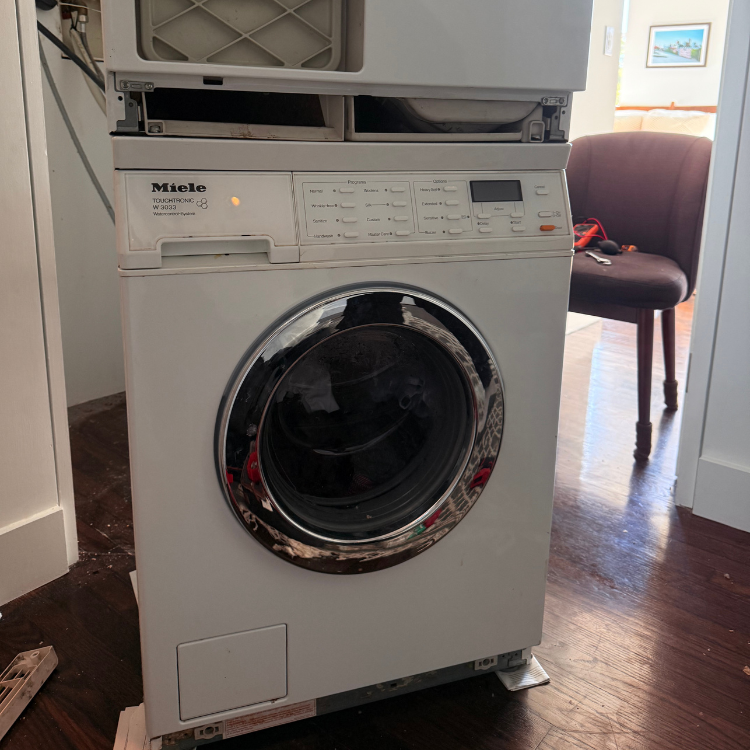
A washer should remain securely in place. Walking, striking a cabinet or wall, pulling hoses, or moving a dryer stacked above it is a reason to stop. There is no useful allowance of a few inches of travel, and adding a rubber mat is not a substitute for correct installation.
If the problem began immediately after delivery, a move, a new drain pan or work on the floor, report that first. The installer should confirm shipping restraints, level, foot contact, floor support and any pedestal or stacking kit according to the model instructions. Do not pull a stacked machine out alone or adjust feet during operation.
If it developed gradually, the same installation and load checks still matter. Suspension, basket support, bearings or drive components become service possibilities after those external causes are checked. A floor can transmit vibration to another room or apartment without identifying which part, if any, has failed.
Water Behavior: When to Investigate
Moisture in the door-gasket folds. A little moisture after unloading is different from a tub that did not drain. With the washer off, wipe accessible folds and remove visible lint or debris without stretching the seal. Let the door and dispenser dry as the manual recommends, only where children and pets cannot enter the machine.
Water under the washer. Stop using it until the source is understood. Photograph where water first appeared, whether it happened during fill, wash or drain, and any visible leak at the door or hose. A leak may come from the washer, a connection or the building drain. Do not touch a wet plug or step into water to reach controls. In an apartment, follow the water-leak response steps and notify building management when neighboring property may be affected.
Slow filling. Check for a known building water interruption, a visibly kinked supply hose or a supply valve that was recently closed. Only check what is safely accessible. Inlet restriction and valve problems remain possibilities, but disconnecting hoses, removing screens or moving the machine is not a universal first step.
Standing water after the cycle. Check the selected option and visible drain-hose condition. A user-cleanable pump filter exists on some models, not all. Follow the exact manual: turn the washer off, disconnect power if safely accessible, let hot water cool and use the specified drain procedure before removing the cap. Do not open a filter on a full or hot machine with only a towel for protection. An inaccessible or stuck filter needs service.
Smells: Reading What Your Washer Tells You
Musty or sour odor. Damp laundry, detergent residue, the gasket, dispenser or retained water can contribute. Remove laundry promptly, use the correct detergent amount and follow the washer's maintenance cycle and approved cleaner instructions. Do not mix cleaning chemicals. A recurring odor with standing water, poor draining, residue on clothing or a torn seal needs more than another deodorizing cycle. Samsung's odor guidance separates moisture and maintenance from other symptoms.
Burning, hot-rubber or electrical odor. Stop use. Do not run extra cycles to see whether it clears. A slipped or rubbing part and electrical overheating are different possibilities that require inspection. Smoke, sparks or fire require emergency help.
Odor on a new washer. Follow its commissioning instructions and tell the installer what you smell. Newness does not make a burning smell acceptable. Do not prescribe several empty hot cycles for an unidentified odor.
Cycle Results: Settings, Drainage or a Fault?
Clothes feel soapy. Check that the detergent type and dose suit the machine, load and detergent concentration. Overloading can also impair rinsing. If residue continues with correct use, record whether the machine fills, drains and completes rinsing. A restricted supply or other fault needs confirmation rather than more detergent.
Clothes are wetter than usual. A low-spin or delicate setting can leave more moisture by design. An unbalanced load, excess suds or incomplete drainage can also prevent full spin. An empty tub with repeated failure on appropriate loads needs a model-specific lock, drive, balance or control diagnosis. It does not establish worn motor brushes or a belt from the outside. Whirlpool's spin guide explains these distinctions.
The displayed time changes. Sensor-controlled cycles can adjust to the load and operating conditions. Note whether the extra time is spent filling, rinsing, draining or retrying spin. Repeated stalls, an error code or an unfinished load are more useful service evidence than the displayed minutes alone. Photograph codes before attempting any reset directed by the manual.
What to Include in a Service Request
- Washer: Model number and whether it is front-load, top-load or stacked.
- Load and cycle: What was being washed and the selected cycle or spin setting.
- Failure stage: Fill, wash, drain or spin; note whether water remained.
- Recent changes: Delivery, relocation, a new drain pan or work on the floor.
- Evidence: Displayed code, leak photo or a recording already captured safely.
For example: “Ordinary mixed load; drains, then bangs while accelerating; started after relocation.” This helps separate an installation issue from an internal repair without guessing a part.
Match the behavior to the cycle stage before deciding what to do.