

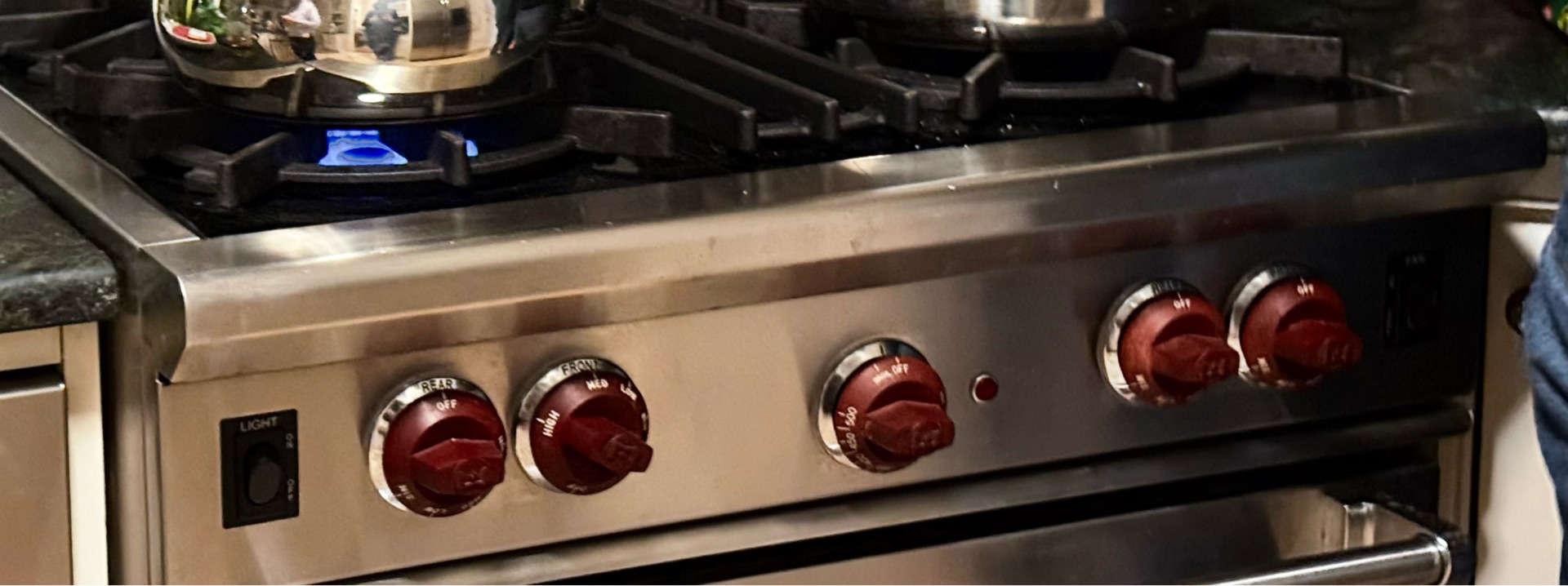
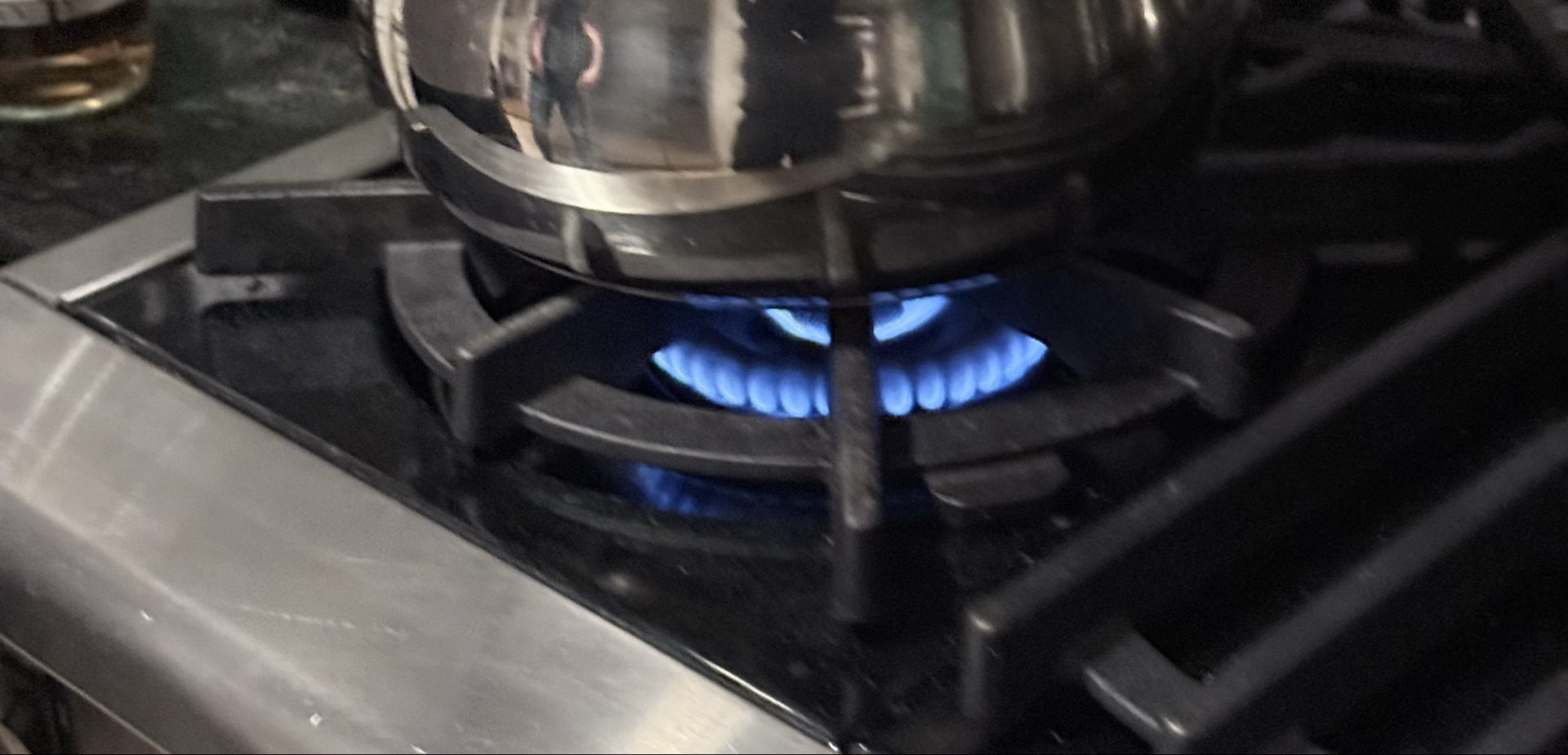
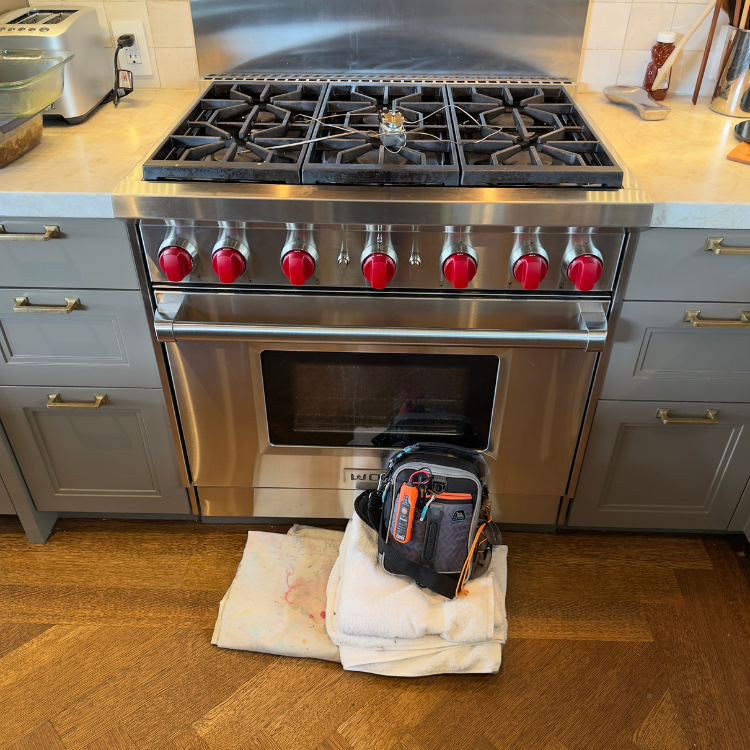
If a Wolf surface burner keeps clicking, the ignition system is still trying to light the burner or “re-light” a flame it thinks is unstable. The most common homeowner-fixable causes are moisture after cleaning/boil-over, burner cap or ring not seated perfectly flat, or airflow/cookware starving the flame of oxygen. Wolf also notes that the igniters are electric and need proper power. (Sub-Zero & Wolf)
You smell gas, hear hissing, or suspect a leak
A burner will not shut off
Flames appear outside the normal burner area
The cooktop/range is sparking when NOT in use and you cannot stop it by turning every knob fully OFF
You see arcing to metal in an unusual place (not just the normal spark at the electrode)
Clicking and NO flame
Ignition is sparking, but gas is not lighting yet (wet parts, dirty ports, mis-seated cap/ring, air in the gas line, gas supply interruption)
Clicking AFTER the flame lights
Flame is unstable or not “recognized” as stable (cap/ring alignment, moisture, airflow, oversized cookware, flame lifting)
Clicking when the burner is OFF
A knob is not fully OFF, moisture got into the switch area after a spill/cleaning, or an ignition switch/module is sticking and needs service
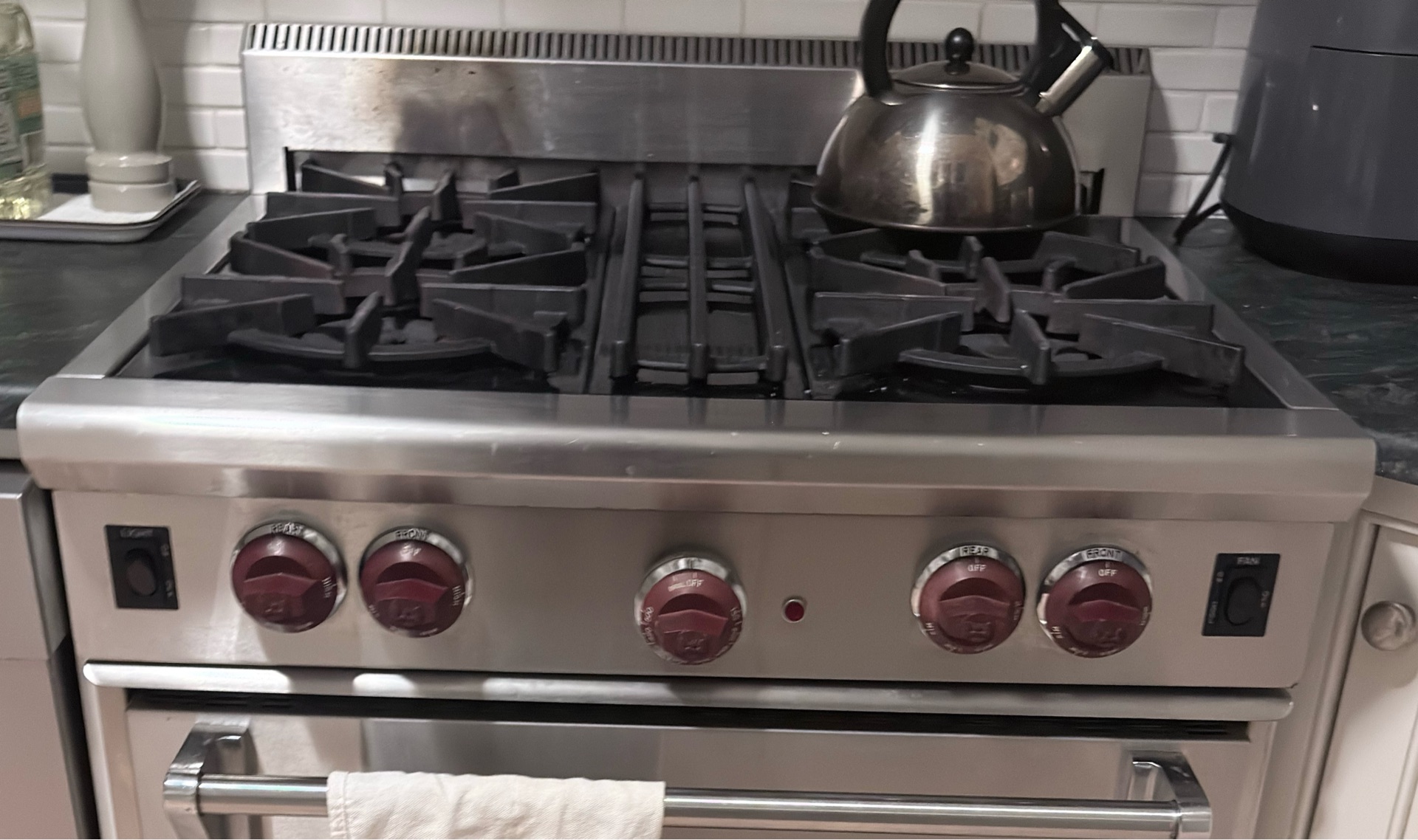
Turn the problem burner knob to OFF (firmly).
Confirm every other burner knob is fully OFF (not between detents).
If there was any cleaning or spill, leave the burner area open to air-dry. Use ventilation hood to move air. (Sub-Zero & Wolf)
Try lighting again. If it does not light within about 10 seconds, turn it OFF, wait one minute, then try again (this can purge air in the line). (Sub-Zero & Wolf)
Let everything cool completely.
Remove grates only after the surface is cool.
Do not spray cleaner or water directly into the igniter area.
Do not scrape burner ports aggressively or enlarge holes (you can worsen flame quality). (Sub-Zero & Wolf)
1) Dry-out protocol (after cleaning or a boil-over)
Why it matters: Water around the electrode or burner parts can keep the system “asking” for spark. (Sub-Zero & Wolf)
Checks:
Lift off grates, burner cap, and burner ring (when cool)
Wipe all parts completely dry (top and underside)
Air-dry the burner base area
Optional: hairdryer on LOW to speed drying (keep it moving, do not overheat plastics) (Sub-Zero & Wolf)
What the result means:
Clicking stops after drying = moisture was the trigger
Next action:
Reassemble only when fully dry and retest
2) Re-seat the burner ring and cap (most common “clicking after flame” fix)
Why it matters: If the ring/cap is slightly off-center or rocking, the flame pattern lifts or becomes uneven and the system may keep sparking. Wolf explicitly calls out correct positioning and (on some designs) a tight screw-in cap. (Sub-Zero & Wolf)
Checks:
Place the burner ring so it sits flat with zero rocking
Center the burner cap precisely
If your Wolf uses a screw-in cap design, confirm it is securely fastened (snug, not cross-threaded) (Sub-Zero & Wolf)
What the result means:
Clicking stops immediately after correct seating = alignment/fitment issue
Next action:
If the cap/ring will not sit flat, inspect for debris underneath; if still rocking, the part may be warped and may need replacement (service-level)
3) Light cleaning of ignition zone and burner ports (no aggressive scraping)
Why it matters: Food residue can block gas ports or disrupt where the spark “jumps,” causing delayed ignition or unstable flame. Wolf recommends gentle cleaning methods (toothbrush; toothpick for ports). (Sub-Zero & Wolf)
Checks:
Use a soft, dry toothbrush around the igniter/electrode area
If food is lodged in burner-ring holes, clear carefully with a toothpick (do not enlarge openings) (Sub-Zero & Wolf)
Ensure the gap where the spark needs to jump is not packed with debris (Wolf notes cleaning between igniter and burner area) (Sub-Zero & Wolf)
What the result means:
Burner lights faster and clicking stops = debris/contamination was interfering
Next action:
Reassemble, test, and keep the area dry going forward
4) Purge air from the line (after long downtime or gas interruption)
Why it matters: Wolf notes it may take time to clear air and deliver gas for ignition. (Sub-Zero & Wolf)
Checks:
Turn burner ON
If it does not light within ~10 seconds, turn OFF
Wait one minute
Try again (repeat 2–3 cycles max) (Sub-Zero & Wolf)
What the result means:
Burner starts lighting normally after 1–3 attempts = air in line was the issue
Next action:
If none of the burners light after multiple attempts, stop and check building gas supply with your super/management
5) Cookware and airflow test (clicking after ignition)
Why it matters: Wolf explicitly notes large pans can starve the burner for oxygen, causing flame lift and continued clicking; lowering the setting may stop it. Ventilation hood can help (especially with griddle/charbroiler interactions on some units). (Sub-Zero & Wolf)
Checks:
Remove the oversized pan and test with a smaller pan
Turn the burner to a lower setting and see if clicking stops (Sub-Zero & Wolf)
Run the hood and retry ignition (Sub-Zero & Wolf)
What the result means:
Clicking stops with smaller cookware or lower flame = oxygen/airflow interaction
Next action:
Match pan size to burner and use hood for high-output cooking
6) Knob “stuck in” check (keeps ignition circuit active)
Why it matters: If the knob does not return properly, the ignition circuit can stay engaged.
Checks:
Push the knob in and release (or press down depending on design)
Confirm it springs back cleanly and rotates crisply to OFF
What the result means:
Clicking changes when you move the knob = mechanical/switch issue may be developing
Next action:
If the knob feels sticky after a spill, keep the unit OFF and let it dry; if persistent, service is typically required
7) Power-cycle reset (safe, external reset)
Why it matters: Wolf troubleshooting includes verifying power supply and power-cycling for ignition issues; igniters are electric. (Sub-Zero & Wolf)
Checks:
Turn the circuit breaker to the unit OFF for at least 30 seconds
Turn it back ON
Retest ignition (Sub-Zero & Wolf)
What the result means:
Normal operation returns = control/ignition logic was latched
Next action:
If sparking continues when not in use, treat it as an electrical safety issue and involve a qualified professional (Sub-Zero & Wolf)
Confirm every knob is fully OFF (not between settings)
If there was a spill or cleaning, leave the unit OFF and allow time to dry (moisture can trigger continuous sparking behavior) (Sub-Zero & Wolf)
If clicking continues after full drying and a breaker reset, the most likely causes are a stuck ignition switch or a spark module problem (service-level repair) (iFixit)
If the appliance is sparking when not in use, treat this as an electrical safety issue (Wolf notes involving an electrician in that scenario) (Sub-Zero & Wolf)
Clicks only right after you cleaned
Moisture in the igniter zone or under the cap/ring
Clicks only on ONE burner, especially after a boil-over
Cap/ring not seated, food in ports, wet switch area under that knob
Clicks mostly on HIGH with a huge pot, stops on LOW
Flame lift from oxygen starvation (cookware/airflow)
Clicks when OFF, stops if you turn THAT burner on
Switch/knob circuit behavior (often service-level once drying doesn’t fix it)
All burners weak + lots of clicking / delayed ignition
Possible gas supply/pressure issue in the building (stop and verify supply)
Burner cap/ring fitment and correct assembly, including warpage and seating tolerances
Spark electrode condition, contamination, and spark strength/consistency
Whether the ignition circuit is being commanded continuously (switch/knob behavior)
Spark module output behavior under normal use and during “phantom sparking”
Flame stability drivers: airflow, cookware interaction, flame lift, cross-drafts
Gas supply consistency across burners and ignition timing (especially if “some burners work, others don’t”)
Avoid flooding the burner area during cleaning; do not spray directly at igniters (Sub-Zero & Wolf)
After wiping, allow caps/rings and the igniter area to dry fully before lighting (Sub-Zero & Wolf)
Reinstall burner parts carefully: centered, flat, no rocking (Sub-Zero & Wolf)
Use cookware that matches burner size; use the hood for large cookware/high output (Sub-Zero & Wolf)
If a boil-over happens, turn everything OFF, clean, and let it dry before relighting
Need diagnosis in NYC
Volt & Vector Appliance Repair
Phone: +1 (332) 333-1709
Email: voltnvector@gmail.com
Hours: Monday–Saturday, 9:00 AM–6:00 PM
Service area: Brooklyn, Manhattan below 96th St, selected Queens ZIPs
If a Wolf surface burner keeps clicking, the ignition system is still trying to light the burner or “re-light” a flame it thinks is unstable. The most common homeowner-fixable causes are moisture after cleaning/boil-over, burner cap or ring not seated perfectly flat, or airflow/cookware starving the flame of oxygen. Wolf also notes that the igniters are electric and need proper power. (Sub-Zero & Wolf)
You smell gas, hear hissing, or suspect a leak
A burner will not shut off
Flames appear outside the normal burner area
The cooktop/range is sparking when NOT in use and you cannot stop it by turning every knob fully OFF
You see arcing to metal in an unusual place (not just the normal spark at the electrode)
Clicking and NO flame
Ignition is sparking, but gas is not lighting yet (wet parts, dirty ports, mis-seated cap/ring, air in the gas line, gas supply interruption)
Clicking AFTER the flame lights
Flame is unstable or not “recognized” as stable (cap/ring alignment, moisture, airflow, oversized cookware, flame lifting)
Clicking when the burner is OFF
A knob is not fully OFF, moisture got into the switch area after a spill/cleaning, or an ignition switch/module is sticking and needs service
Turn the problem burner knob to OFF (firmly).
Confirm every other burner knob is fully OFF (not between detents).
If there was any cleaning or spill, leave the burner area open to air-dry. Use ventilation hood to move air. (Sub-Zero & Wolf)
Try lighting again. If it does not light within about 10 seconds, turn it OFF, wait one minute, then try again (this can purge air in the line). (Sub-Zero & Wolf)
Let everything cool completely.
Remove grates only after the surface is cool.
Do not spray cleaner or water directly into the igniter area.
Do not scrape burner ports aggressively or enlarge holes (you can worsen flame quality). (Sub-Zero & Wolf)
1) Dry-out protocol (after cleaning or a boil-over)
Why it matters: Water around the electrode or burner parts can keep the system “asking” for spark. (Sub-Zero & Wolf)
Checks:
Lift off grates, burner cap, and burner ring (when cool)
Wipe all parts completely dry (top and underside)
Air-dry the burner base area
Optional: hairdryer on LOW to speed drying (keep it moving, do not overheat plastics) (Sub-Zero & Wolf)
What the result means:
Clicking stops after drying = moisture was the trigger
Next action:
Reassemble only when fully dry and retest
2) Re-seat the burner ring and cap (most common “clicking after flame” fix)
Why it matters: If the ring/cap is slightly off-center or rocking, the flame pattern lifts or becomes uneven and the system may keep sparking. Wolf explicitly calls out correct positioning and (on some designs) a tight screw-in cap. (Sub-Zero & Wolf)
Checks:
Place the burner ring so it sits flat with zero rocking
Center the burner cap precisely
If your Wolf uses a screw-in cap design, confirm it is securely fastened (snug, not cross-threaded) (Sub-Zero & Wolf)
What the result means:
Clicking stops immediately after correct seating = alignment/fitment issue
Next action:
If the cap/ring will not sit flat, inspect for debris underneath; if still rocking, the part may be warped and may need replacement (service-level)
3) Light cleaning of ignition zone and burner ports (no aggressive scraping)
Why it matters: Food residue can block gas ports or disrupt where the spark “jumps,” causing delayed ignition or unstable flame. Wolf recommends gentle cleaning methods (toothbrush; toothpick for ports). (Sub-Zero & Wolf)
Checks:
Use a soft, dry toothbrush around the igniter/electrode area
If food is lodged in burner-ring holes, clear carefully with a toothpick (do not enlarge openings) (Sub-Zero & Wolf)
Ensure the gap where the spark needs to jump is not packed with debris (Wolf notes cleaning between igniter and burner area) (Sub-Zero & Wolf)
What the result means:
Burner lights faster and clicking stops = debris/contamination was interfering
Next action:
Reassemble, test, and keep the area dry going forward
4) Purge air from the line (after long downtime or gas interruption)
Why it matters: Wolf notes it may take time to clear air and deliver gas for ignition. (Sub-Zero & Wolf)
Checks:
Turn burner ON
If it does not light within ~10 seconds, turn OFF
Wait one minute
Try again (repeat 2–3 cycles max) (Sub-Zero & Wolf)
What the result means:
Burner starts lighting normally after 1–3 attempts = air in line was the issue
Next action:
If none of the burners light after multiple attempts, stop and check building gas supply with your super/management
5) Cookware and airflow test (clicking after ignition)
Why it matters: Wolf explicitly notes large pans can starve the burner for oxygen, causing flame lift and continued clicking; lowering the setting may stop it. Ventilation hood can help (especially with griddle/charbroiler interactions on some units). (Sub-Zero & Wolf)
Checks:
Remove the oversized pan and test with a smaller pan
Turn the burner to a lower setting and see if clicking stops (Sub-Zero & Wolf)
Run the hood and retry ignition (Sub-Zero & Wolf)
What the result means:
Clicking stops with smaller cookware or lower flame = oxygen/airflow interaction
Next action:
Match pan size to burner and use hood for high-output cooking
6) Knob “stuck in” check (keeps ignition circuit active)
Why it matters: If the knob does not return properly, the ignition circuit can stay engaged.
Checks:
Push the knob in and release (or press down depending on design)
Confirm it springs back cleanly and rotates crisply to OFF
What the result means:
Clicking changes when you move the knob = mechanical/switch issue may be developing
Next action:
If the knob feels sticky after a spill, keep the unit OFF and let it dry; if persistent, service is typically required
7) Power-cycle reset (safe, external reset)
Why it matters: Wolf troubleshooting includes verifying power supply and power-cycling for ignition issues; igniters are electric. (Sub-Zero & Wolf)
Checks:
Turn the circuit breaker to the unit OFF for at least 30 seconds
Turn it back ON
Retest ignition (Sub-Zero & Wolf)
What the result means:
Normal operation returns = control/ignition logic was latched
Next action:
If sparking continues when not in use, treat it as an electrical safety issue and involve a qualified professional (Sub-Zero & Wolf)
Confirm every knob is fully OFF (not between settings)
If there was a spill or cleaning, leave the unit OFF and allow time to dry (moisture can trigger continuous sparking behavior) (Sub-Zero & Wolf)
If clicking continues after full drying and a breaker reset, the most likely causes are a stuck ignition switch or a spark module problem (service-level repair) (iFixit)
If the appliance is sparking when not in use, treat this as an electrical safety issue (Wolf notes involving an electrician in that scenario) (Sub-Zero & Wolf)
Clicks only right after you cleaned
Moisture in the igniter zone or under the cap/ring
Clicks only on ONE burner, especially after a boil-over
Cap/ring not seated, food in ports, wet switch area under that knob
Clicks mostly on HIGH with a huge pot, stops on LOW
Flame lift from oxygen starvation (cookware/airflow)
Clicks when OFF, stops if you turn THAT burner on
Switch/knob circuit behavior (often service-level once drying doesn’t fix it)
All burners weak + lots of clicking / delayed ignition
Possible gas supply/pressure issue in the building (stop and verify supply)
Burner cap/ring fitment and correct assembly, including warpage and seating tolerances
Spark electrode condition, contamination, and spark strength/consistency
Whether the ignition circuit is being commanded continuously (switch/knob behavior)
Spark module output behavior under normal use and during “phantom sparking”
Flame stability drivers: airflow, cookware interaction, flame lift, cross-drafts
Gas supply consistency across burners and ignition timing (especially if “some burners work, others don’t”)
Avoid flooding the burner area during cleaning; do not spray directly at igniters (Sub-Zero & Wolf)
After wiping, allow caps/rings and the igniter area to dry fully before lighting (Sub-Zero & Wolf)
Reinstall burner parts carefully: centered, flat, no rocking (Sub-Zero & Wolf)
Use cookware that matches burner size; use the hood for large cookware/high output (Sub-Zero & Wolf)
If a boil-over happens, turn everything OFF, clean, and let it dry before relighting
Need diagnosis in NYC
Volt & Vector Appliance Repair
Phone: +1 (332) 333-1709
Email: voltnvector@gmail.com
Hours: Monday–Saturday, 9:00 AM–6:00 PM
Service area: Brooklyn, Manhattan below 96th St, selected Queens ZIPs
Related offers


.avif)
.avif)


.png)
.png)
.jpg)