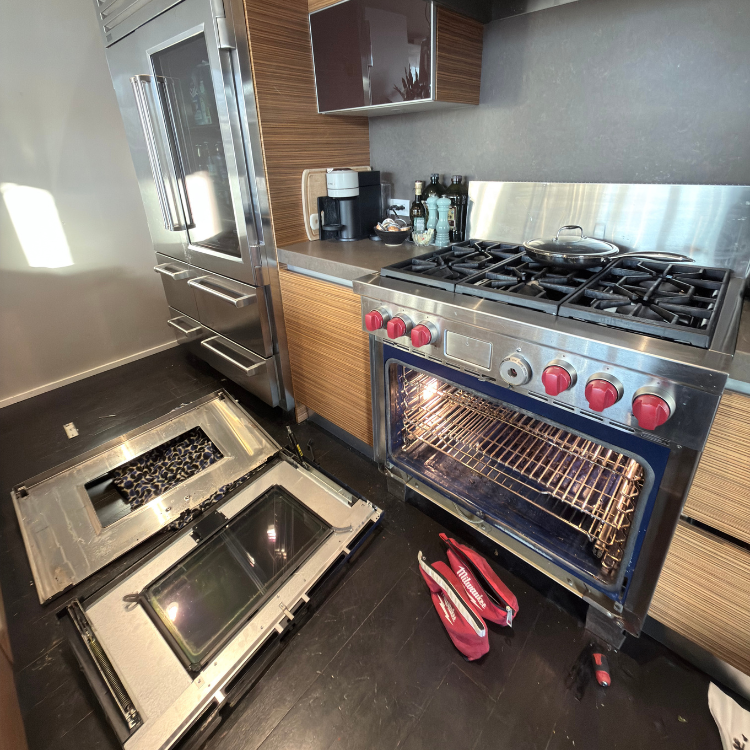
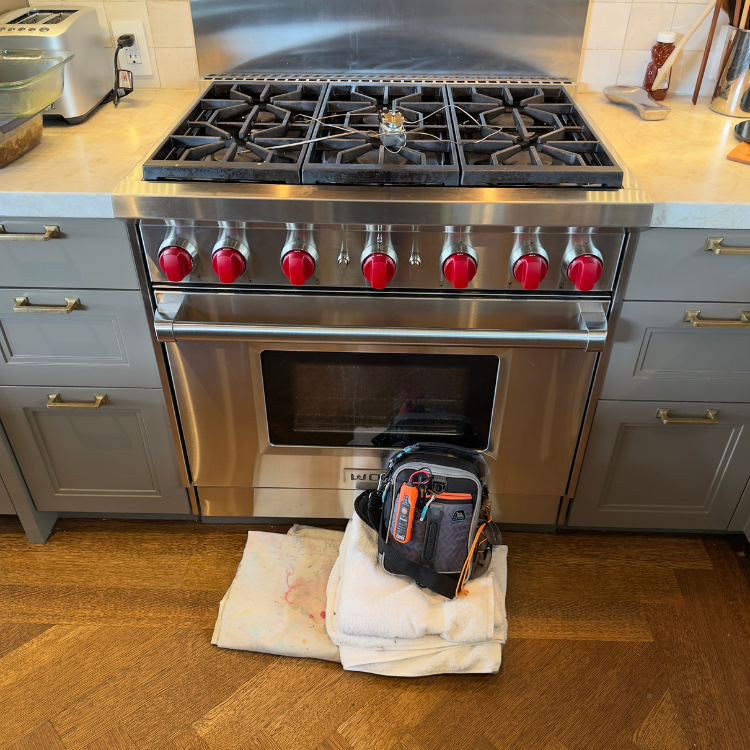
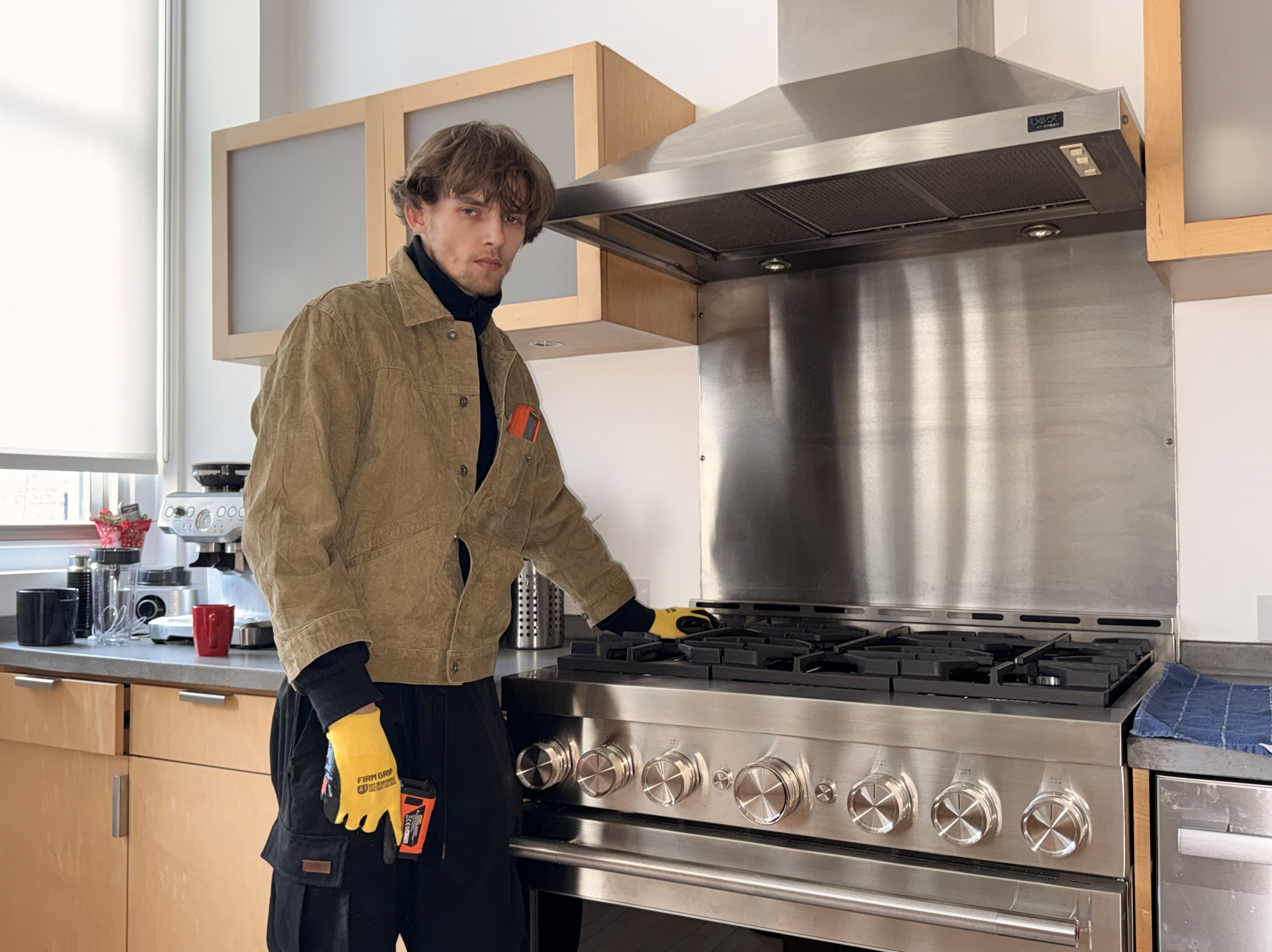
Viking Oven Not Heating Up: Quick Diagnosis (Igniter Only)
If your Viking gas oven is not heating up, the most igniter-specific check is whether the oven igniter is doing its job: either it does not energize at all (no glow/no ignition attempt) or it energizes but cannot reliably light the burner (weak igniter behavior). A failed or weak igniter can prevent the oven burner from lighting even when the controls look normal.

Safety First (Read This Before You Test Anything)
• If you smell gas:
– Do not try to light the appliance
– Do not touch electrical switches
– Do not use a phone in the building
– Ventilate if you can do so safely, leave the area, and contact your gas supplier or emergency services
• Do not attempt to operate a Viking gas oven during a power outage. Viking gas ranges use electric igniters; without power, the igniters will not work.
• Keep your face and hands away from the oven burner area during ignition attempts. Delayed ignition can produce a sudden “whoosh.”
• Do not “assist” ignition with a lighter or flame. If the igniter system is not working correctly, manual lighting is unsafe.
Fast Diagnosis: What Your Symptoms Usually Mean (Igniter Focus)
• No heat and no sign of ignition attempt (no glow, no clicking/attempt sounds):
– The igniter may not be getting power, or the igniter circuit is not active (most commonly: no electrical power to the unit)
• You see an igniter glow, but there is no flame after a long wait:
– The igniter may be weak and not drawing enough current to allow the gas safety valve to open consistently
• The oven tries repeatedly (cycling) but still does not light:
– The igniter may be borderline weak (sometimes works when cold, fails when hot), creating intermittent ignition
• You notice gas odor during attempts, then it shuts down:
– Treat as a safety stop condition; turn the oven off immediately and do not continue cycling ignition
Know What “Igniter” You Have (So You Don’t Chase the Wrong Symptom)
On Viking gas ovens/ranges, oven ignition commonly falls into one of these patterns:
• Hot-surface (glow) igniter: you should see an intense glow near the burner area before flame appears
• Spark-based ignition (less common for oven burners than surface burners): you may hear clicking and see spark activity
If your unit is a Viking electric wall oven (no gas supply at all), it does not use an oven igniter for heat. In that case, “igniter troubleshooting” is not applicable to the heating system.
Tools You May Need (No Disassembly)
• Flashlight
• Phone timer (to measure how long the igniter attempts before shutdown)
• Oven mitt (for handling racks only, not for touching internal components)
Step-by-Step Troubleshooting (Igniter Only, Safe Observations)
Use your phone timer. The timing matters for diagnosis.
What You Can Realistically Fix Without Opening the Oven (Igniter-Relevant)
Most true igniter failures are not “settings” problems. Still, these are the only safe, igniter-relevant items a homeowner can address without disassembly:
• Ensure the oven has electrical power (igniters require it)
• Avoid repeated cycling of ignition attempts (this does not “reset” a weak igniter)
• If the unit recently had heavy cleaning, allow time for any moisture to fully evaporate before testing again, then retest once
If the igniter is weak or failed, replacement and confirmation testing are the proper fix.
What Requires a Technician (Still Igniter-Only)
If your observation matches any of these, a technician-level diagnosis is appropriate:
• No igniter activity despite a powered appliance
• Igniter glows but does not light the burner within a reasonable time window
• Intermittent ignition (lights sometimes, fails other times)
• Any gas odor during ignition attempts
• A “soft glow” or inconsistent glow pattern on a hot-surface igniter
What a Pro Typically Checks (So You Know What “Good” Looks Like)
A qualified technician will typically:
• Confirm the igniter is being energized at the correct time in the cycle
• Evaluate igniter condition (cracks, damage, degraded output)
• Measure igniter electrical characteristics (commonly current draw or resistance, depending on design)
• Verify ignition timing and consistency and whether the gas safety valve opens when the igniter reaches proper operating state
• Confirm correct alignment and proximity between igniter and burner ignition point (for proper lighting)
Parts That Commonly Fix This Issue (Igniter Only)
Depending on the Viking model and which function fails:
• Bake igniter (hot-surface igniter)
• Broil igniter (hot-surface igniter or electrode, model-dependent)
• Igniter wiring/harness connectors (heat-damaged or loose connections)
• Igniter mounting hardware (if misalignment is preventing reliable ignition)
When to Stop Troubleshooting and Call for Service Immediately
• You smell gas at any point during an ignition attempt
• The igniter glows for an extended period with no flame (do not keep retrying)
• You get repeated delayed ignition events (a sudden “whoosh” after a wait)
• You are unsure whether you are observing spark vs glow ignition and cannot confirm safe operation
Preventive Tips (Igniter Life and Reliability)
• Avoid spraying cleaners into burner/ignition areas. Residue and moisture can interfere with reliable ignition.
• If you clean aggressively, allow full dry-out time before testing ignition cycles.
• If you notice ignition time is getting longer over weeks/months, treat that as early warning of an igniter weakening.
FAQ (Igniter Only)
Why does my Viking oven turn on but never heats up?
On Viking gas ovens, the most igniter-specific explanation is that the igniter is not energizing (no glow/no attempt) or it energizes but cannot reliably light the burner (weak igniter behavior). If the burner never lights, the oven will not heat.
How can I tell if my oven igniter is bad without tools?
Use safe observation. Start a Bake cycle and watch for igniter activity. If you never see ignition behavior, or you see glow/spark behavior that does not lead to flame within a reasonable time, the igniter (or its circuit) is a strong suspect.
My igniter glows, so why is there still no heat?
A hot-surface igniter can glow and still be weak. In many gas oven designs, the igniter must reach a functional operating state so the gas safety valve opens and ignition occurs. A weak igniter may glow but fail to produce reliable ignition.
How long should a Viking gas oven take to ignite after I press Bake?
There is some variation by model, but a consistent “very long wait” or repeated failure to light is not normal. If you are consistently approaching the 90-second range without ignition, stop cycling and move to service.
If Broil works but Bake doesn’t, is that still an igniter problem?
Often, yes. Many ovens use different ignition components for Bake vs Broil. A single-function failure can point to the igniter associated with that function.
Can I keep restarting the oven until it lights?
You should not. Repeated ignition attempts can create unsafe conditions, especially if you ever notice gas odor or delayed ignition events.
Is an igniter a DIY replacement?
On many models it involves disassembly, fragile components, and proper verification testing after installation. If you are not experienced with appliance repair and safe verification steps, this is best handled by a technician.
Does a power outage matter for a Viking gas oven heating?
Yes. Viking gas ranges use electric igniters; without electrical power the igniters will not work, and the manufacturer advises not operating the appliance during a power failure.
Related Resources
• Your Viking model’s Use & Care manual (search by SKU/model in Viking’s product documentation archive)
• Viking troubleshooting section entries for igniter and ignition behavior (manual-specific)
If your Viking gas oven is not heating up, the most igniter-specific check is whether the oven igniter is doing its job: either it does not energize at all (no glow/no ignition attempt) or it energizes but cannot reliably light the burner (weak igniter behavior). A failed or weak igniter can prevent the oven burner from lighting even when the controls look normal.


.avif)


.avif)