
.svg.png)
LG Front-Load Washer Mold: Why It Happens and How to Prevent It (Boot, Drawer, Drum)
Volt & Vector Appliance Repair
.avif)
Front-load washers clean well, but they also seal tightly, run cooler cycles, and hold a few ounces of water in places you don’t see. That combination feeds biofilm in the door boot folds, detergent drawer, and drain path—showing up as black spots, slime, or a musty smell. The fix is mostly habit: remove moisture and residue after every load, then do a consistent monthly deep clean using the washer’s cleaning cycle.
Front-load LG washers trap moisture in the door gasket and dispenser, letting biofilm form. Use a simple after-wash routine plus monthly “Tub Clean” to stop mold and odors.

+1 (332) 333-1709
Our service manager handles all calls personally. For short questions, text works best.
Google Business Profile
See live reviews, photos, and recent jobs. Booked with us? Please leave a review, thank you!
180-Days Warranty
Every completed repair includes a 180-day parts & labor warranty. OEM parts only. Warranty service is prioritized.
Local Service
Built by real NYC technicians - not marketers. Volt & Vector is where clean design meets certified service.

LG Front-Load Washer Mold: Why It Happens and How to Prevent It (Boot, Drawer, Drum)
Reviewed by Lead Tech
Vladis B.
Updated:
February 7, 2026
LG front-load washers get mold because moisture and detergent residue stay trapped in the door gasket folds, dispenser drawer, and drum—especially with cool/quick cycles and too much detergent. Prevent it by drying the gasket area after use, leaving the door and dispenser cracked open for airflow, using the correct amount of HE detergent, and running the washer’s “Tub Clean/Drum Clean” routine on schedule.
What’s really happening (mechanisms, not myths)
Front-loaders are designed to be water-tight at the door, which also means they don’t “air out” on their own. After a cycle, small amounts of water remain in:
The door boot (rubber gasket) folds and weep channels
The detergent/softener drawer and its housing
The bottom of the outer tub and pump/hoses
Any lint/soil residue that becomes a thin film (“biofilm”)
Biofilm + constant dampness + low wash temperatures = mold/mildew growth and odor. Over-dosing detergent worsens it because extra surfactant and softener residue becomes food for biofilm and also traps moisture.
Ranked action plan (Low effort → Medium → High)
Low effort (highest ROI, daily habits)
1) Wipe the door gasket and glass after the last load of the day
Why it works: Removes the wet layer that mold needs; the boot folds are the #1 growth zone.
Tools/materials: Microfiber cloth or paper towel.
Common mistakes: Only wiping the visible lip and ignoring the lower folds; leaving small items (socks, hair ties) trapped in the boot.
2) Leave the door slightly ajar (and the detergent drawer slightly open)
Why it works: Airflow breaks the moisture cycle inside the drum and drawer housing.
Tools/materials: None.
Common mistakes: Closing the door “to look tidy,” especially overnight; trapping humidity in a laundry closet.
3) Use less detergent than you think (HE only), and minimize fabric softener
Why it works: Less residue = less “food” for biofilm and fewer films that hold moisture.
Tools/materials: Measuring cup; HE detergent.
Common mistakes: Filling to the top line by default; doubling detergent for “dirty loads” (use soil setting and proper cycle instead).
Medium effort (weekly/monthly maintenance)
Run a hot maintenance cycle (LG “Tub Clean/Drum Clean”) on schedule
Why it works: Heat + chemistry breaks down biofilm in the tub and hidden water paths.
Tools/materials: Washer cleaning cycle; a cleaner approved by the manufacturer (often chlorine bleach or a washer-cleaning product per the manual).
Common mistakes: Running Tub Clean with laundry inside; using random acids or mixing cleaners; skipping it because the washer “looks clean.”
Clean the detergent drawer and the cavity behind it
Why it works: Drawer slime is a major odor source and can re-seed the drum.
Tools/materials: Warm water, soft brush/toothbrush, mild soap; towel.
Common mistakes: Rinsing only the drawer and not the housing/nozzle area; reinstalling the drawer wet and closed.
Check and clean the drain pump filter/coin trap (if your model has one)
Why it works: Debris in the filter holds water and bacteria; slow draining increases standing water time.
Tools/materials: Shallow pan, towels, gloves.
Common mistakes: Opening the filter without towels/pan; overtightening the cap; ignoring recurring lint/sludge (often points to usage or drain issues).
High effort (when mold keeps coming back)
Deep-clean the door boot folds and weep channels
Why it works: Surface wiping won’t remove embedded slime in folds and drain paths.
Tools/materials: Gloves, soft brush, manufacturer-approved cleaning method (often a diluted bleach solution per guidance), good ventilation.
Common mistakes: Using abrasive pads that damage rubber; pouring strong chemicals directly into folds; not rinsing/wiping dry afterward.
Fix ventilation and drainage conditions
Why it works: If the washer lives in a tight closet with no airflow, or if it drains slowly, you’re fighting physics.
Tools/materials: Dehumidifier or improved airflow; verify standpipe height and drain performance per install requirements.
Common mistakes: Pinched drain hose; improper standpipe configuration; leaving wet laundry sitting for hours (humidity spikes inside the drum).
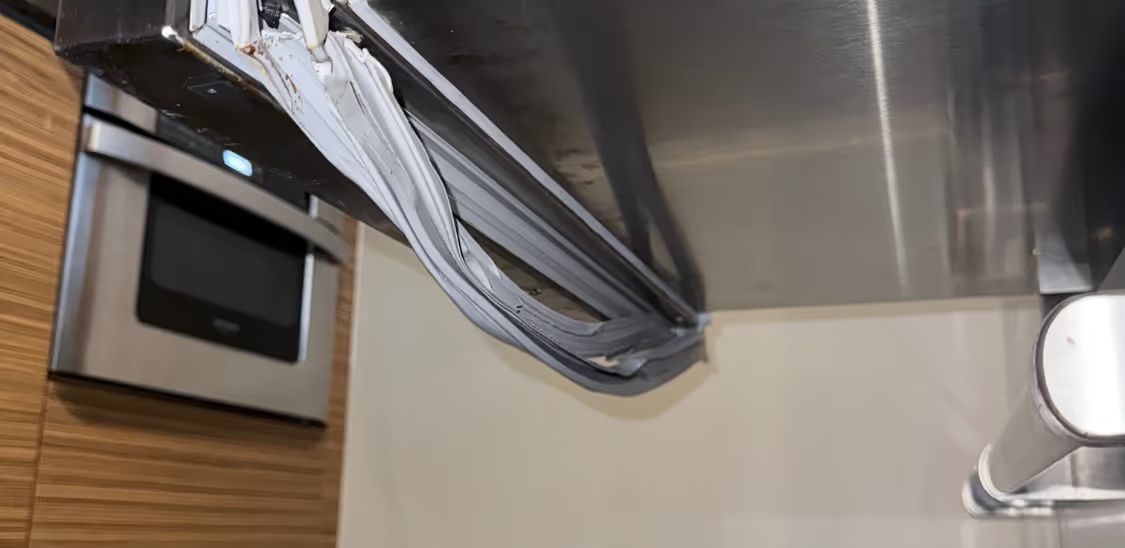
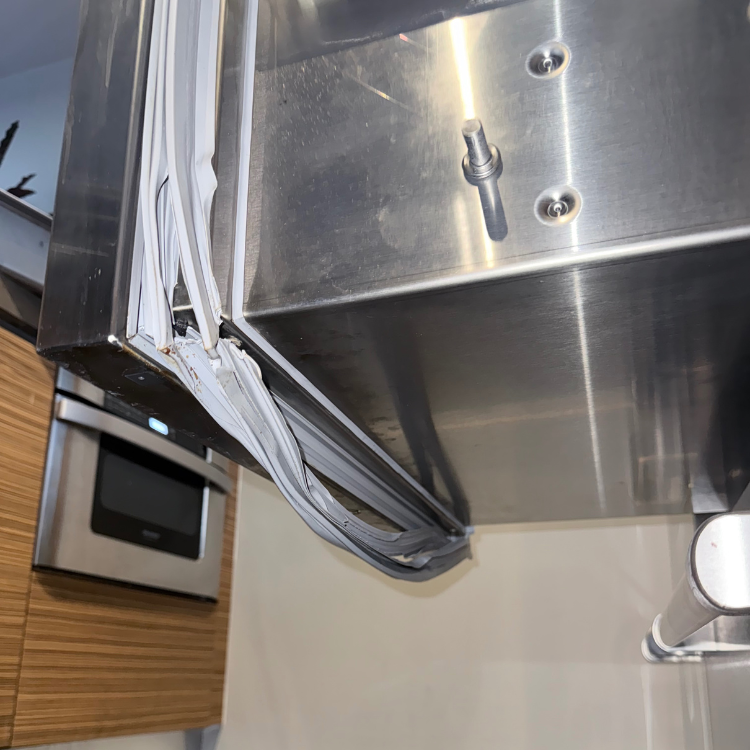
Replace a damaged or permanently stained door boot (last resort)
Why it works: If the rubber is cracked, torn, or impregnated with mold, it can continuously re-odor.
Tools/materials: OEM gasket, proper tools; typically a pro job due to spring clamps and leak risk.
Common mistakes: DIY clamp work that causes leaks; replacing the boot without fixing the underlying moisture/residue habit.
Stop DIY and call a pro if…
You have water leaking from the front door, not just odor or spots.
The washer won’t drain, drains very slowly, or throws repeated drain/pump errors.
You see heavy black growth that returns within 1–2 weeks despite correct cleaning habits.
There’s a strong sewer smell (can indicate drain/standpipe issues, siphoning, or trap problems).
The machine is in a rental/multi-unit setup and you suspect a building drain issue.
Anyone in the home has severe mold allergies/asthma and symptoms are being triggered.
Maintenance cadence (text form)
Weekly
Wipe door boot folds and door glass after the last load
Leave door and detergent drawer cracked open between uses
Monthly
Run “Tub Clean/Drum Clean” (hot maintenance cycle)
Remove and wash the detergent drawer; clean the drawer cavity
Quarterly
Clean the drain pump filter/coin trap (if equipped)
Inspect the boot for trapped debris, tears, or persistent slime in folds
Annual
Verify drain hose routing and standpipe condition (no kinks, proper height)
If odor persists: check for slow-drain conditions, venting, or mechanical issues
FAQ
1) Why do front-load washers mold more than top-loaders?
They seal tightly and retain moisture in gasket folds and drawers; top-loaders dry out faster because they’re not door-gasket sealed.
2) Is the smell “mold” or “sewer gas”?
Musty/earthy usually points to biofilm/mold. A sharp sewer smell can indicate drain/standpipe or trap/vent issues.
3) Will hotter cycles prevent mold?
Yes, using occasional hot cycles helps, but it won’t replace drying habits and correct detergent dosing.
4) Is too much detergent actually bad?
Yes. Over-dosing leaves residue that feeds biofilm and holds moisture, causing odor and buildup.
5) Should I use bleach in an LG front-load washer?
Many manufacturers allow it in specific ways (often for maintenance cycles) but you should follow the exact manual instructions and never mix chemicals.
6) What’s the main mold hotspot on LG front-load models?
The lower folds of the door boot/gasket and the detergent drawer housing.
7) Does leaving wet laundry in the drum cause mold?
It can. It raises humidity and gives biofilm more time to grow, especially overnight.
8) Why does mold come back right after I clean?
Common causes: door kept closed, drawer closed, too much detergent/softener, mostly cold cycles, or a slow-drain/filter issue.
9) Can I prevent mold without special cleaners?
Mostly yes: wipe/dry + airflow + correct detergent amount + monthly hot maintenance cycle.
10) When is boot replacement actually necessary?
If the gasket is damaged, leaking, or permanently impregnated with odor despite proper prevention and deep cleaning.
+1 (332) 333-1709
Our service manager handles all calls personally. For short questions, text works best.
Google Business Profile
See live reviews, photos, and recent jobs. Booked with us? Please leave a review, thank you!
180-Days Warranty
Every completed repair includes a 180-day parts & labor warranty. OEM parts only. Warranty service is prioritized.
Local Service
Built by real NYC technicians - not marketers. Volt & Vector is where clean design meets certified service.
Book your service





9:00 AM – 6:00 PM




.png)


.avif)


The diagnostic fee credit applies to the same job when you approve the repair. You will receive diagnostic results and an estimate before any repair begins.
Speak directly with a Volt & Vector dispatcher
voltnvector@gmail.com
Send your appliance details and preferred time window

Our Work





.avif)