
Dryer Takes Too Long and Shuts Off: What It Means
Separate normal sensor completion from airflow overheating, unstable power, door interruption, load problems, or motor protection when a dryer runs long and stops.
Separate normal sensor completion from airflow overheating, unstable power, door interruption, load problems, or motor protection when a dryer runs long and stops.
A dryer that takes too long and then shuts off needs its stop timing and final load temperature documented before any part is guessed. A normal sensor end, a cool power interruption, and a hot shutdown after restricted airflow are different paths even though all leave damp clothes. Stop using the dryer for abnormal heat, weak or absent exhaust, burning or gas odor, a hot plug, repeated breaker trips, or a machine that restarts only after cooling.
Do not keep adding time after the dryer shuts down hot. Repeated restarts can hide an airflow, electrical, motor, or thermal-protection problem while increasing heat and lint exposure.
Keep the dryer off when:
If gas odor is present, leave the area and call 911 and the gas utility from a safe location. Do not operate electrical devices inside.
The combination matters: this is not only a long-dry complaint and not only a stop complaint. The dryer may be adjusting a sensor estimate, ending because it believes the load is dry, losing electrical supply, detecting an open door, protecting an overheated motor, or interrupting heat because airflow or temperature is abnormal.
Use the Stop Timing + Load Temperature matrix:
Heat alone does not dry clothes. Air must move through the load and carry moisture into a vent or through the dryer’s ventless condensate path. A hot, damp result can therefore indicate poor moisture removal rather than weak heat.
The exact owner manual is the source for the selected cycle's intended behavior, lint-filter care, ventless maintenance points, and displayed warnings. Use it to interpret observations, not to convert one symptom into an unconfirmed part diagnosis.
Low effort: identify the exact kind of stop
Why it works: A completed cycle, paused cycle, dead control, open-door response, and protective stop leave different evidence. Approximate timing also shows whether the failure repeats only after heat builds.
Tools/materials: Phone clock, camera, and notes.
What to record:
Common mistakes:
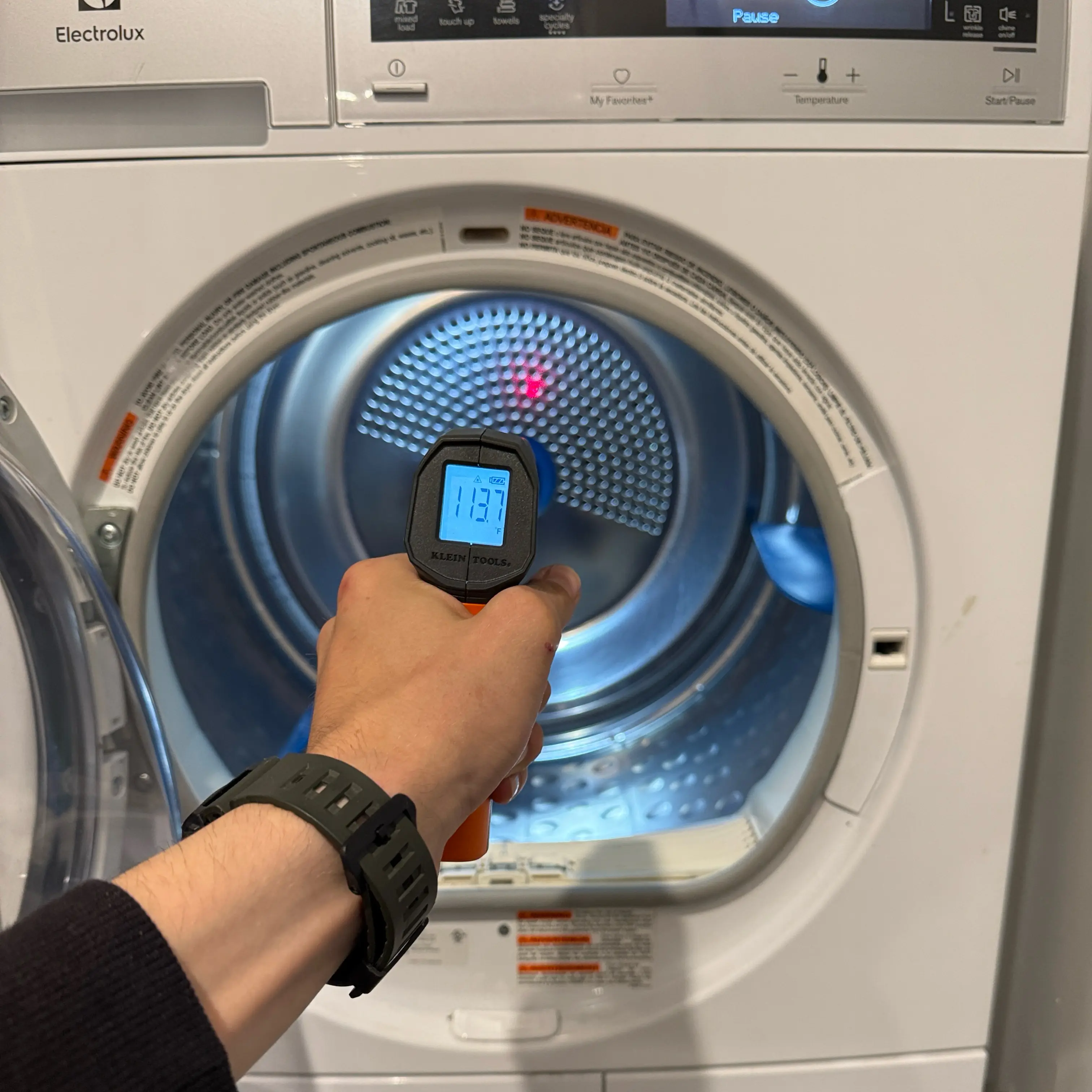
Why it works: Cold-damp points toward missing heat or early interruption; warm-damp points toward sensing, load, or moisture removal; excessively hot-damp raises an airflow and overheat concern.
Tools/materials: Notes and careful hand observation of fabric only.
What to do:
Common mistakes:
Why it works: Mixed fabrics, one bulky item, a very small load, overload, dryness level, or an air/eco setting can produce long estimates or early sensor endings without a hardware fault. The model manual identifies which cycles use moisture sensing and which options intentionally change time or temperature.
Tools/materials: Care labels and exact owner manual.
What to do:
Common mistakes:
Medium effort: check airflow and supply safely
Why it works: A restricted screen reduces airflow at the first owner-accessible point. Residue can remain even when loose lint was removed, and the manual defines whether rinsing or another cleaning method is allowed for that filter.
Tools/materials: Soft brush, warm water when approved, and complete drying time.
What to do:
Common mistakes:
Why it works: USFA guidance identifies crushed, damaged, or restricted venting and an exterior covering that does not open as safety concerns. A hidden route can remain blocked after the visible connector is clean.
Tools/materials: Flashlight and phone camera.
What to do:
Common mistakes:
Why it works: A loose door, damaged latch area, unstable plug, or supply interruption can stop the cycle without the same heat pattern as a vent restriction.
Tools/materials: Flashlight and dry visual access.
What to do:
Common mistakes:
Why it works: In an apartment or older home, a dryer may lose power because of a receptacle, breaker, shared electrical condition, gas interruption, or building work rather than an internal control decision. The display state and whether other affected equipment changed at the same time help assign the next trade without pretending to prove the cause.
Tools/materials: Breaker label, building notice, utility contact information, and notes.
What to do:
Common mistakes:
High effort: preserve the failure before service
Why it works: The relationship between elapsed time, cabinet temperature, restart delay, airflow, and display state helps separate supply interruption, sensing, door, airflow, motor protection, thermal safety, and control behavior.
Tools/materials: Model/serial photo, one safe observation record, vent description, and service history.
What to record:
Common mistakes:
The diagnostic visit should prove the installed airflow route, actual heat pattern, supply stability, drum and blower operation, motor temperature behavior, door input, sensor response, thermal protection, wiring, and control output.
It may be ending a sensor cycle, losing power, seeing an open door, overheating, or stopping through motor/thermal protection. The display state, stop time, load temperature, and restart delay separate the paths.
No. Sensor cycles may revise remaining time while continuing to run. Record whether the drum and controls actually stop.
That pattern can indicate heat-related motor or thermal protection, often with airflow or internal causes. Do not keep using cooldown as a reset strategy.
Restricted airflow can increase heat and contribute to protective shutdown. A clean lint screen does not prove the concealed duct or exterior termination is clear.
Heat is present, but moisture may not be leaving efficiently because of airflow, load, sensing, washer extraction, or a ventless condensate path.
An overloaded drum restricts tumbling and airflow and can change sensor contact. Correct the load, but stop if abnormal heat or shutdown returns.
One controlled comparison may help when the dryer is otherwise safe. Do not use timed cycles to override repeated hot shutdowns, weak airflow, or electrical symptoms.
No. Motor protection is one possibility, but airflow, thermal devices, supply, drum load, wiring, and controls can create similar behavior.
Laundry entering the dryer dripping wet increases the moisture burden and time. It may expose a dryer limitation without proving the dryer caused the original problem.
Provide model/serial, platform, cycle, load, elapsed stop time, display state, temperature result, restart delay, airflow findings, vent scope, recent work, and exact warnings.