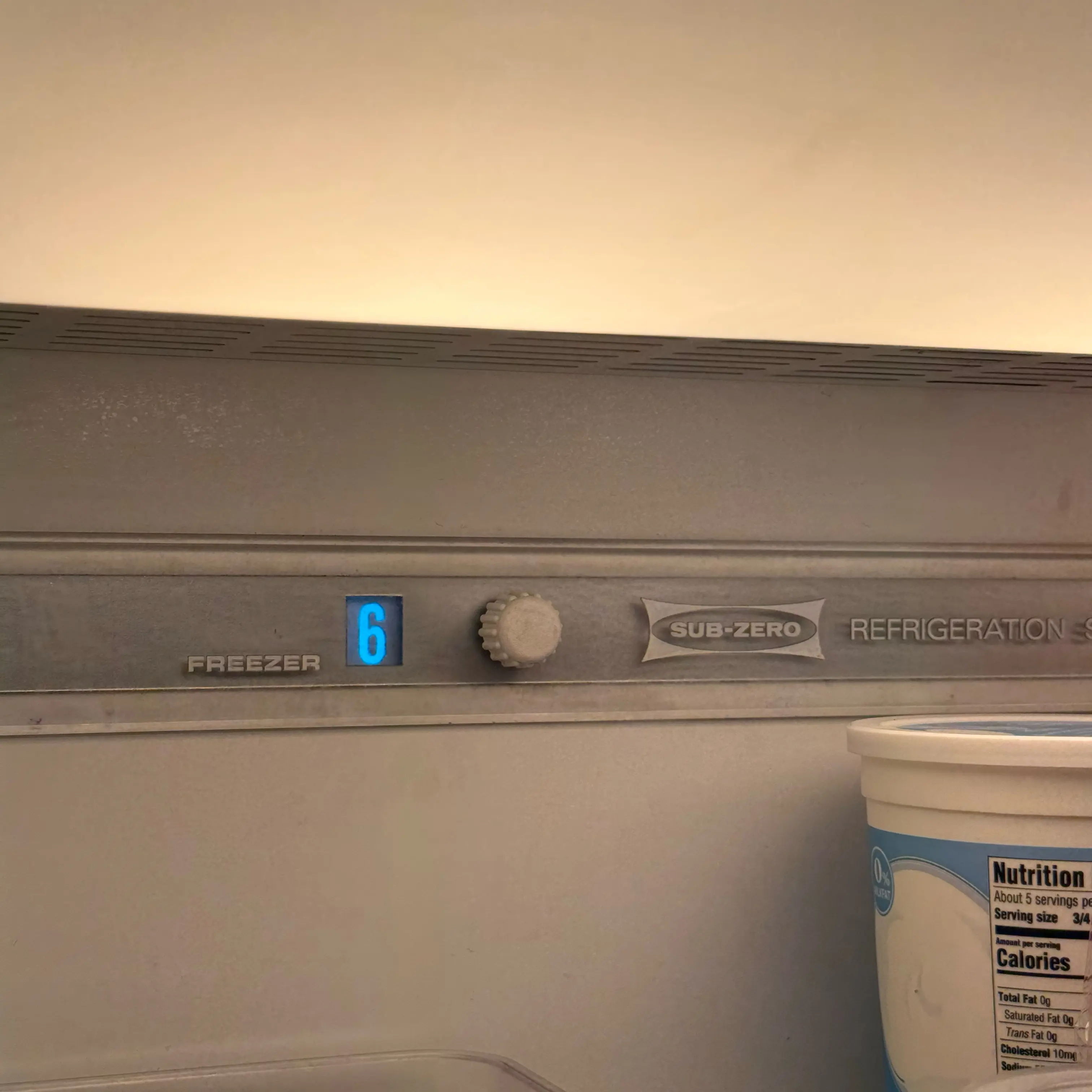
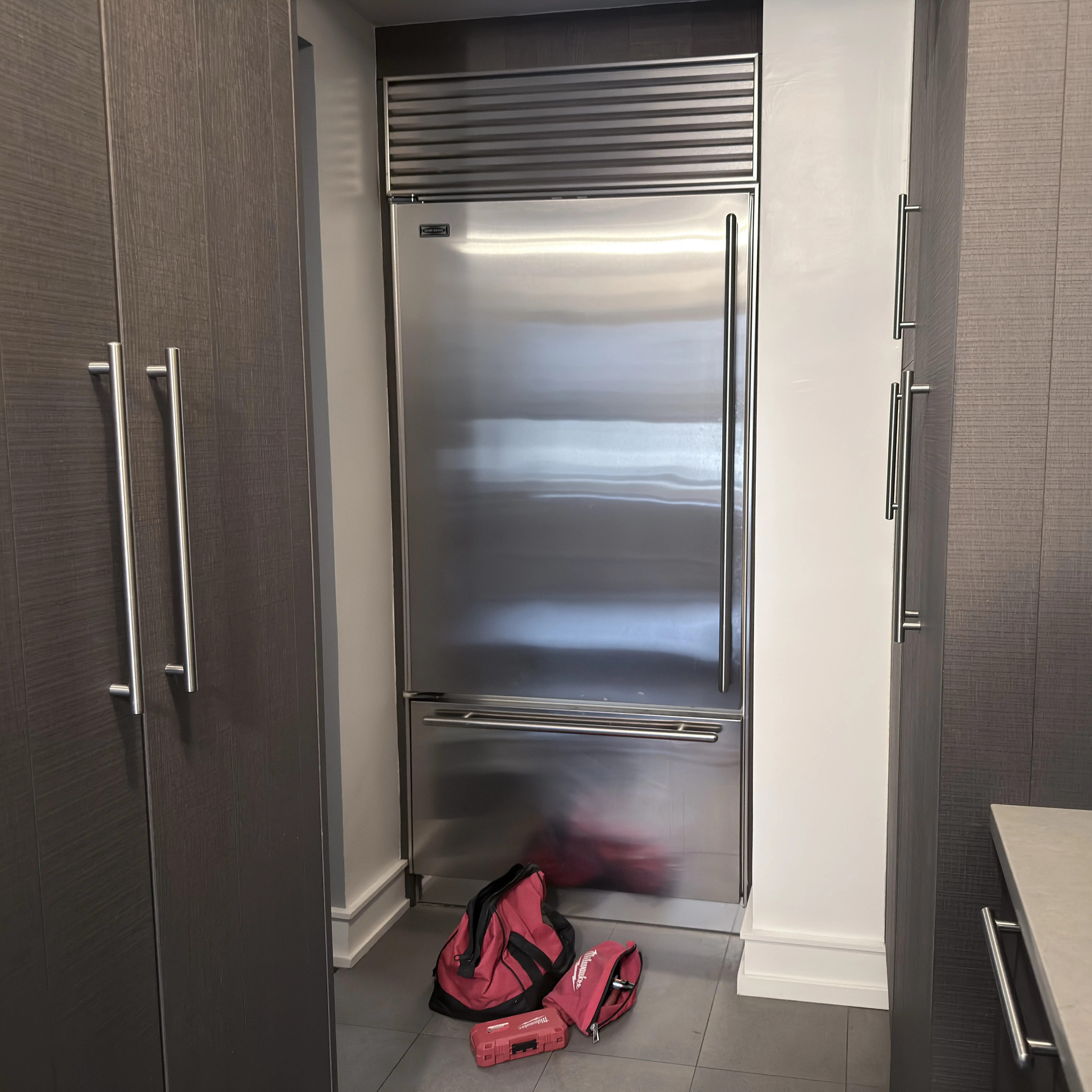
What’s really happening
Water near a refrigerator can come from pressurized household supply water, ice-maker or dispenser water, melting frost, condensation caused by warm humid air, a defrost-water path, a spilled container, or an unrelated sink and floor source. The puddle’s final location is not always the source; water follows cabinet seams, tubing, flooring slope, and gravity.
Before wiping everything dry, record the first wet area and timing:
- Water appears at or below the dispenser after use: trapped drips, air after filter work, ice in the chute, or a dispenser-system issue is possible.
- Water begins near the filter housing after a change: installation, compatibility, filter damage, or housing condition moves higher.
- Water appears under the ice maker or after a fill sound: stop ice production and address the water-fed path.
- Water collects under crisper drawers: spilled food, condensation, or an internal drainage condition may be involved.
- Water forms around the door with frost or sweating: door closure, gasket, humid-air entry, or temperature conditions matter.
- Water appears on the floor behind or beneath the unit independent of door use: supply plumbing, drain-pan area, or another hidden path requires inspection.
- A one-time puddle follows a door left open or power outage: melting ice or frost may explain the event, but recurrence still needs a source.
Do not name a clogged defrost drain from the puddle alone. Do not pull the refrigerator forward to look behind it if it is built in, connected by a short water line, on a soft floor, or difficult to control.
Water and electrical safety gate
Keep people away from the wet area. If water approaches the plug, outlet, power strip, or exposed wiring, do not touch the plug and do not stand in the puddle. Shut off the correct circuit from a dry, safely accessible panel and close the known refrigerator water valve if it can be reached without moving the appliance.
For a large or continuing apartment leak, notify building staff promptly. Protect flooring and the unit below, but do not conceal active leakage with towels and continue using the dispenser or ice maker.
Ranked action plan
Low effort: contain and map the leak
Dry the visible water and create source markers
Why it works: A clean, dry surface makes the next drop traceable and separates a continuous leak from old water spreading across the floor.
Tools/materials: Towels, shallow tray, flashlight, painter’s tape, and phone camera.
What to do:
- Photograph the original wet pattern.
- Dry the floor, door sill, filter area, dispenser recess, and accessible interior surfaces.
- Mark the puddle edge and note the time.
- Place dry paper towels at separate safe locations to show where water first returns.
- Keep the refrigerator closed and do not run the dispenser during the initial observation.
Common mistakes:
- Placing towels where they block ventilation.
- covering the whole area so the source cannot be distinguished.
- tilting the refrigerator to make water run out.
- ignoring water that has reached wood seams or the unit below.
Check for spills, open containers, and a door gap
Why it works: A leaking container or door left ajar can create a one-time interior or floor puddle without a failed water component.
Tools/materials: Flashlight and cooler for food.
What to do:
- Inspect bottles, pitchers, produce bags, and ice containers.
- Confirm shelves and drawers sit correctly.
- Check that neither door is held open by food or a bin.
- Inspect the visible gasket for residue, folding, tearing, frost, or a gap.
- Move affected perishables to safe refrigeration if temperature has risen.
Common mistakes:
- Assuming clear water cannot be a food-container spill.
- heating or stretching the gasket.
- lowering the temperature to stop condensation without checking the door.
- leaving food in a warming compartment while tracing water.
Separate dispenser drips from a cabinet leak
Why it works: A few drops in the dispenser tray after use are different from continuous water running behind the recess or down the door.
Tools/materials: Dry cloth and exact model guide.
What to do:
- Dry the dispenser tray and chute area.
- Note whether water returns without dispenser use.
- Check for visible ice or frost preventing the chute flap from closing.
- If a filter was just changed, follow only the model’s documented air-purging procedure.
- Stop dispenser use if flow continues or water emerges from behind the trim.
Common mistakes:
- Pouring hot water into the chute.
- removing dispenser trim.
- repeatedly dispensing to purge air while water leaks elsewhere.
- treating the drip tray as a drain; on many models it only catches small drips.
Medium effort: inspect owner-accessible water and frost clues
Inspect the filter installation
Why it works: Frigidaire specifically identifies recent filter installation, seating, cracks, and compatibility as relevant to interior leaks on filtered models.
Tools/materials: Correct filter information, towel, and flashlight.
What to do:
- Photograph the installed filter and surrounding wet pattern.
- Confirm the filter matches the exact refrigerator model.
- Check whether it is fully seated and locked by the documented method.
- Inspect the owner-removable filter for visible cracks or damaged seals.
- Reinstall or replace only by the exact procedure, then watch closely for water.
Common mistakes:
- Forcing a filter that does not lock normally.
- buying by appearance alone.
- using pliers or lubricant on the filter.
- removing a filter while water is actively spraying.
- assuming a new filter cannot be defective or incompatible.
Turn off ice production when leakage follows an ice-maker fill
Why it works: Disabling the ice maker can prevent repeated water calls while preserving normal refrigeration, depending on the model.
Tools/materials: Exact operating manual and phone camera.
What to do:
- Photograph the ice area, cubes, and visible frost or water.
- Use the documented control to switch the ice maker off.
- Empty only loose ice and reseat the bin.
- Observe whether new water appears without another fill command.
- Close the household water supply if leakage continues.
Common mistakes:
- forcing a shutoff arm.
- applying heat to a frozen fill area.
- reaching into the mechanism.
- assuming the ice maker itself is the only possible source.
Observe frost, interior water, and the door pattern
Why it works: Water under drawers or near a door may come from melting frost or condensation rather than a pressurized tube.
Tools/materials: Flashlight and photos.
What to do:
- Photograph frost or ice before cleaning loose water.
- Note whether water occurs after defrost-like operating periods, door openings, or humid weather.
- Keep food and liners away from visible air and drain areas.
- Clean the gasket and cabinet contact surface by the manual’s method.
- Leave bonded ice and interior panels in place.
Common mistakes:
- probing a drain hole with wire.
- pouring boiling water or chemicals into an interior opening.
- removing a freezer panel.
- diagnosing a drain from under-drawer water without excluding a spill or door condition.
High effort: isolate supply, installation, or internal leakage
Inspect only accessible water connections
Why it works: A wet shutoff, connection, or visible supply section can identify a pressurized source, but moving the appliance can worsen a brittle or short line.
Tools/materials: Flashlight, dry paper towel, and installation documentation.
What to do:
- Keep the water supply closed during inspection if an active leak is suspected.
- Check only fittings reachable without pulling the refrigerator.
- Blot rather than tighten to determine whether fresh water returns.
- Record corrosion, cracking, line material, and cabinet damage.
- Arrange plumbing or appliance access based on which side of the shutoff leaks.
Common mistakes:
- blindly tightening compression or push-connect fittings.
- moving the refrigerator while water remains on.
- reusing damaged tubing or seals.
- opening a shared building valve without authorization.
Prepare a time-and-location diagnosis
Why it works: A technician can trace a leak more efficiently when the trigger and first wet point are preserved.
Tools/materials: Model/serial, photos, video, towels showing source, filter details, and event log.
Report:
- first wet location and puddle direction;
- continuous, dispenser-triggered, ice-fill-triggered, or intermittent timing;
- recent filter, plumbing, power, door, or cleaning events;
- frost, temperature, and food condition;
- whether closing the water supply stopped the leak;
- whether leakage continues with ice maker and dispenser unused.
Common mistakes:
- reporting only “water underneath.”
- replacing a filter, valve, ice maker, or drain part without tracing the path.
- continuing to produce ice to recreate a damaging leak.
- discarding a cracked filter or wet connection photo.
Stop DIY and call a professional if…
- Water is actively flowing or reaches electricity, cabinetry, flooring, or another unit.
- The refrigerator must be moved, tipped, or removed from a built-in opening.
- A filter will not seat, is cracked, or leaks after correct installation.
- Water continues with the ice maker off and dispenser unused.
- Frost or interior water returns after door and loading conditions are corrected.
- Food temperature is rising or a cooling warning appears.
- A panel, internal drain, valve, tubing, dispenser, or ice-maker mechanism requires access.
For smoke, arcing, or fire, leave and call 911. For an uncontrolled water leak, close the appropriate shutoff only if known and safely accessible, then contact building maintenance, a plumber, or appliance service according to the source side.
Maintenance cadence
Weekly
- Check door closure, dispenser drips, and new water around the filter or ice bin.
- Wipe spills before they migrate under drawers.
Monthly
- Clean the visible gasket and dispenser recess by the approved method.
- Inspect accessible floor and cabinet edges for swelling or recurring dampness.
Quarterly
- Review filter status and inspect the owner-accessible filter area during replacement or service.
- Check the visible water shutoff and supply path without moving the refrigerator.
Annual
- Review installation, water-line condition, shutoff access, door alignment, and floor protection.
- Keep model, filter, installation, and leak-response information available.
FAQ
Why is my Frigidaire refrigerator leaking water onto the floor?
Possible sources include the supply line, filter, dispenser, ice maker, melting frost, condensation, or an internal drain path. Trace the first wet point before choosing a repair.
Why is there water under the crisper drawers?
A spill, condensation, or internal drainage condition can collect there. Check containers, door closure, frost, and recurrence; do not probe hidden drains.
Can a new water filter cause a leak?
Yes. An incorrect, cracked, or incompletely seated filter can leak. Confirm compatibility and installation with the exact model guide.
Why does the dispenser drip after a filter change?
Air introduced during filter work may contribute to temporary sputtering or drips. Follow the model’s purging procedure, but stop if water runs continuously or from behind the dispenser.
Should I shut off the refrigerator water line?
Close the known dedicated shutoff for an active supply-fed leak if it is safely accessible without moving the appliance. Do not guess at building valves.
Can I use hot water to clear a frozen refrigerator drain?
Do not pour hot water or chemicals into an unidentified opening. Internal drain access and thawing methods are model-specific and can cause damage or electrical exposure.
Why does water appear after the door was left open?
Warm humid air can create frost and condensation that later melts. Confirm door closure and temperature, then monitor for recurrence.
Is the dispenser tray supposed to drain?
Do not assume it does. Many trays are intended only for small drips and need to be emptied and cleaned.
Can I pull the refrigerator out to find the leak?
Not if it is built in, heavy, on a vulnerable floor, or connected by an unknown or short water line. Controlled access may require an installer or technician.
What should I photograph?
Capture the first wet area, puddle direction, filter, dispenser, ice maker, frost, door gasket, model/serial, and any accessible wet connection.
Sources you would cite
- Frigidaire, “Refrigerators — Water Leaks”
- Frigidaire owner’s guide for the exact model: water filter, dispenser, ice maker, door, temperature, defrost, and troubleshooting sections.
- Frigidaire installation instructions for the exact model: household water supply, tubing, shutoff, leveling, anti-tip, clearances, and leak checks.
- U.S. Food and Drug Administration, refrigeration failure and food-safety guidance.
- U.S. Consumer Product Safety Commission, electrical safety guidance.
- Building or plumbing authority guidance for water shutoff and multi-unit leak response.

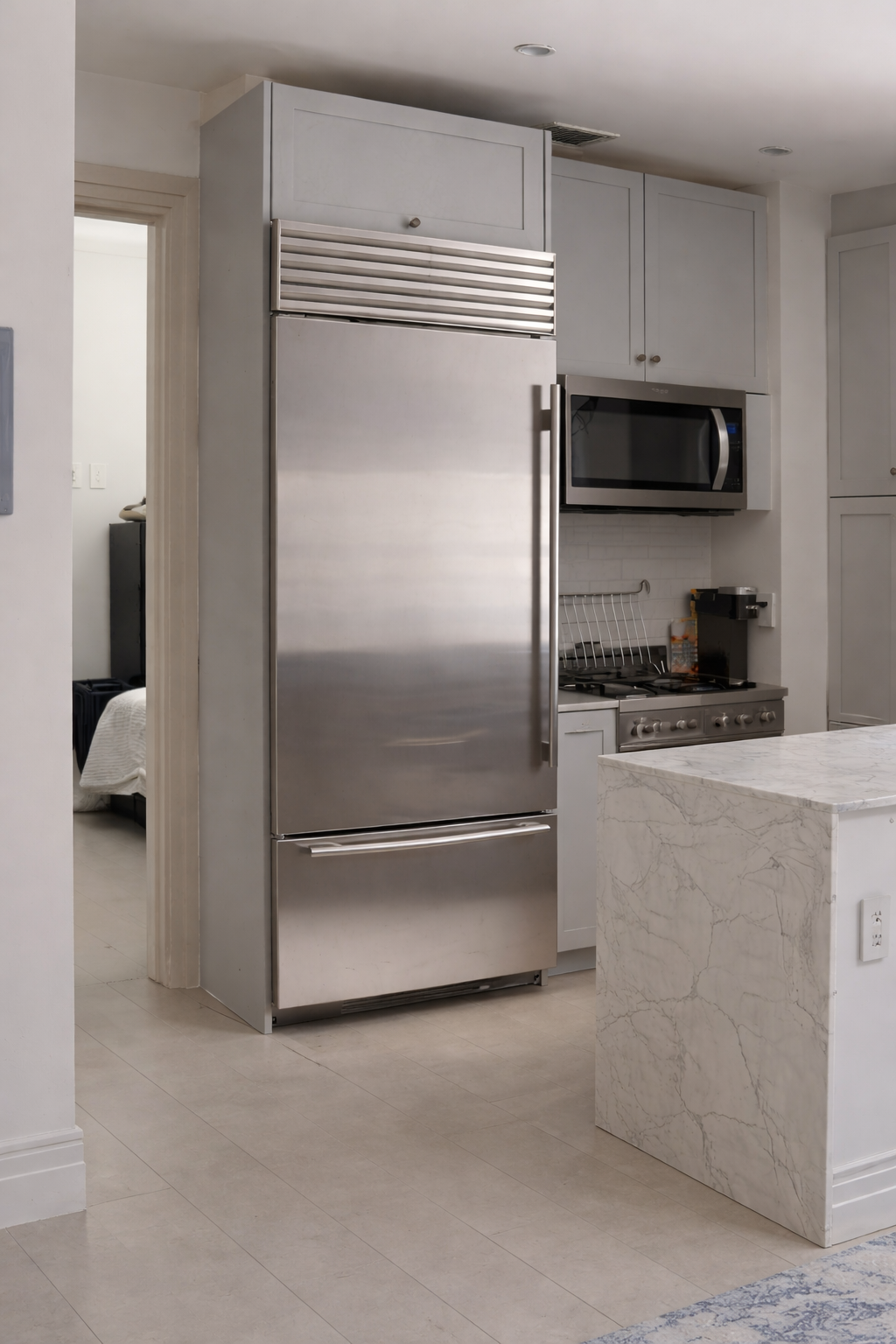

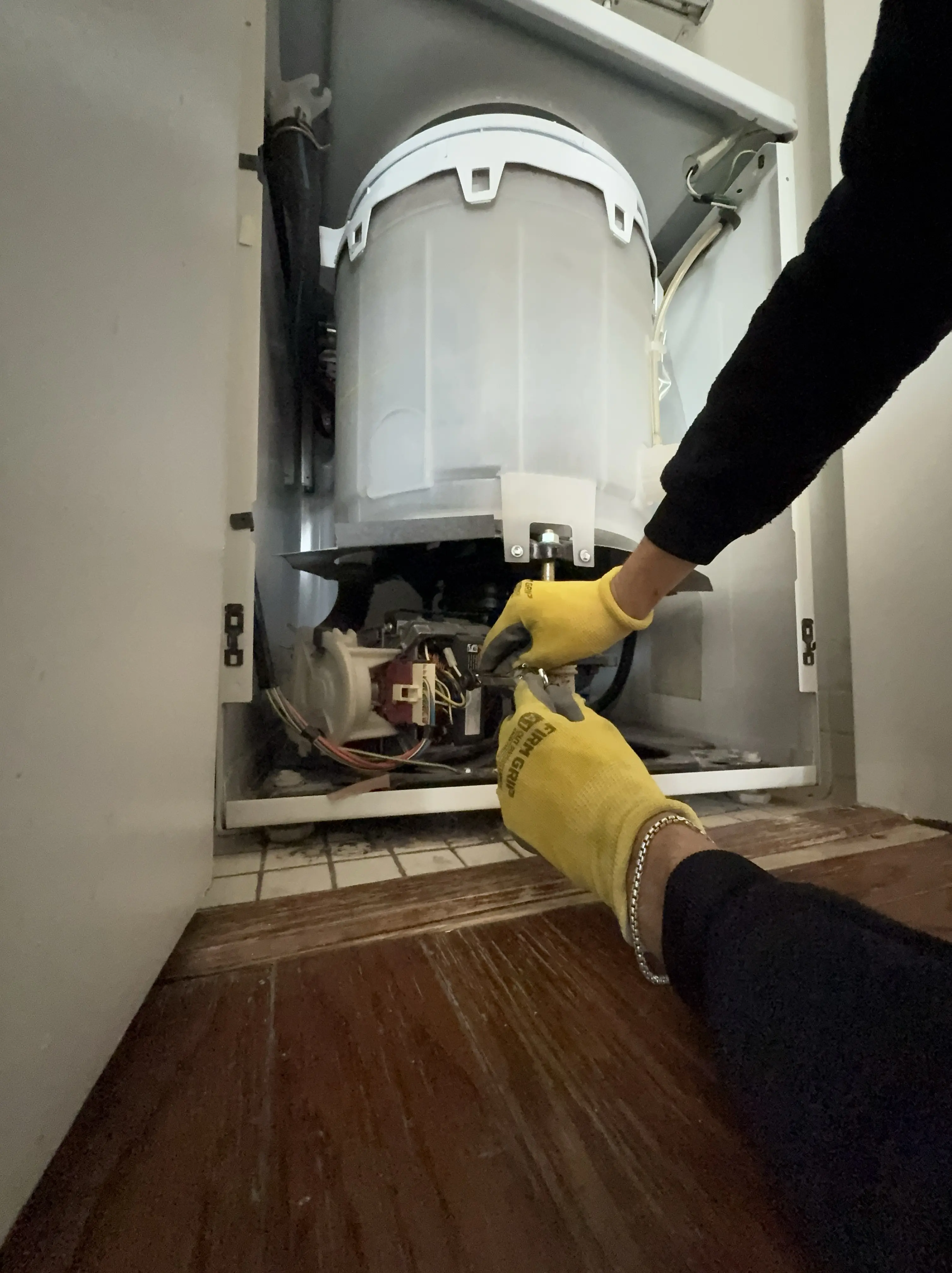
.jpeg)