


LG Washer Won’t Drain: OE and Safe Checks
For an LG washer with standing water or OE, check suds, the accessible drain hose, and the exact model’s residual-water and filter procedure.
For an LG washer with standing water or OE, check suds, the accessible drain hose, and the exact model’s residual-water and filter procedure.
If an LG washer will not drain or shows OE, stop restarting it and check for excess suds and an accessible kinked or compressed drain hose. On a front-load model with documented filter access, let hot water cool, protect the floor, drain residual water by the exact manual procedure, and clean and reseat the pump filter. Stop for an active leak, water near electricity, a locked full tub you cannot drain safely, a humming or grinding pump, or a code that returns after one controlled check.
The washer has to move used water from the tub through the pump and drain hose into the household standpipe or sink connection within the expected part of the cycle. LG uses OE on many models when the control does not see the water level drop as expected. The code identifies a failed result, not a specific pump failure.
The most useful evidence is what remains and what the washer did:
Front-load and top-load LG washers do not share one pump-filter procedure. Many front-load models provide a lower access door, residual-water hose, and filter. A top-load model may not provide comparable owner access. Compact and WashTower configurations also vary. Identify the exact model before opening anything.
Do not open a pump filter while the tub contains hot wash water. Let the water cool and follow the model’s controlled residual-drain instructions with towels and a shallow container. A full tub can release far more water than the filter recess holds.
If water is near the outlet, cord, pedestal wiring, or another appliance, do not stand in it or touch the plug. Switch off the correct circuit from a dry location and close accessible supply valves if water is still entering. Notify building staff promptly for an uncontrolled apartment leak.
Low effort: stop repeated cycles and preserve evidence
Why it works: OE, a displayed time, door-lock state, water level, and pump sound distinguish a drain failure from a spin or control-selection issue.
Tools/materials: Phone camera, flashlight, and notes.
What to do:
Common mistakes:
Why it works: Too much or unsuitable detergent can create foam that interferes with normal draining and water-level behavior.
Tools/materials: Detergent label and exact LG manual.
What to do:
Common mistakes:
Why it works: A hose crushed behind the machine, sharply kinked, frozen, inserted incorrectly, or compressed by a cabinet can slow or stop flow.
Tools/materials: Flashlight and installation guide.
What to do:
Common mistakes:
Medium effort: use the documented residual-drain and filter path
Why it works: Controlled draining makes a documented front-load filter check possible without flooding the floor or exposing the user to hot water.
Tools/materials: Shallow pan, several absorbent towels, waterproof gloves, and exact manual.
What to do:
Common mistakes:
Why it works: Coins, lint, hair, buttons, and small articles can restrict flow through the filter area. Correct seating is also essential to prevent a new leak.
Tools/materials: Towels, shallow pan, gloves, soft brush or cloth, and flashlight.
What to do:
Common mistakes:
Why it works: A working washer pump cannot overcome a clogged standpipe or sink drain. Backup at the connection needs plumbing or building action, not washer parts.
Tools/materials: Flashlight, towels, and building maintenance contact.
What to do:
Common mistakes:
High effort: one controlled verification and internal diagnosis
Why it works: After correcting suds, hose, and filter conditions, a controlled command tests whether water level falls and the machine can proceed.
Tools/materials: Manual, phone video, and towels.
What to do:
Common mistakes:
Why it works: Persistent no-drain behavior may involve the pump, obstruction, water-level feedback, wiring, control output, internal hose, or installation. Measurements are needed before parts are chosen.
Tools/materials: Model/serial, code photo, water level, sound video, filter findings, and drain/standpipe observations.
Report:
Common mistakes:
Do not bypass the door lock or pry or pull against it. Do not use chemical drain cleaners inside the washer, and do not repeat breaker resets. If an uncontrolled leak threatens another unit, contact building staff and the appropriate emergency service promptly.
On many LG washers, OE indicates that the machine did not drain as expected. It does not by itself prove the drain pump failed.
The pump may be obstructed, stalled, or facing a restricted filter or hose. Stop repeated attempts and use only the owner-accessible checks for the exact model.
Yes, on models whose pump filter is owner-accessible. Debris can restrict flow, but a clean filter does not rule out another hose, pump, sensing, or drain problem.
Let hot water cool and use the exact model’s residual-drain hose or stated method with a shallow pan and towels. Do not loosen the main filter first.
No. Do not apply the lower front-load filter procedure unless the exact top-load manual documents equivalent owner access.
Excess suds can interfere with normal draining and water-level behavior. Correct the dose and use only the manual’s recovery method.
No. It can damage appliance materials, create hazardous exposure, and leave chemicals for anyone who later opens the drain path.
The machine normally needs to confirm that water has drained before high-speed spin. Correct the drain condition first.
Stop the washer. That points to a household or building drain restriction or installation issue and can cause property damage.
No. Preserve the sound and water-level evidence and rule out suds, hose, filter, and household drain conditions before model-specific pump diagnosis.
LG requests are considered in Brooklyn, Manhattan below 96th Street, and selected Queens routes; WashTower, stacked laundry, built-in, and connected-model details are checked before routing.


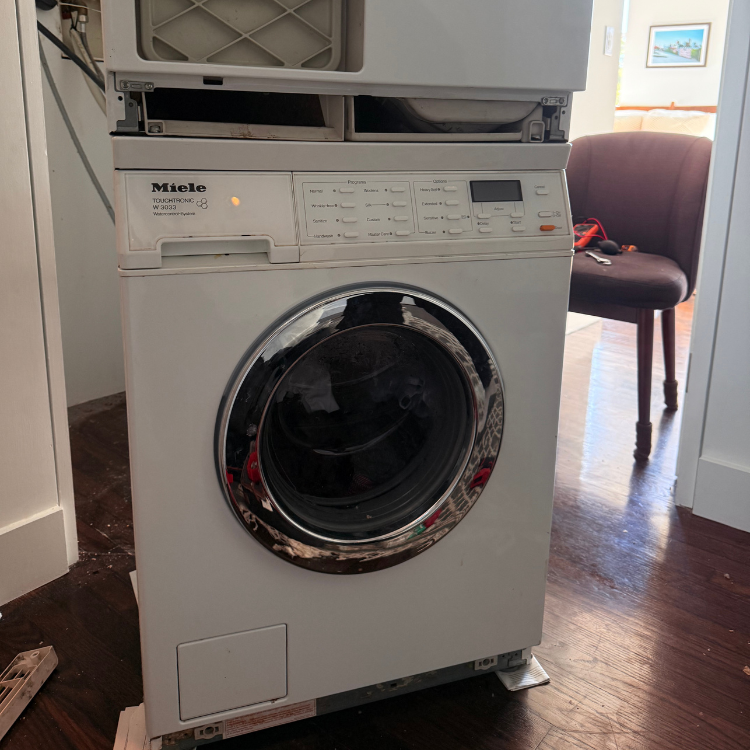
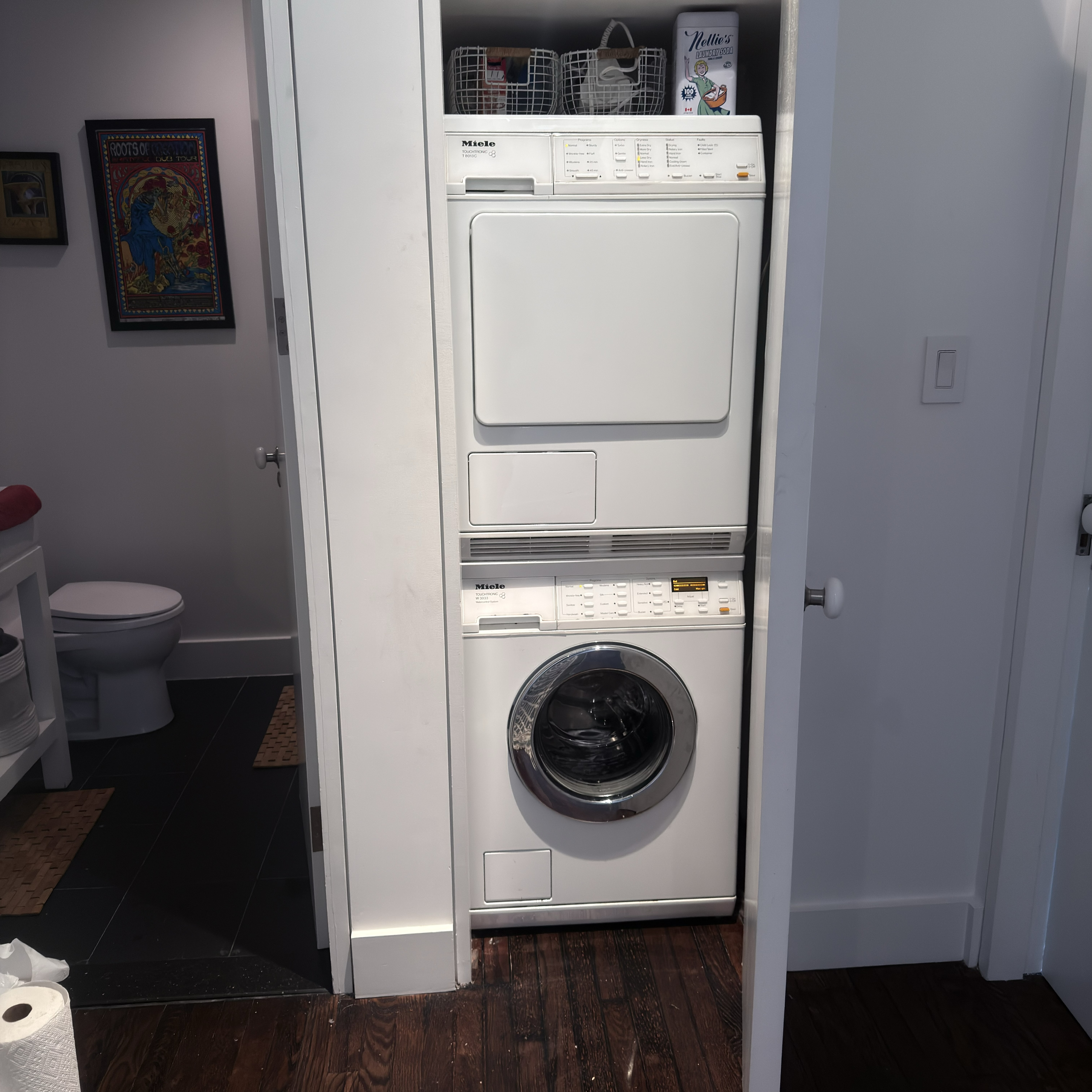

Technician experience standard: 4+ years of hands-on appliance repair per technician; senior technicians bring 8 and 16 years. LG intake starts with model and serial, appliance form, display or ThinQ message, failed stage, and stacked or built-in access. Independent service; no current manufacturer authorization implied.

