
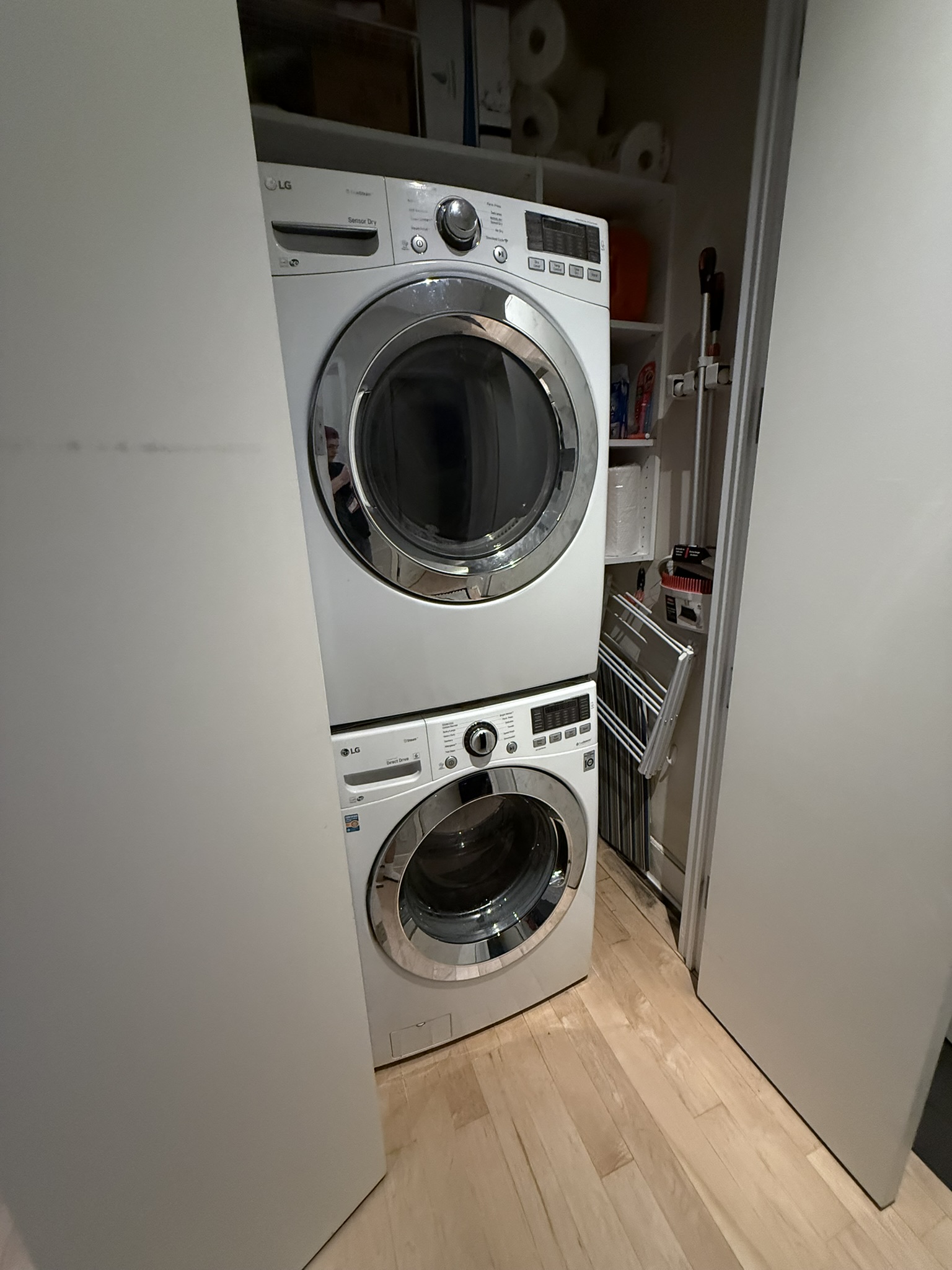

LG Washer Won’t Spin: Safe Diagnostic Path
If an LG washer will not spin, first separate standing water from an unbalanced load, leveling problem, locked-door issue, or drive fault.
If an LG washer will not spin, first separate standing water from an unbalanced load, leveling problem, locked-door issue, or drive fault.
If an LG washer will not spin, first look through the door or tub and determine whether water remains; a washer that has not drained normally will usually withhold high-speed spin. If the water is gone, record any UE, Ub, OE, door, or lid message, redistribute the load, confirm the washer is stable and level, and use only the exact model’s documented Spin Only test. Stop if the door is locked with water inside, the drum is jammed, the washer moves violently, leaks, smells burned, or trips a breaker.
“Won’t spin” can mean the drum never moves, it turns slowly during washing but never accelerates, it repeatedly tries to balance, or it stops with wet clothes after water should have drained. Those are different failed stages.
Before high-speed spin, the washer must confirm several conditions: the selected cycle permits spin, water has drained to the expected level, the door or lid condition is safe, the load can be balanced, and the machine does not detect excessive movement. Only then does the drive system accelerate the basket. If one condition is missing, the control may pause, tumble slowly, refill, redistribute, show a code, or end without the expected spin.
Use this first split:
Do not use hand rotation as a universal mechanical test. Some platforms have normal magnetic or drive resistance, and an obstruction can create a pinch or cut hazard.
Low effort: preserve the code and separate drain from spin
Why it works: An OE drain message, UE/Ub imbalance message, door/lid message, or power error can route the diagnosis before any physical work.
Tools/materials: Phone camera, notes, and exact model manual.
What to do:
Common mistakes:
Why it works: Delicate, hand-wash, no-spin, or reduced-spin selections can leave laundry wetter while the appliance completes normally.
Tools/materials: Control-panel photo and cycle chart.
What to do:
Common mistakes:
Why it works: One waterlogged item, a small dense load, or tangled bedding can stay on one side of the drum. The washer may keep trying to redistribute instead of accelerating.
Tools/materials: Laundry basket.
What to do:
Common mistakes:
Medium effort: verify installation and complete drainage
Why it works: The control protects the machine by withholding high-speed spin when the sensed water level remains too high.
Tools/materials: Flashlight, towels, exact drain guidance.
What to do:
Common mistakes:
Why it works: A washer that rocks or sits on an unstable surface can trigger repeated imbalance correction or become unsafe at speed.
Tools/materials: Bubble level, flashlight, and wrench only if the installation guide assigns leveling to the owner.
What to do:
Common mistakes:
Why it works: A controlled empty or small balanced test shows whether the washer can drain and accelerate outside the failed wash cycle. Control steps vary by model.
Tools/materials: Manual, phone video, and safe test textiles if specified.
What to do:
Common mistakes:
High effort: isolate a machine fault without parts guessing
Why it works: A garment trapped at the door, a protruding object, or a displaced drum condition may prevent normal movement and make further operation damaging.
Tools/materials: Flashlight.
What to do:
Common mistakes:
Why it works: A technician must determine whether the washer is blocked by water level, door/lid safety, balance sensing, suspension behavior, drive feedback, power, or control output.
Tools/materials: Model/serial photo, error photo, test video, load details, and timeline.
Report:
Common mistakes:
Never bypass a door lock, lid switch, water-level control, or safety device. Do not hold a moving washer in place. If it becomes violent, step away and disconnect power from a dry, safe control only after movement stops.
It may still contain water, detect an unbalanced load, have a reduced-spin setting, lack a confirmed door/lid condition, or have a drive/control fault.
Yes. High-speed spin is normally withheld when the washer cannot lower the water level. Standing water or OE belongs on the drain path first.
It indicates the washer could not balance the load for spin. Correct the load and installation basics; a recurring code with normal loads may need suspension or sensing diagnosis.
The button sequence varies. Use the exact model manual and do not guess from a different control panel.
It may be redistributing an unbalanced load or waiting for another condition. Record the load, water level, and any UE/Ub or OE message.
Yes. One waterlogged item can remain on one side of the drum. Follow its care label and the washer manual’s bulky-item guidance.
No. It shows the machine can complete that limited test, but a normal load may still expose balance, suspension, drain, or drive problems.
Do not force it. With power off, only a gentle observation may be reasonable if the manual permits; stop for scraping, a jam, or off-center position.
Not if the washer retains water, moves violently, leaks, smells hot, or repeats a fault. One controlled test is enough.
Save the code, water level, load type, selected cycle, Spin Only result, movement and sound video, and model/serial information.
LG requests are considered in Brooklyn, Manhattan below 96th Street, and selected Queens routes; WashTower, stacked laundry, built-in, and connected-model details are checked before routing.


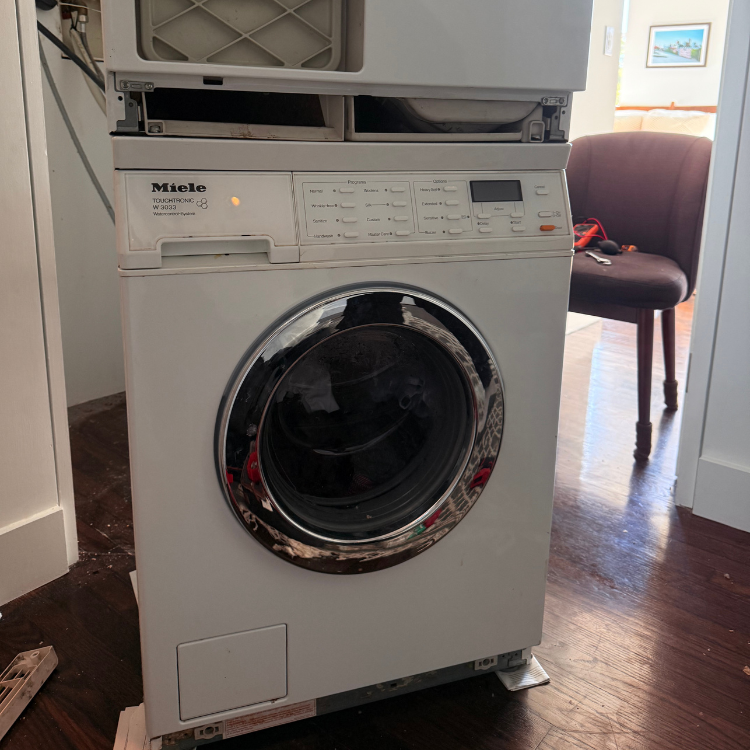
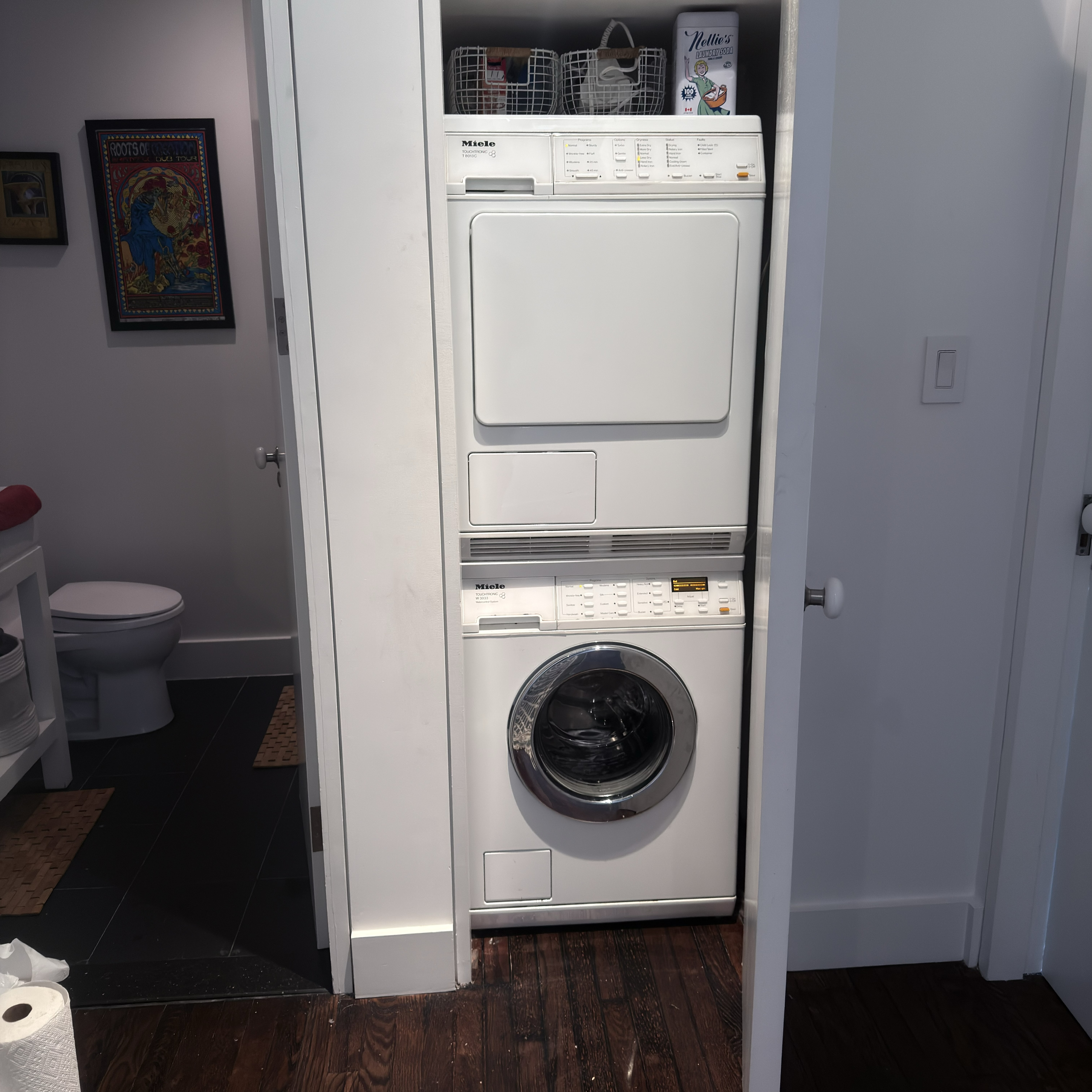

Technician experience standard: 4+ years of hands-on appliance repair per technician; senior technicians bring 8 and 16 years. LG intake starts with model and serial, appliance form, display or ThinQ message, failed stage, and stacked or built-in access. Independent service; no current manufacturer authorization implied.

