

Sub-Zero Ice Maker Not Making Ice: Safe Checks
If a Sub-Zero ice maker stops producing ice, check its setting, freezer condition, bin, filter, and water supply before assuming a failed part.
If a Sub-Zero ice maker stops producing ice, check its setting, freezer condition, bin, filter, and water supply before assuming a failed part.
If a Sub-Zero ice maker is not making ice, confirm that the ice maker is on, the freezer is holding its normal temperature, the ice bin is fully seated, and the household water supply is open. Check the model’s approved filter and visible shutoff-arm or fill-tube conditions, then allow the manual’s stated recovery time after any correction. Stop if there is an active leak, thawed food, a recurring fault, or a need to remove panels or work on water or electrical connections.
Ice production requires several conditions at the same time: the freezer must be cold enough, the control must call for ice, the shutoff mechanism must permit a harvest, water must reach the fill system, and completed cubes must release into a correctly positioned bin. “Not making ice” does not identify which stage stopped.
Start by preserving the symptom:
Sub-Zero configurations vary. The ice-maker switch, control-panel wording, bin, shutoff arm, water filter, and fill-tube access are not identical across Classic, Designer, Pro, undercounter, and older products. Record the model and serial information and use its current U.S. use-and-care guide before operating any control or removing a user-serviceable part.
Low effort: establish the operating condition
Why it works: A cleaning session, power interruption, control change, or moved shutoff arm can leave the ice maker off even though the rest of the freezer operates normally.
Tools/materials: Phone camera and the operating guide for the exact model.
What to do:
Common mistakes:
Why it works: The ice maker depends on a sufficiently cold, stable freezer. A door that was left open, warm food loading, a power interruption, or a cooling problem can pause production before frozen food appears obviously damaged.
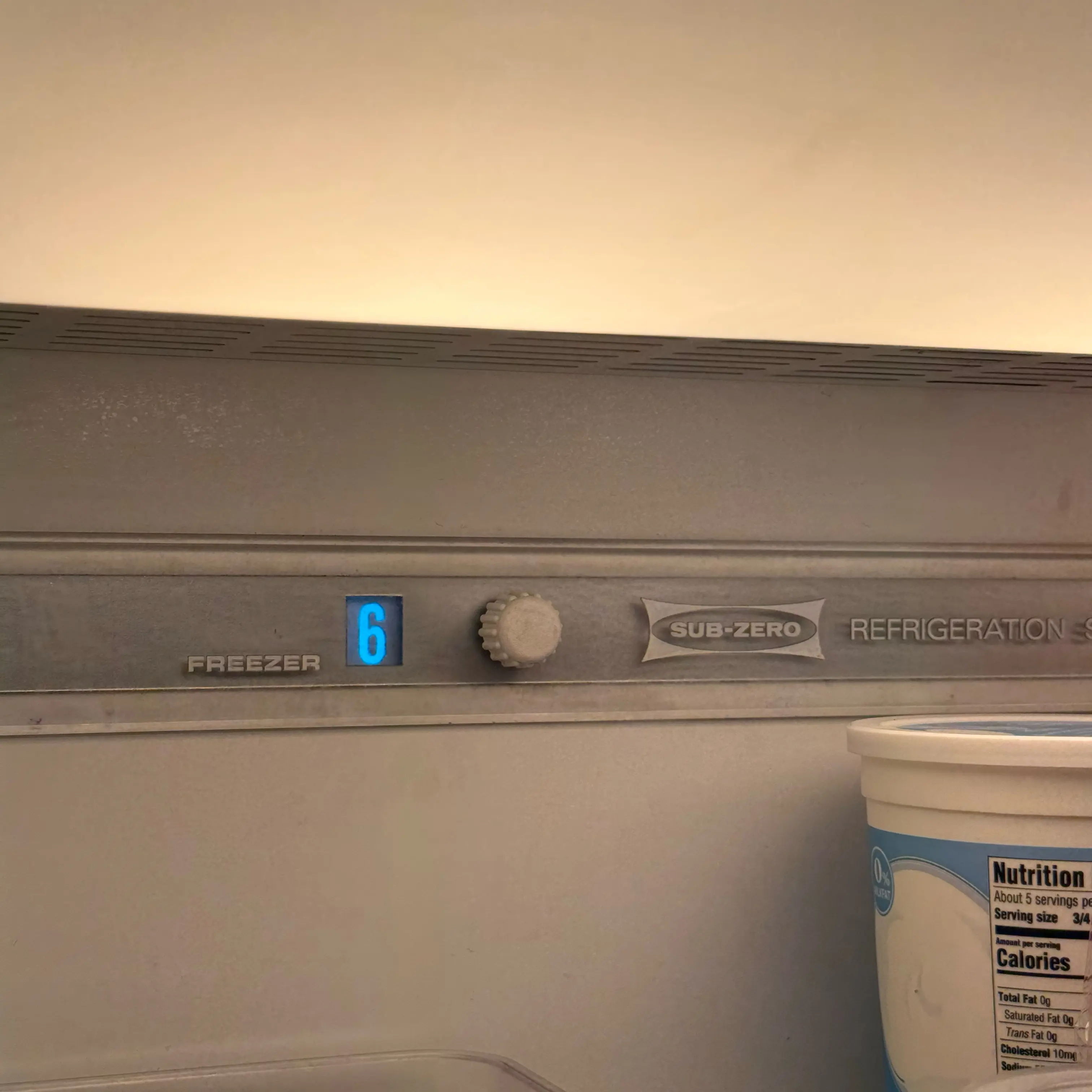
Tools/materials: Display reading, flashlight, and an appliance thermometer if the exact manual supports that method.
What to do:
Common mistakes:
Why it works: A bin that is not fully seated can interfere with the shutoff position or the path where cubes drop. A loose cube can also hold a visible arm out of place.
Tools/materials: Dry towel and flashlight.
What to do:
Common mistakes:
Medium effort: verify the water path
Why it works: The freezer can remain cold and dispense stored ice even after the supply is closed. A recent move, plumbing repair, filter change, or cabinet work may leave the shutoff valve partly or fully closed.
Tools/materials: Flashlight; building or installation documentation.
What to do:
Common mistakes:
Why it works: On models where the filter supplies the ice maker, an overdue, incorrect, damaged, or incompletely seated filter can reduce or interrupt water flow. Air introduced during a filter change can also delay normal delivery.
Tools/materials: Correct replacement-filter information and the exact filter procedure.
What to do:
Common mistakes:
Why it works: A visible ice obstruction at the fill tube can explain why the mold stays dry, but the cause may involve temperature, seepage, or water-control behavior that remains after the ice melts.
Tools/materials: Flashlight and phone camera.
What to do:
Common mistakes:
High effort: allow one controlled recovery, then escalate
Why it works: Ice production is not immediate after enabling the system, correcting freezer temperature, reseating the bin, opening the water supply, or changing a filter. The exact manual provides the appropriate waiting period for that product.
Tools/materials: Notes, a clock, and the exact model guide.
What to do:
Common mistakes:
Why it works: A technician needs to separate freezer temperature, control request, shutoff sensing, water delivery, fill control, and harvest behavior. The symptom alone cannot prove a valve, sensor, motor, or module failed.
Tools/materials: Model/serial photo, display photo, bin and mold photos, filter information, and a timeline.
Document:
Common mistakes:
If water is approaching electrical equipment, do not step into the wet area or reach for a wet plug. Shut off the known water supply and electrical circuit only if each control is safely accessible; otherwise leave the area and obtain emergency building or professional help.
The ice maker can be off, the bin or shutoff mechanism may not be in position, or water may not be reaching the mold. A cold freezer narrows the path but does not prove the water or harvest stages work.
The control varies by model. Use the model’s use-and-care guide for the panel control or shutoff-arm position rather than copying a universal button sequence.
On a model where filtered water feeds the ice maker, a restricted, incorrect, or poorly seated filter can affect production. Confirm compatibility and installation before replacing other parts.
Small or hollow cubes often indicate that the mold received too little water. Check the filter status, accessible supply, and recent plumbing changes; internal pressure and valve diagnosis require service.
Use the recovery time in the exact model manual. Freezer temperature, recent installation, filter work, and whether the system was fully warm affect the first batch.
No. Concentrated heat can damage liners, wiring, and plastic tubing. Photograph the obstruction and use only a model-approved owner procedure.
Not on every configuration. It shows that part of the supply system works, but the ice-maker branch, fill control, or filter path may still need confirmation.
Use only the reset or power procedure documented for the exact model, and do it once. Repeated power cycling can erase useful evidence and will not correct a leak, warm freezer, or restricted water path.
The filter may be incorrect, incompletely seated, damaged, or not flushed as directed; the supply may also have been left closed. Inspect for leaks before following the model’s filter procedure.
Photograph the model and serial, display, ice mold and bin, filter, any frost or leak, and note recent plumbing, power, temperature, or cleaning changes.
Built-in cooling visits are considered in Brooklyn, Manhattan below 96th Street, and selected Queens routes; confirm the exact address, cabinet access, and building restrictions before routing.
.jpeg)

Technician experience standard: 4+ years of hands-on appliance repair per technician; senior technicians bring 8 and 16 years. Sub-Zero intake starts with cabinet family, tag, compartment, temperature, and built-in access. Independent service; no current manufacturer authorization implied.

