Appliance repair service in New York City - Brooklyn

Wolf Gas Surface Burner Will Not Shut Off

Quick answer:

If a Wolf surface burner stays lit after its control is turned to Off, use an already-known accessible appliance gas shutoff and stop using the entire unit. Do not force the control or move the appliance to reach a hidden shutoff.

Safety Gate: The Flame or Gas Odor Persists

A surface flame that remains established with the control at Off is an uncontrolled gas condition, not a burner-cleaning problem. If the normal Off action does not extinguish it immediately, use only an already-known, safely accessible shutoff for that appliance. Stop using every burner and every other function on the unit.

If the shutoff is hidden behind the range or would require pulling a heavy or built-in appliance forward, do not move the appliance to reach it. Leave the affected area and follow the building's gas-emergency procedure. If gas odor remains after the appliance supply has been shut off, contact the gas utility or building emergency contact from a safe location.

Most Common Reasons a Wolf Gas Surface Burner Will Not Shut Off

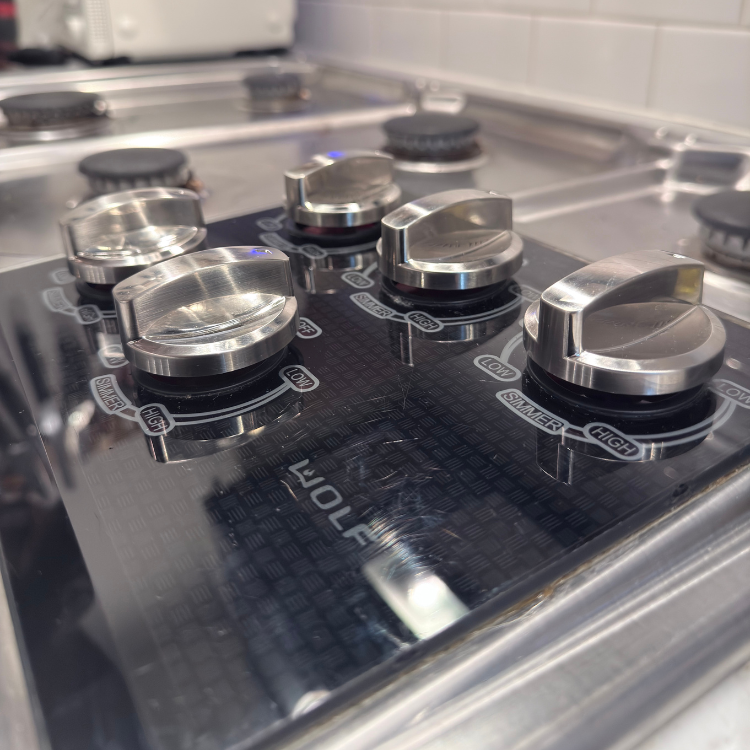
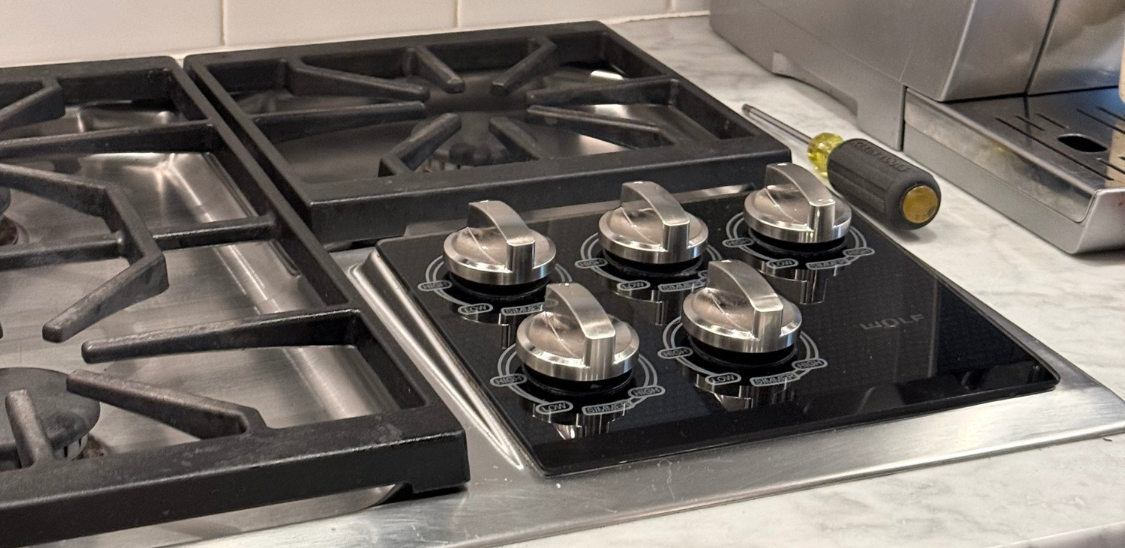
  • The knob is stuck, broken, or no longer moving the control correctly: The visible knob can point toward Off without engaging the valve stem far enough to stop gas flow. Wolf surface-burner knobs may be interchangeable on the same appliance, but oven knobs and some product controls are different. The useful visible evidence is a cracked, loose, spinning, or stuck knob. A technician must confirm the exact knob, insert, engagement, stem condition, and whether the valve actually reaches its closed position.
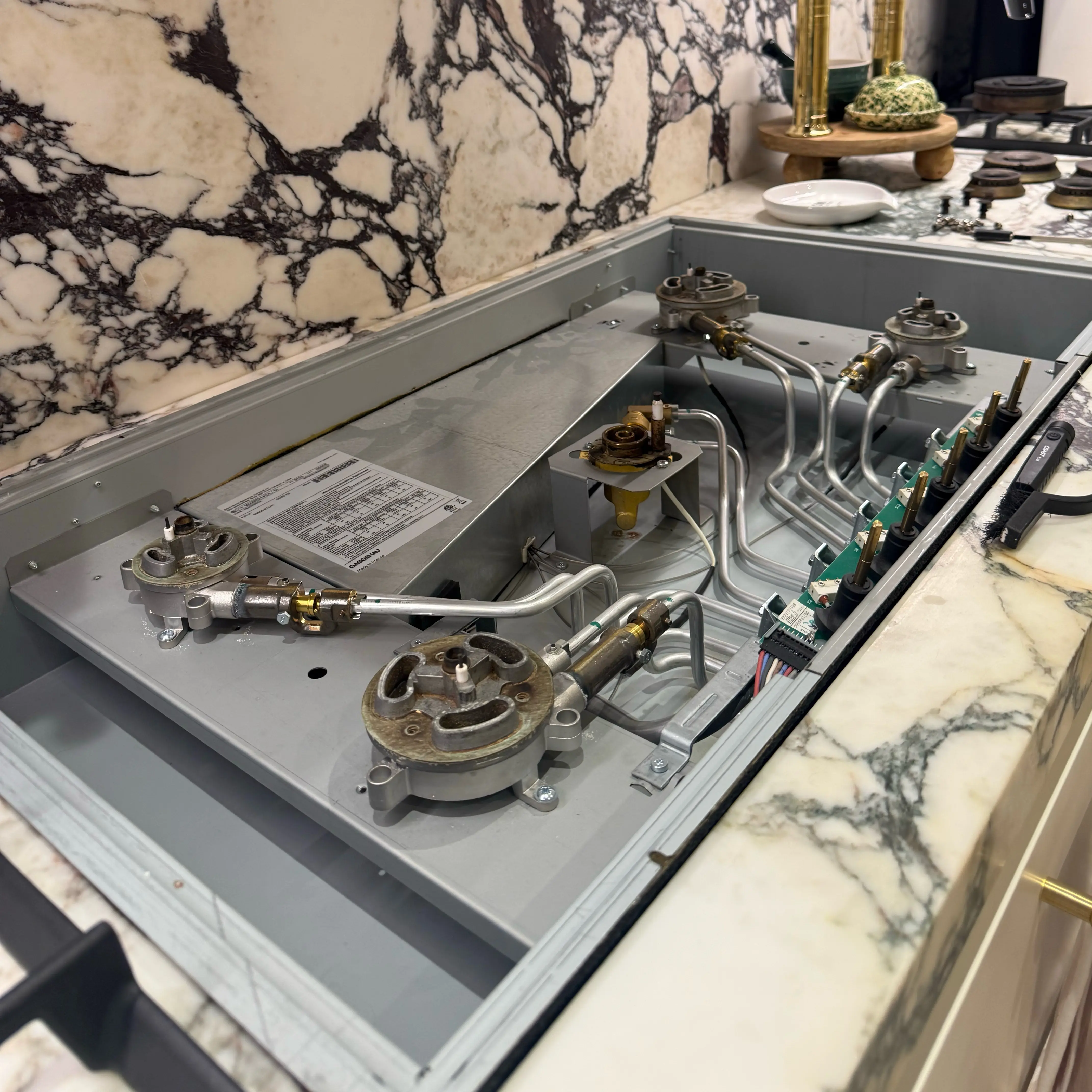
  • The gas valve is not closing: The internal valve can continue passing gas even when the control has been placed at Off. The visible clue is simple and serious: an established flame remains after the correct knob action. That observation does not prove which valve part failed. Diagnosis must confirm the control position, mechanical movement, and positive gas shutoff using the exact model procedure.
  • The incoming gas pressure is excessive: Inlet pressure above the appliance's required condition can keep the control from achieving normal gas shutoff. Wolf lists excessive supply pressure for this exact symptom. There is no safe visible homeowner test for it. A qualified gas professional must verify the supply and appliance inlet conditions and separate a building-side supply issue from an appliance control issue.

If the Visible Surface-Burner Knob Is Broken

Wolf permits one tightly limited action when the visible surface-burner knob itself is clearly cracked or broken:

  • Use only a known correct surface-burner knob from the same Wolf appliance.
  • Slide it on normally and turn the control to Off once, without tools or extra force.
  • Do not use an oven, griddle, charbroiler, or unfamiliar knob.
  • Do not remove an insert, lubricate the control, grip the stem, or repeat the attempt.

If the correct knob does not reach Off immediately, stop the attempt and shut off the appliance gas supply.

Choose the Correct Help Page

Use this guidance only when an established gas surface flame remains on after the control is turned Off.

Safe Checks Before Service

These observations belong after the active gas risk has been resolved.

  • Exact product and model: Photograph the model and serial label. Record whether the burner is on a cooktop, rangetop, GR gas range, or DF dual-fuel range.
  • Affected control: Photograph the knob position and identify the exact burner. Do not recreate the symptom for a video.
  • Control record: Photograph the affected surface-burner knob and note whether it is cracked, loose, spinning, or sitting differently from the others.
  • Event timing: Record whether the problem began after knob removal, cleaning, installation, fuel conversion, or gas-supply work.

What Not to Do

  • Do not remove the control panel, valve, regulator, or gas line.
  • Do not measure or adjust gas pressure, orifices, air shutters, or fuel-conversion parts.

What Diagnosis Must Confirm

The technician first identifies the exact product, burner, knob, and valve control. The technician should then confirm:

  • whether the correct knob and insert transfer movement to the valve stem;
  • whether the stem and valve move through the intended range and close positively;
  • whether the valve continues passing gas at the commanded Off position;
  • whether supply and inlet pressure meet the exact installation requirements;
  • whether recent installation, conversion, or building gas work changed the condition;
  • whether the repair requires appliance service, licensed plumbing work, or gas-utility involvement.

A continuing flame supports these cause families, but it does not justify replacing a valve, regulator, or control by guess.

Booking

Appliance Repair in NYC

Choose a time that works for you. Share the appliance type, address, and the issue you are seeing. We review the request and confirm the appointment details before the visit is finalized.

$99 diagnostic

Credited toward repair after approval

180 day warranty

Parts and labor on completed repair

OEM parts

Used when applicable and available

Licensed and insured

COI available if building requires it

What Happens Next

You send the request with the appliance type, location, and symptom.

We review the details and confirm service area, timing, and access notes.

If needed, we may ask for a model and serial photo before the visit.

Before You Book

If you smell gas, see sparks, notice a burning odor, or have an active water leak near electrical parts, stop using the appliance and handle the safety issue first.