
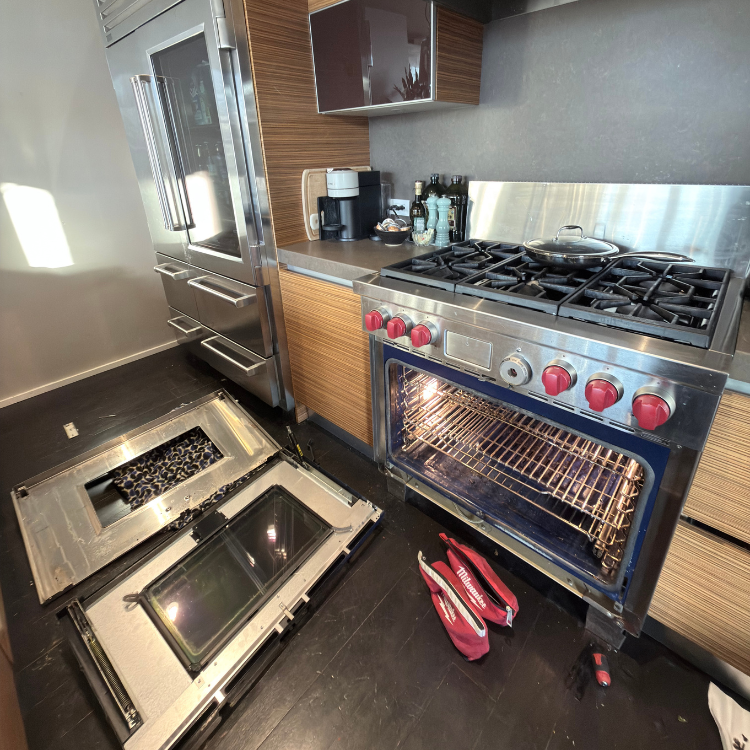

Wolf Oven Door Locked After Self-Clean
Know when a Wolf oven door lock is normal cooldown, when one reset is appropriate, and when the latch or control path needs diagnosis.
Know when a Wolf oven door lock is normal cooldown, when one reset is appropriate, and when the latch or control path needs diagnosis.
.avif)
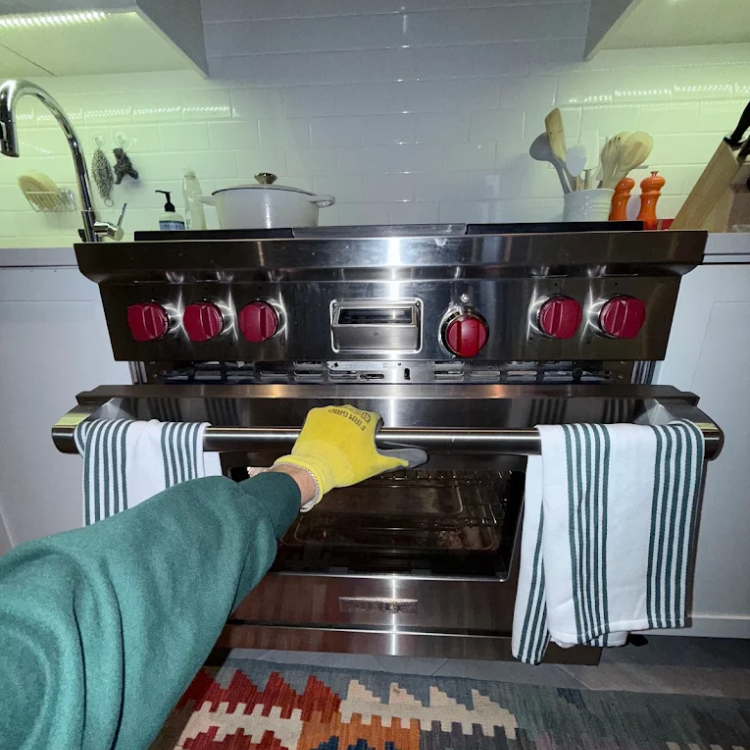
The Wolf oven door is designed to remain locked through self-clean cooldown. Let the oven reach its model-controlled unlock condition, and do not force the door.
Do not reset the oven if there is smoke, arcing, a burning odor, uncontrolled heat, cracked door glass, loud grinding or repeated latch motion, or a breaker trip. Leave the oven off and arrange service. A breaker that trips must not be reset repeatedly.
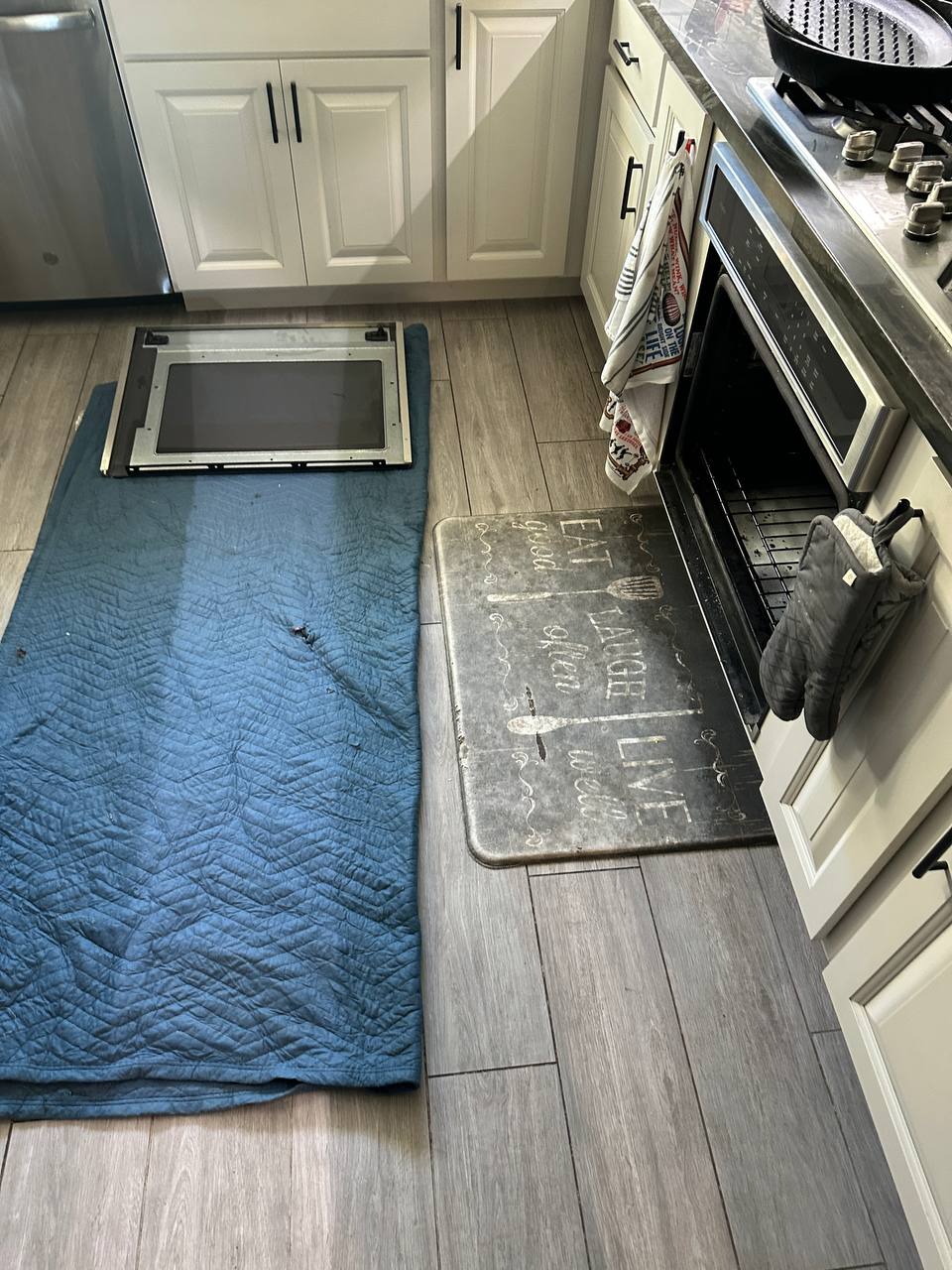
Photograph the exact message, lock symbol, or code. Note whether the latch is silent, clicks once, repeats, or grinds. Record the exact model and serial number, the power-event timing, and, on a double oven, which cavity is locked.
This guidance covers supported Wolf E, L, and M wall ovens and DF range ovens after self-clean. Control wording and latch behavior differ by model and generation, so use the exact guide for cancellation and display interpretation.
Wolf GR gas ranges do not use this self-clean procedure. A door that opens but drops, will not balance, or will not close has a different mechanical condition; locked-door reset steps do not repair hinges.
If the door is already unlocked but the electric oven no longer heats after self-clean, use the appropriate no-heat page instead. For an E, L, or M wall oven, use Wolf wall oven not heating; for a DF range, use Wolf dual fuel range oven turns on but does not heat.
Prepare the exact model, cavity, display text, self-clean completion state, cooldown observation, power-event timing, latch sound, and one-reset result.
The technician should then verify cavity-temperature input, stored faults, cycle and lock state, latch movement and alignment, motor and feedback operation, wiring continuity under safe service procedures, and relay or control output. If the door must be released for service, that work follows the model procedure; the visible symptom does not justify replacing a board by guess.
Wolf does not provide one universal number of minutes or hours for every supported oven. Wait for the model-controlled cooldown state to complete rather than promising an elapsed time.
Wolf cooking-system requests are considered in Brooklyn, Manhattan below 96th Street, and selected Queens routes; fuel connection, ventilation, cabinet clearance, and building access are confirmed before routing.

.jpeg)
Technician experience standard: 4+ years of hands-on appliance repair per technician; senior technicians bring 8 and 16 years. Wolf intake starts with model prefix, fuel or induction platform, affected burner or cavity, and access. Independent service; no current manufacturer authorization implied. Our Wolf oven work includes a completed igniter replacement.

