

Wolf Wall Oven Not Heating: Safe Checks
Separate LO, mode, Showroom, one-cavity, power and post-self-clean conditions when a Wolf E, L or M wall oven stays cold.
Separate LO, mode, Showroom, one-cavity, power and post-self-clean conditions when a Wolf E, L or M wall oven stays cold.
.avif)
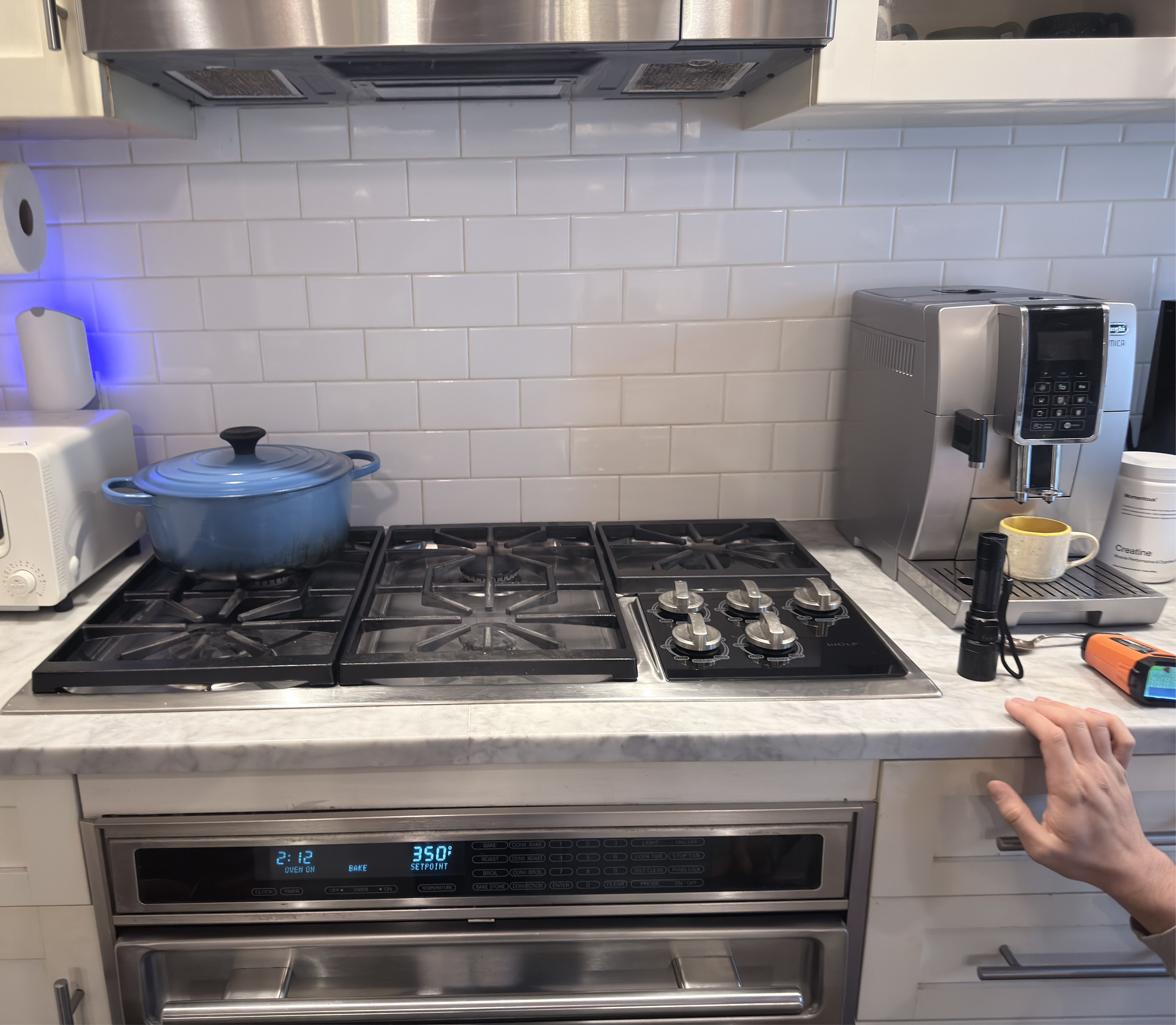
For a responsive Wolf E, L, or M Series wall oven that stays cold, confirm that the intended cooking mode actually started and that the exact model is not in Showroom Mode. If the cavity still does not warm, stop at visible checks.
Leave the oven off if a breaker trips, arcing appears, smoke or a burning electrical odor develops, heat becomes uncontrolled, the door glass is cracked, or an error is accompanied by abnormal heat or noise. Do not perform a reset after a breaker trip.
Record whether the cycle completed, whether the door unlocked, what the display showed, and whether a cooling fan or unusual sound continued. Do not run self-clean again as a test. If the door is still locked, the post-self-clean door-lock question must be resolved before a heating comparison.
The after-self-clean timing keeps thermal protection, cooling, latch state, wiring, and control output in the diagnosis. It does not justify resetting a thermal device or replacing a board by guess.
This page covers Wolf E, L, and M Series electric wall ovens. It does not cover a DF dual-fuel range, an IR induction range, a GR gas range, or a Convection Steam Oven.
An IR induction range requires instructions for its exact range platform. Do not apply DF or wall-oven controls to it automatically.
Prepare the exact model and serial number, selected cavity and mode, display text, Showroom state under the matched guide, one-versus-both-cavity result, and any self-clean or power-event timing.
Diagnosis must then prove the model-required supply under load, terminal and wiring integrity, door and operating inputs, cooling and thermal-protection state, cavity heating outputs, sensor feedback, and relay or control command. A responsive display or one cold cavity narrows the work, but neither identifies a failed part.
Wolf cooking-system requests are considered in Brooklyn, Manhattan below 96th Street, and selected Queens routes; fuel connection, ventilation, cabinet clearance, and building access are confirmed before routing.

.jpeg)
Technician experience standard: 4+ years of hands-on appliance repair per technician; senior technicians bring 8 and 16 years. Wolf intake starts with model prefix, fuel or induction platform, affected burner or cavity, and access. Independent service; no current manufacturer authorization implied. Our Wolf oven work includes a completed igniter replacement.

