
.png)
.avif)


Insured HVAC Service in NYC & Brooklyn
VOLT & VECTOR LLC carries Commercial General Liability insurance through Hiscox Insurance Company Inc. Coverage is effective June 6, 2026 – June 6, 2027, with $1,000,000 per occurrence and $2,000,000 general aggregate limits.COI available upon request for homeowners, landlords, property managers, co-op/condo boards, commercial clients, and general contractors.
Cleaning for Air Handlers and Fan Coils in NYC
Cleaning air handlers and fan coils in NYC should be narrow, practical, and access-aware. Many apartments, condos, co-ops, offices, and small buildings use indoor HVAC equipment that is not a wall-mounted mini split head. The equipment may sit in a closet, ceiling cavity, soffit, hallway enclosure, fan coil cabinet, or mechanical room. When the complaint is weak airflow, dust, odor, filter buildup, visible coil debris, or water in the cabinet, the right first step is to identify the equipment and decide whether the request is cleaning, maintenance, or repair.
This request is for cleaning and maintenance around accessible air handlers and fan coil units. It is not a broad air handler repair page, and it does not replace air handler repair when the blower motor, control board, thermostat wiring, hydronic valve, refrigerant circuit, or building loop needs diagnosis. The purpose is to collect the details that make a cleaning request useful: equipment photos, access notes, filter and coil condition, drain pan evidence, symptoms, COI needs, and building restrictions.
New York buildings make this category especially important. A fan coil can serve one apartment while relying on building chilled water or hot water. An air handler may be tied to a split AC, heat pump, ducted system, or mechanical closet. A customer may call it an air conditioner, vent, closet unit, fan, or HVAC box. The request should help them describe what they see without forcing them to know the exact mechanical name.
When cleaning is the likely request
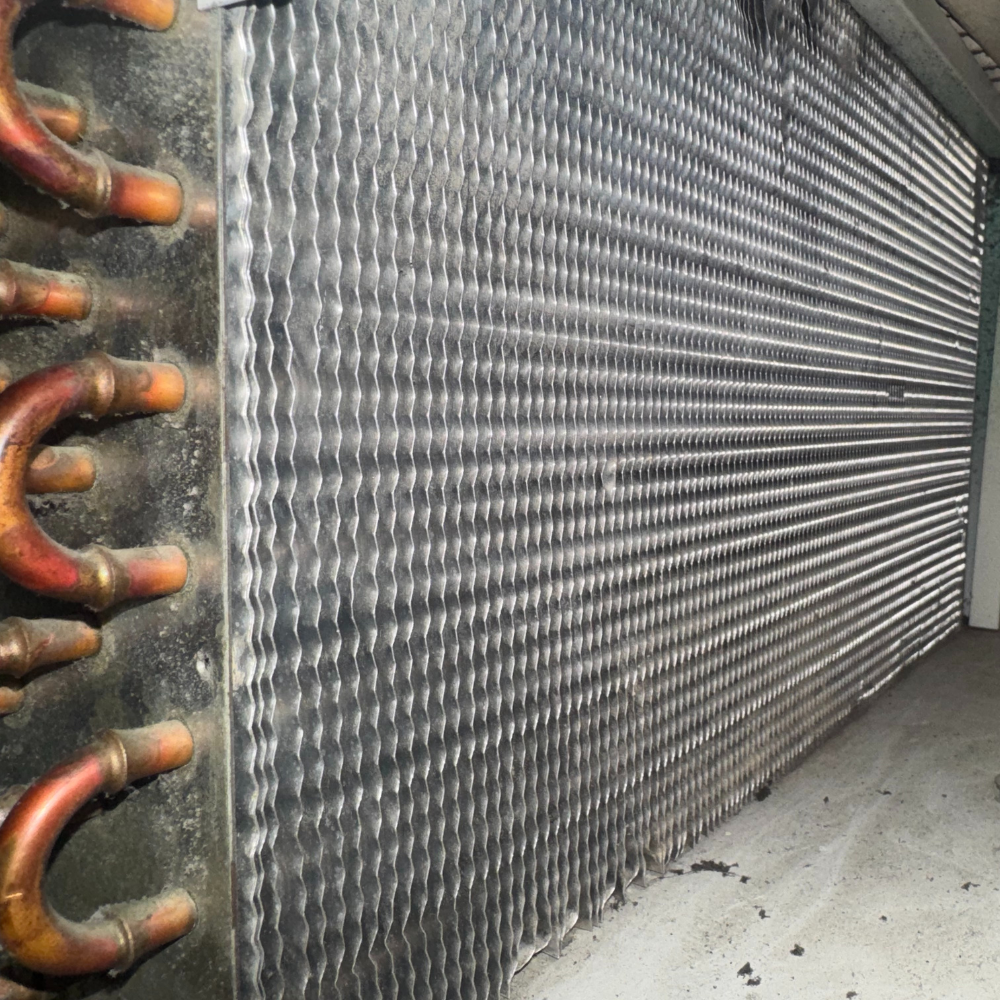
Cleaning is a reasonable request when the unit still runs but airflow feels reduced, the filter is dirty, the return grille is loaded, dust appears around the outlet, odor appears when the fan starts, the cabinet shows debris, or the drain pan area appears dirty. Cleaning can also be the first step when the customer wants seasonal maintenance before heavy cooling or heating use. None of these conditions proves a failed part. They do support a request for visible inspection and accessible cleaning.
- Weak airflow: dirty filters, filter bypass, blower buildup, coil restriction, closed dampers, or cabinet obstruction can reduce airflow before a motor failure is confirmed.
- Odor at startup: dust, moisture, idle periods, and dirty drain areas can create stale odor. The response should document visible condition rather than make health claims.
- Dust around the grille: visible debris can come from filters, return leakage, cabinet condition, or airflow patterns; photos help classify the request.
- Water in the cabinet: drain pan buildup, pump behavior, float switch condition, ice melt, or pitch issues may need condensate review.
- Seasonal maintenance: filter, coil, blower, cabinet, drain, and thermostat response checks can identify whether cleaning is enough or repair is needed.
How to identify the equipment
A wall-mounted ductless head usually sits high on the wall and blows directly into the room. A fan coil may sit under a window, inside a cabinet, behind a grille, or in a closet, and may be connected to building water loops. An air handler may be inside a closet or ceiling area and move air through ducts or grilles. A PTAC or packaged terminal unit usually sits through an exterior wall or sleeve. If the customer is unsure, the request should ask for photos from several angles rather than forcing a label.
This matters because the cleaning scope changes with equipment type. A ductless head may need mini split cleaning. A fan coil may involve filters, coil surfaces, drain pan condition, access panels, and building-loop boundaries. A ducted air handler may require safe access to a filter rack, blower area, coil section, and drain pan. Some panels may be inaccessible without building staff or without moving built-in finishes. The intake should make that clear instead of promising a universal process.
What a cleaning or maintenance visit can check
Where access is safe, the cleaning request can include visible filter condition, filter fit, return obstruction, grille condition, accessible coil condition, blower area condition, cabinet debris, drain pan signs, condensate path evidence, pump reservoir condition where applicable, thermostat or controller response, and basic airflow after cleaning. If the technician can safely protect the surrounding area, the work may include cleaning accessible surfaces, documenting before/after condition, and identifying whether repair is needed.
The maintenance logic is supported by official guidance. The Department of Energy explains that dirty filters can restrict airflow and dirt can reduce evaporator coil performance. NYC split-system maintenance guidance calls out fan coil cleaning, filter cleaning or replacement, outdoor fin cleaning, odor, leaks, short cycling, and thermostat setup as maintenance-plan concerns. Those points support practical cleaning and inspection language. They do not support claims that cleaning fixes every airflow complaint.
Where cleaning stops
Cleaning stops when the issue becomes mechanical, electrical, hydronic, refrigerant-side, or building-side. A hydronic fan coil with a valve problem, chilled-water issue, hot-water issue, control failure, or building-loop imbalance is not solved by wiping a coil. A blower motor that does not run, a control board that does not respond, a thermostat wiring issue, a refrigerant-side cooling issue, or repeated breaker behavior belongs under diagnostic repair. Cleaning can reveal these problems, but it should not be sold as the repair.
Water issues also need careful routing. If water is found in a pan or cabinet, cleaning may address debris or visible buildup. Recurring leaks can involve drain pitch, pump failure, float switch behavior, ice melt, blocked routing, or building drain constraints. Those conditions should route to condensate drain repair or a diagnostic request if cleaning is not enough.
Photos to send before requesting service
The request should ask for a photo of the full unit, the grille or access panel, the filter area if visible, the thermostat or controller, water or staining if present, the model label if visible, and any building access instructions. If the unit is behind a panel, the customer should not force it open. If the unit is in a ceiling, mechanical room, or shared building space, the customer should describe who controls access.
NYC building and COI notes
Air handler and fan coil work often involves building rules. A co-op or condo may require a certificate of insurance. A property manager may control mechanical-room access. A doorman, superintendent, or building engineer may need to open panels or approve water handling. Finished apartments require floor protection, furniture clearance, and clean documentation. The request should capture these details before the job is treated as ready.
How this request routes users
If the customer has a wall-mounted ductless head, route to mini split cleaning. If the issue is a closet unit, fan coil, cabinet, or air handler with dust, odor, filter, coil, blower, or drain pan concerns, this request is the correct path. If the fan does not run, the thermostat is blank, water is active, or the system cannot cool or heat, route to air handler repair, condensate drain repair, or thermostat repair as appropriate.
What happens after submitting the request
The customer submits the request with photos, ZIP code, equipment type if known, symptoms, building access, COI needs, and desired windows. Volt & Vector reviews the request to decide whether it fits cleaning, broader HVAC maintenance, condensate service, thermostat/control work, or diagnostic repair. If the request is not specific enough, the next step should be more photos or a clearer access note, not a generic service promise.
Quick answers
Is this the same as duct cleaning? No. This page is focused on the air handler or fan coil equipment condition, not whole-building duct cleaning.
Can cleaning fix weak airflow? It can help when filters, coil faces, blower buildup, or obstructions are the issue. Weak airflow can also involve motor, control, duct, building-loop, or equipment-sizing conditions.
Can a tenant request this? Yes, but access rules matter. If the unit belongs to the apartment but panels, water valves, or mechanical spaces are building-controlled, management may need to be involved.
Does this include hydronic valve repair? No. Hydronic valves, building chilled/hot water loops, controls, and motor failures are repair or building-side issues, not basic cleaning.
Why fan coil cleaning needs better intake
Fan coils and air handlers are often mislabeled by customers because the equipment is hidden behind grilles, closet doors, ceiling panels, or custom millwork. A request form should not force the customer to know the exact system name. It should ask for photos, location, access, symptoms, and whether building staff must open panels. That information usually matters more than the label the customer uses.
The intake should also protect the difference between apartment-side work and building-side work. Cleaning an accessible filter, cabinet, coil face, blower area, or drain pan is different from adjusting a building water loop, replacing a hydronic valve, repairing controls, or diagnosing a motor that does not run. This distinction is especially important for co-ops, condos, offices, and apartments where the unit may be partly private equipment and partly connected to building systems.
Source-backed maintenance notes
This cleaning request uses official maintenance sources as limits: DOE air conditioner maintenance guidance supports checking filters and evaporator coil condition; NYC HPD split-system maintenance guidance supports fan coil, filter, odor, leak, thermostat, and performance routing; Trane ductless maintenance guidance, Fujitsu support manuals, and Daikin owner manuals reinforce model-specific maintenance limits; and EPA duct-cleaning guidance is why this page separates equipment cleaning from duct-cleaning and health claims.
Common Air Handler and Fan Coil Cleaning Requests
- Weak airflow: check filters, return path, blower buildup, accessible coil condition, and grille obstruction before treating it as motor failure.
- Dust or debris: visible buildup around the grille, filter rack, cabinet, or coil area can justify a cleaning request.
- Odor at startup: document when the odor appears and whether moisture, dirty filters, or drain pan buildup is visible.
- Water in the cabinet: cleaning may help with visible buildup, but pump, drain, pitch, float, or ice-melt conditions may require condensate service.
- Building access issue: fan coils and air handlers may need management, superintendent, roof, closet, or panel access before work can be accepted.