
.ico)

Trusted by 1500+
.png)
The Invisible Hiding Spot for Lost Jewelry: Is It in Your Laundry or Dishwasher?
.avif)
How to Find Lost Jewelry: Professional Appliance Recovery NYC
Lost Jewelry Recovery: Why Appliances Are the “Invisible” Hiding Place
Losing a ring, chain, earring back, or loose stone at home is usually not a “mystery.” It’s a logistics problem. The item didn’t vanish. It moved, quietly, into a place you don’t normally see or service: the inside of a washer, dryer, or dishwasher.
If you’ve already checked the obvious spots (pockets, nightstand, bathroom sink, under couch cushions, between bedsheets), the next rational step is to treat appliances as containment systems. They move fabric, water, air, and debris through tight channels. Jewelry is small, heavy, and slippery. That combination is exactly why it can end up in “internals” without leaving a trace in the drum or basin.
This article explains where jewelry hides inside appliances, how it gets there, what you can check safely, when you should stop using the machine, and what a recovery search actually involves.

Quick Reality Check: This Is Chance-Based, Not Magic
A recovery search is not a guarantee. Sometimes the item is inside the appliance. Sometimes it isn’t. The value is that the search follows a high-probability map of trap zones, and even if the jewelry isn’t there, a proper internal cleaning removes lint, sludge, and debris that create real risks (dryer fire load, drain pump restrictions, dishwasher performance issues).
If you want this framed correctly:
- You are paying for a controlled inspection and deep clean.
- Recovery is the upside, not the promise.
Why Jewelry Ends Up Inside Appliances (Mechanisms, Not Myths)
Jewelry gets “transported” by three boring forces:
- Gravity + vibration
Small items migrate toward gaps and low points during vibration cycles. Appliances shake. Floors flex. Items walk. - Fabric motion + snagging
Chains and rings catch on seams, bedding, drawstrings, elastic, and pockets. Once caught, repeated motion pulls the item toward seals, gaps, or edges. - Water/air flow paths
Washers and dishwashers move water through filters, sumps, and pump paths. Dryers move air through lint screens, ducts, and blower housings. If an item reaches the flow path, it can travel farther than you’d expect.
This is why someone can “lose” a ring during laundry or dishes and never see it again in the visible drum or tub. It doesn’t stay where you can see it. It settles where the machine is designed to hide debris.
High-Probability Trap Zones by Appliance
Washing machine (front-load)
Most recoveries, when they happen, come from a few predictable zones:
- The rubber door gasket folds (especially the bottom fold).
- The drain pump filter / coin trap (behind the small access door on many front-loaders).
- The space between inner drum and outer tub (if it passed the gasket gap or a tub-to-drum clearance point).
- The drain path (if a small item made it past the filter area on certain designs).
Washing machine (top-load)
Top-loaders don’t have the same door gasket, but they have a different “drop zone”:
- Over the rim of the basket into the outer tub.
- Settled at the bottom of the outer tub.
- Around the agitator/impeller area (depending on design).
Dryer
Dryers are brutal for small metal objects because they combine rotation with airflow:
- The lint screen housing and the slot perimeter.
- The front and rear drum seal gaps (items can wedge and later drop).
- The internal ductwork leading toward the blower.
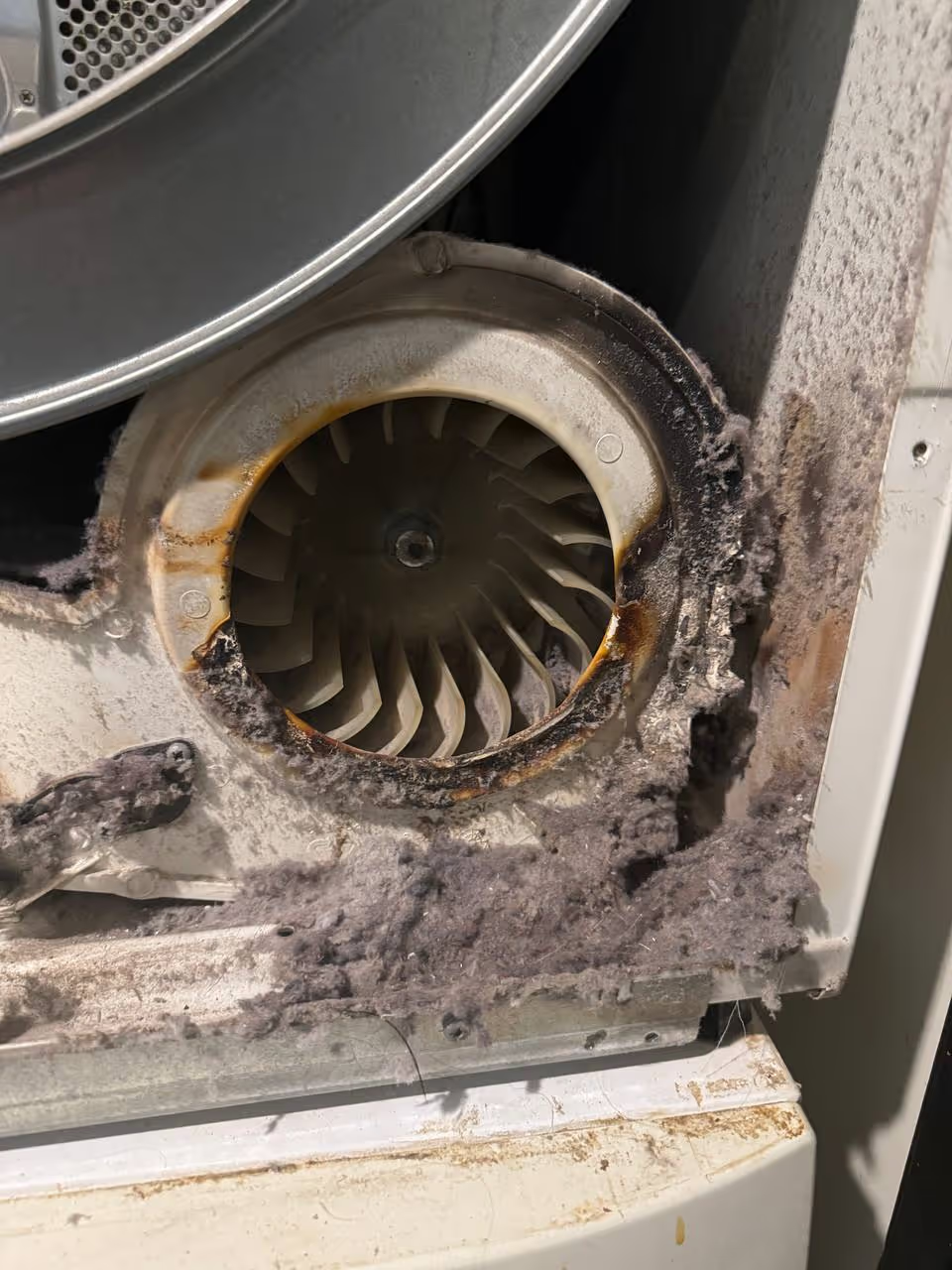
- The blower housing (a major trap zone, and a major damage risk).
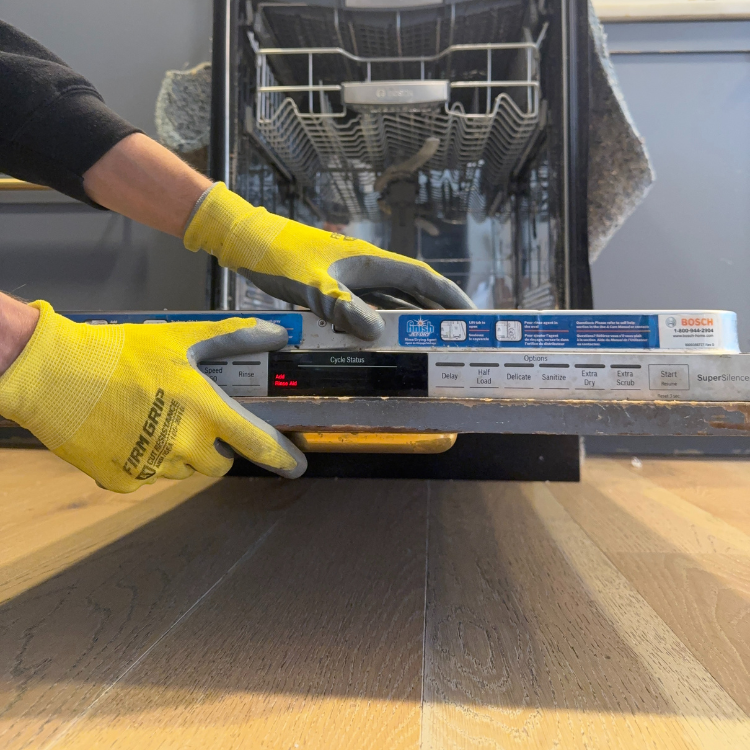
Dishwasher
Dishwashers are the most “invisible” because the machine is designed to circulate and grind/clear debris:
- The filter area (if the machine has a removable filter).
- The sump (low point beneath filters where water collects).
- The pump intake / grinder area (varies by design; can trap or damage items).
- The bottom basin corners where items settle before migrating.
A ring slipping off during loading is common in the simplest way possible: wet, soapy hands reduce friction, and jewelry slides. No drama. Just physics.
Should You Keep Using the Appliance If You Suspect Jewelry Is Inside?
No. Stop using it.
Not because the machine will explode. Because continued operation can turn a recoverable situation into a non-recoverable one:
- In a washer/dishwasher, the item can migrate into the drain pump area, jam the impeller, crack plastic, or wedge behind structures.
- In a dryer, an item can reach the blower wheel, dent it, seize it, or get permanently trapped in the housing. It can also create noise and vibration that damages other components.
The rule is simple:
- If you strongly suspect the item is inside, do not run “one more cycle to see.” That’s how it disappears deeper.
Homeowner-Safe Checks (No Disassembly, No Tools Beyond a Flashlight)
These checks are safe because they do not require removing panels or exposing live electrical parts. If you are not comfortable, skip them and call a technician.
Washer: front-load quick checks
- Door gasket sweep
- Open the door.
- Use a bright flashlight.
- Carefully peel back the lower gasket fold and run your fingers along the fold seam.
- Look for a ring/chain catching in the fold, especially bottom center.
- Drum edge inspection
- Slowly rotate the drum by hand (machine off).
- Watch the gap around the drum edge and front lip.
- Look for a chain end or a reflective edge.
- Drain pump filter access (only if it’s meant to be user-accessible)
- Many front-loaders have a small access door at the bottom front.
- If you open it, expect water. Use towels and a shallow tray.
- If you do not know what you’re doing, stop here. Flooding a bathroom to look for a ring is not a win.
If the jewelry isn’t visible in gasket folds or near the drum lip, the probability increases that it moved into the machine’s lower areas.
Washer: top-load quick checks
- Basket rim sweep
- Use a flashlight and look between the basket rim and tub opening.
- Small items can slip over the rim and not be visible.
- Bottom-of-basket scan
- Check for items stuck in small perforations, under baffles (if visible), or around the base area.
If a top-load item went over the rim, recovery typically requires more than “look and grab,” because it can settle in the outer tub.
Dryer quick checks
- Lint screen + housing
- Remove the lint screen.
- Shine a flashlight down into the housing.
- Look along the edges. Rings often sit where the housing transitions into the duct.
- Drum gap scan
- With the dryer OFF, shine a flashlight into the gap where the drum meets the front bulkhead (door opening area) and rear area if you can see it.
- You are looking for a reflective object sitting on a ledge.
If it’s not in the lint area or visible at a drum gap, the high-probability zone becomes the duct/blower region, which is not homeowner-accessible without disassembly.
Dishwasher quick checks
- Bottom basin sweep
- Pull out the lower rack.
- Look around the bottom perimeter, corners, and under the rack wheels.
- Filter area check (only if your model has user-removable filters)
- Many modern dishwashers have a twist-lock filter assembly.
- Remove it per the model’s normal maintenance steps.
- Look for jewelry sitting in the filter well or on top of the sump cover area.
If you see signs of something metallic down in the sump area but can’t safely retrieve it, stop. Prying and fishing around a pump intake is how parts get damaged.
Clues That Jewelry Is Actually Inside (Observable Signals)
You don’t need to “believe.” You can often infer.
- Washer: new rattling during spin, new drain noise, slow draining, intermittent grinding.
- Dryer: metallic ticking that changes with drum speed, scraping, sudden vibration, burning smell from restricted airflow (also a lint warning sign).
- Dishwasher: new grinding during drain, unusual loudness at the start/end of cycles, poor draining, or a new “something is in the pump” sound.
None of these prove jewelry is inside, but they raise the probability enough to justify stopping use.
Why Retrieval Timing Matters
Most precious metals (gold, platinum, many silvers) can survive exposure to water and typical household temperatures. Heat is not usually the problem.
The real threats are:
- Mechanical impact: tumbling and vibration can scratch metal and knock stones loose.
- Entrapment: once an item reaches a blower housing or pump cavity, it may wedge behind structure and become harder to recover without damage.
The sooner you stop and search, the better the odds and the lower the collateral risk.
What Happens During a Professional Recovery Search
A professional recovery is not “shake the machine and hope.” It’s a controlled access sequence that prioritizes trap zones before deeper teardown.
Typical workflow:
- Confirm appliance type, model, and last known “event” (bedding cycle, towels, dish loading).
- Check high-probability, low-effort zones first (gasket folds, lint housing, filter area).
- If not found, move toward internal duct/pump paths depending on the appliance.
- Remove accumulated lint/debris while inside, because that’s often the hidden hazard you’re already paying to eliminate.
- Reassemble, test for normal operation, and confirm no new leaks/noises.
This is also why a “no find” outcome is not wasted money. A dryer deep clean reduces fire risk. A washer/dishwasher pump-path clean reduces restrictions and sludge load.
Flat-Fee Structure and Expectations
Based on your draft:
- $150 flat fee for the recovery search.
- If found, the item is returned.
- If not found, you still receive a full internal deep clean appropriate to the machine type.
Keep the language strict: “chance-based recovery,” “no guarantee,” “value remains regardless.”
What You Should Send to Start the Search
To move fast and avoid wasted time:
- The model number (photo of the sticker is best).
- Appliance type (front-load washer, top-load washer, gas dryer, electric dryer, dishwasher).
- A description of the item (ring size/style, chain length/type, stone type, any unique marks).
- The last event you associate with the loss (“after washing bedding,” “during dish loading,” “after cleaning lint screen”).
- Any new sounds or behavior changes.
That last known event matters because it tells a technician which trap zones to prioritize first.
Prevention That Actually Works (Low Effort, High ROI)
You don’t need a lifestyle overhaul. You need two habits:
- Hard rule: jewelry off before laundry and dish loading
Put a small dish or tray near the hamper and near the sink. The goal is a consistent “drop zone.” - Pocket discipline
Before laundry, do a fast pocket sweep. Rings and small items often travel via pockets, not magic.
Optional but effective:
- Use a zippered mesh bag for small items that snag (bras, delicate pieces), which reduces chaotic fabric motion.
- Don’t overload washers and dryers. Overloading increases snagging, seal contact, and odd motion.
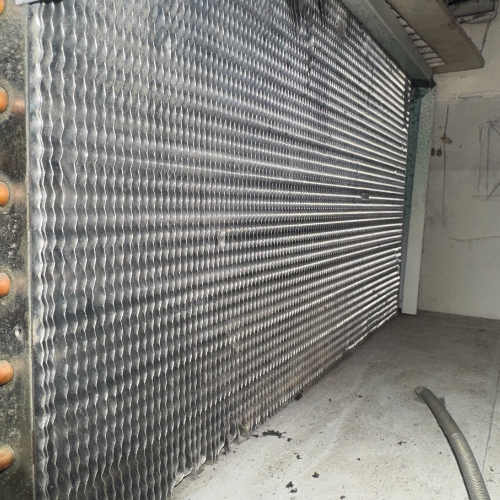
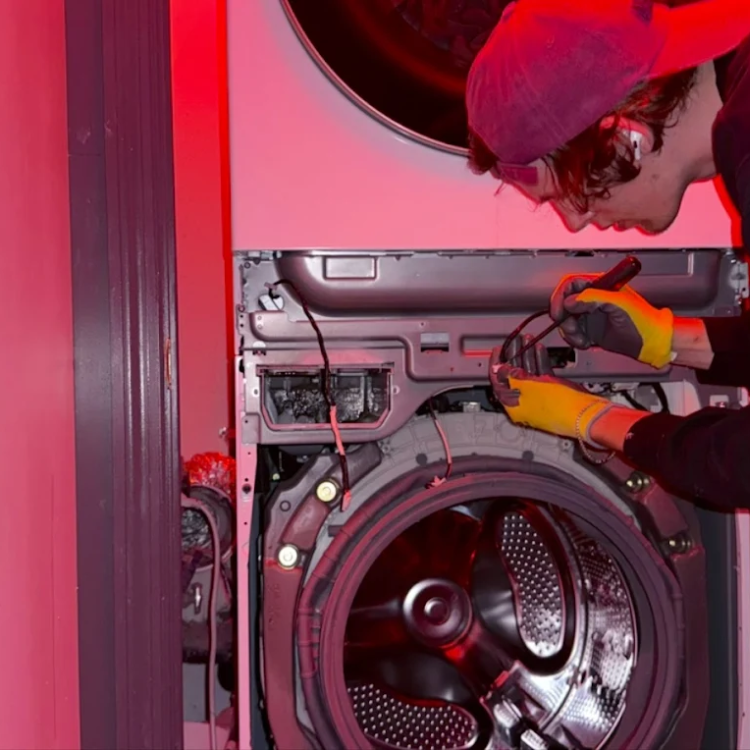
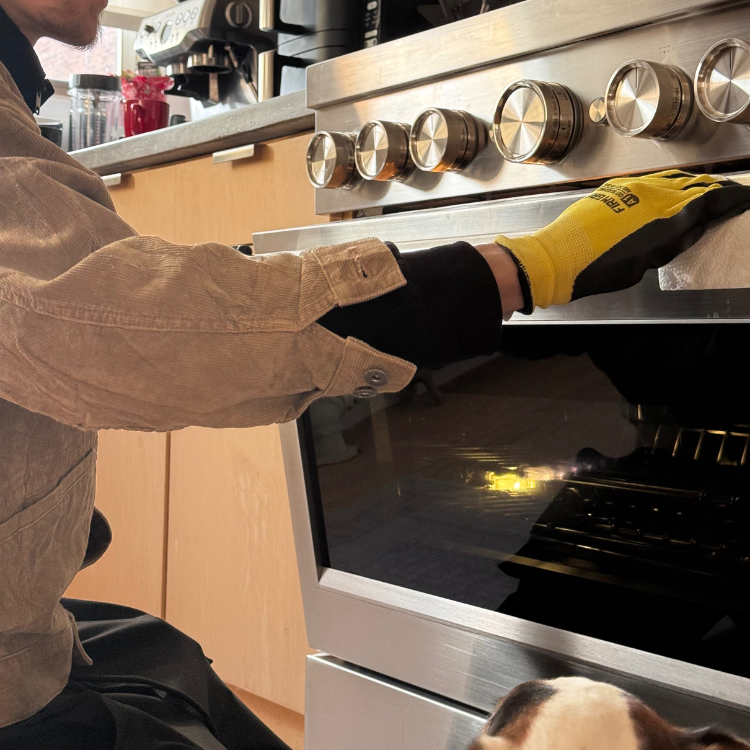
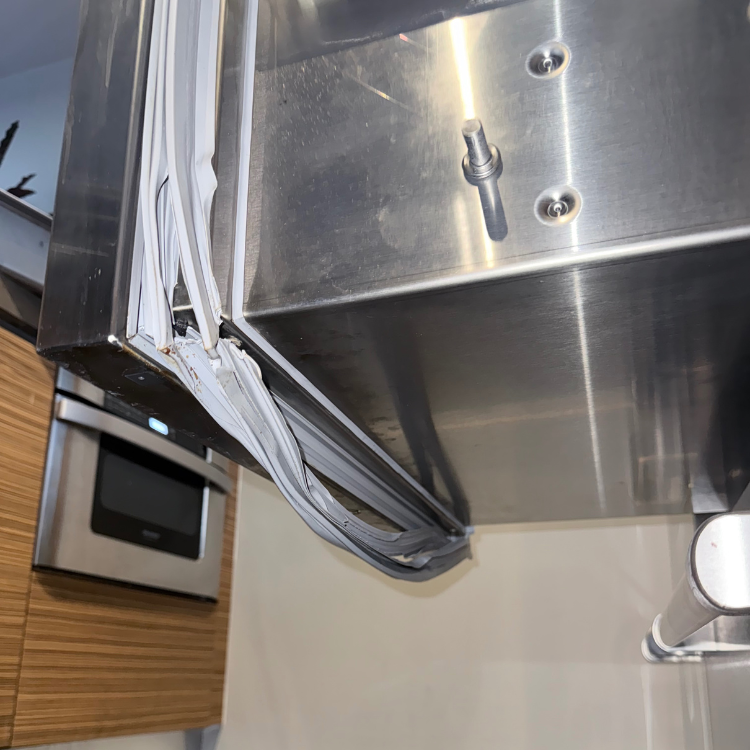
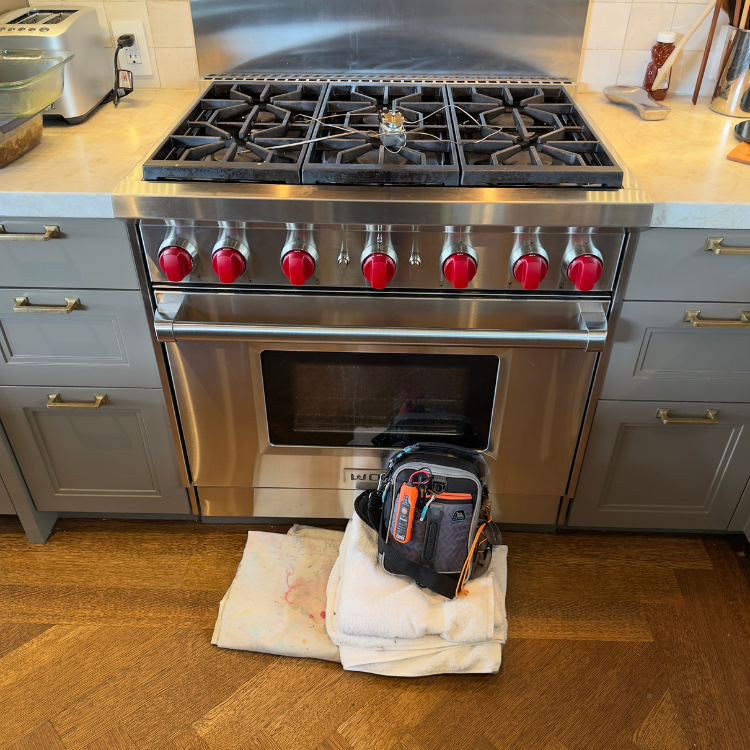
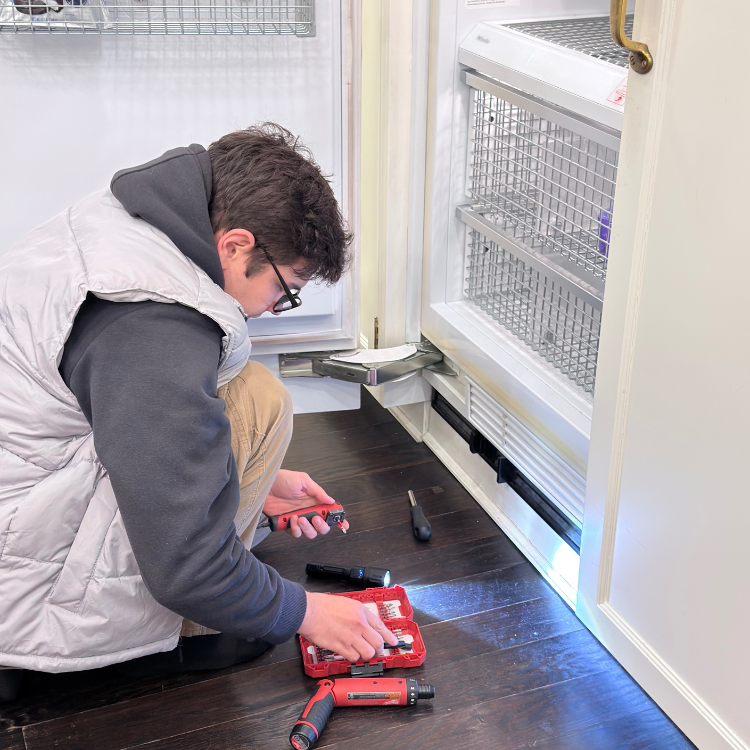
Photos from real jobs: what we found, what we tested, and what we fixed.


.png)
.avif)








.avif)