
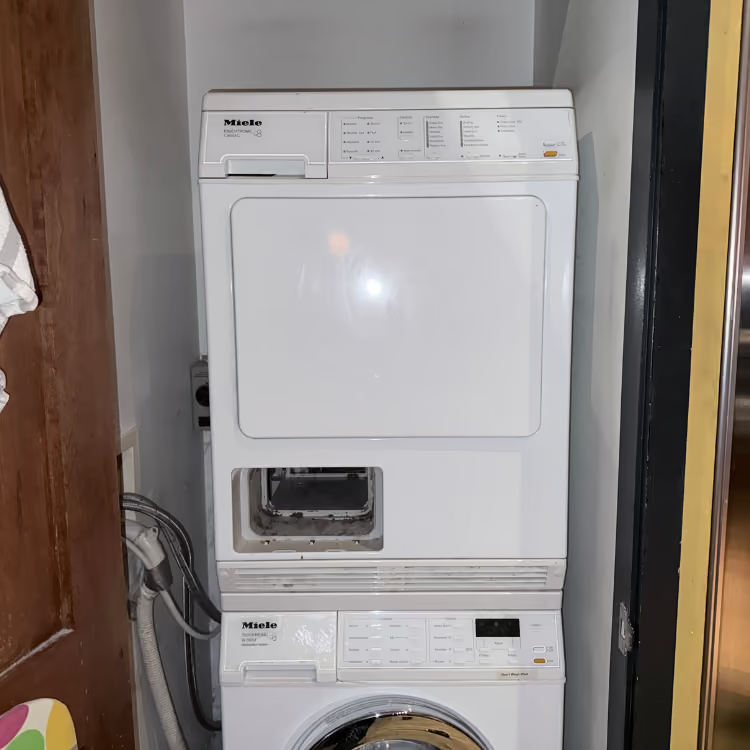

Miele Dryer F13 or F18 Error: Verify Before Replacing A Sensor
Miele dryer F13 or F18 needs code-context verification first. Check the exact display, model family, airflow conditions, and stop point before assuming a sensor failure.
Miele dryer F13 or F18 needs code-context verification first. Check the exact display, model family, airflow conditions, and stop point before assuming a sensor failure.
Use this decision map before turning F13 or F18 into a part diagnosis. The same short code numbers can appear across different Miele appliance families, so the dryer model, exact wording, and timing matter more than the number alone.
The useful answer is not that F13 or F18 can never appear on any Miele dryer. The useful answer is that those codes are not safe universal dryer meanings. Miele's public tumble-dryer index lists multiple numbered dryer faults, including F1 through F4 and F66, but F13 and F18 are not shown in that public dryer list.
That matters because Miele dishwasher support uses F13 and F18 for water-inlet type faults. A dryer repair route should not borrow dishwasher water-inlet logic, flow-meter language, drain-route advice, or valve replacement language from a code number alone.
Miele does publish dryer faults tied to temperature sensing. F1 and F2 are refrigerant temperature sensor faults, and F3 and F4 are drying-air temperature sensor faults. Those nearby official dryer faults can frame the diagnostic neighborhood if the machine is a heat-pump or condenser dryer, but they do not prove that visible F13 or F18 means a bad NTC sensor on your model.
The technician still has to prove which code context is real: a current public display fault, stored diagnostic information, a different visible dryer fault, or an unrelated code meaning copied from another appliance family.
Timing is important. If F13, F18, Technical fault, or an airflow message appeared after the plinth filter was washed, the dryer was pushed back into a closet, the unit was stacked, or the room ventilation changed, include that in the service notes. A damp filter, blocked grille, filter not seated flush, or disturbed access condition can create a different first diagnosis than a fault that appears on every startup.
Do not open the cabinet to prove that diagnosis. Preserve the evidence and describe what changed.
Stop homeowner checks when F13 or F18 returns after one careful restart and visible filter or airflow checks, when the dryer shows heat smell, breaker trips, smoke, repeated shutdowns, or an immediate startup fault, when the unit is stacked or built in and access requires moving it, or when the code exists only as stored service data that cannot be interpreted from the public display.
At that point, more resets do not add useful evidence. The next step is controlled diagnosis from the model number, display history, service memory, airflow condition, and sensor evidence.
No. Miele's dishwasher support uses F13 for a water-inlet issue, but that does not make it a dryer diagnosis. The appliance type and model family have to be confirmed first.
Not from the dryer code alone. F18 appears in Miele dishwasher support as a water-inlet valve technical fault, and that logic should not be copied into a dryer repair route.
It could be part of a model-specific or stored diagnostic route, but it is not a universal NTC replacement instruction. Miele publishes separate dryer temperature-sensor fault pages for F1/F2 and F3/F4.
Filter condition, seating, dampness, and lower airflow can affect Miele dryer operation. If the fault began right after cleaning, that timing is useful service evidence.
One restart after recording the code is enough to see whether the warning was temporary. If it returns, or if the dryer runs hot, smells, trips a breaker, smokes, or shuts down, stop using it.
Miele residential requests are considered in Brooklyn, Manhattan below 96th Street, and selected Queens routes; stacked, panel-ready, and built-in access conditions are checked with the exact address.
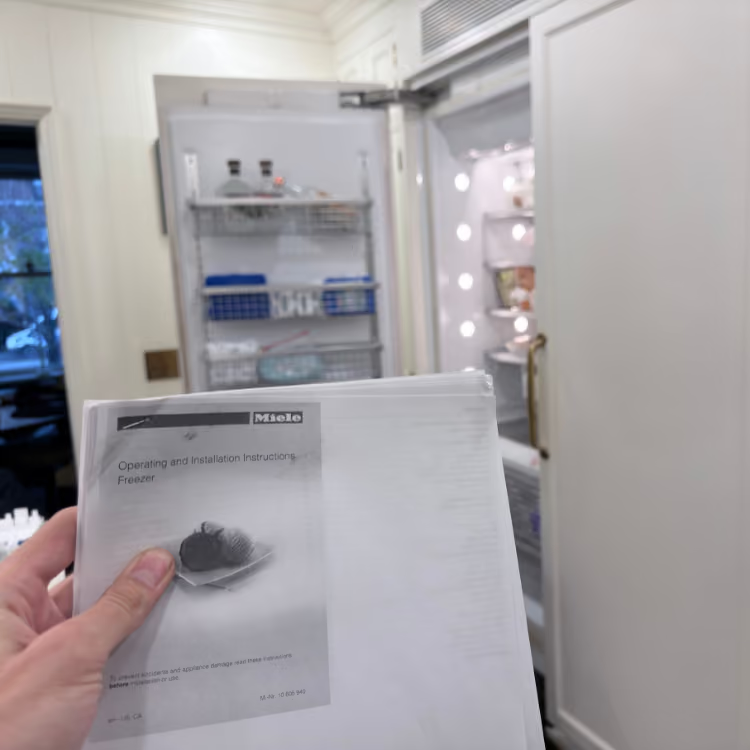
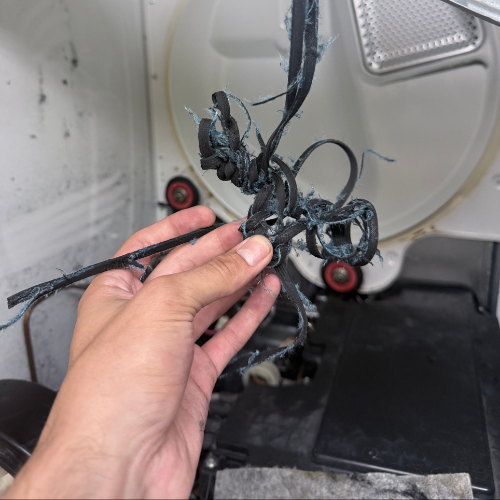

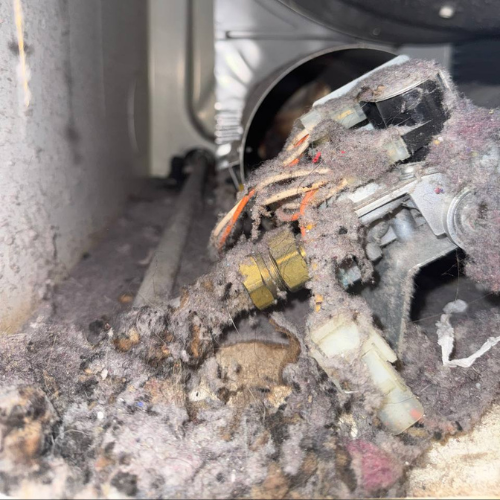

Technician experience standard: 4+ years of hands-on appliance repair per technician; senior technicians bring 8 and 16 years. Miele intake starts with the data plate, platform, program, message, failed stage, and stacked or built-in access. Independent service; no current manufacturer authorization implied.

