
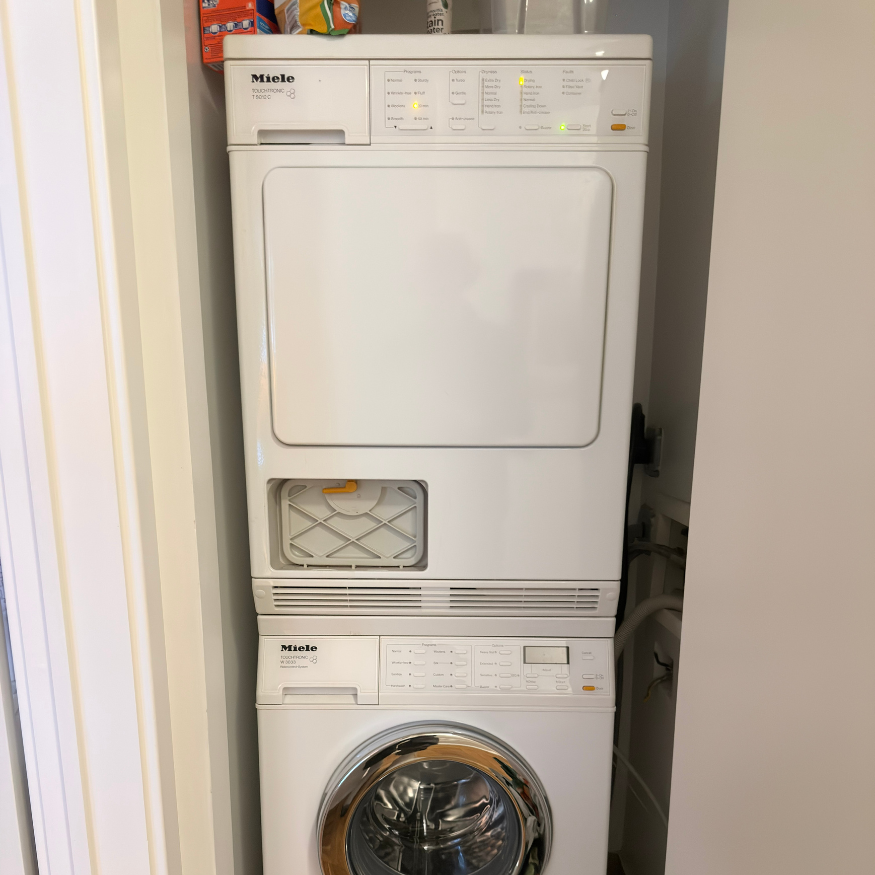

Miele Dryer Burning Smell: What to Do
Stop a Miele dryer for burning, electrical, or hot-rubber odor. Separate the narrow new-appliance rubber context from active heat or fire risk.
Stop a Miele dryer for burning, electrical, or hot-rubber odor. Separate the narrow new-appliance rubber context from active heat or fire risk.
Turn a Miele dryer off for a burning, electrical, melting, or worsening hot-rubber odor, and do not run another heated cycle to locate the smell. Miele notes that a mild rubber odor can occur with a new dryer and diminish after initial use, but that narrow explanation does not apply to smoke, sparking, abnormal heat, fabric damage, a hot power connection, or an intensifying odor. Once the area is safe, document where and when the odor appeared, the load condition, filter state, display, sound, and installation.
A dryer combines heat, moving fabric, lint, electrical load, and—depending on design—exhaust or condensate systems. Odor does not reliably identify the source, so the first decision is whether there is an active fire or electrical emergency.
If there is smoke, visible flame, sparking, strong electrical odor, rapidly increasing heat, or a hot wall connection:
If the odor has stopped and no emergency signal is present, leave the dryer off and let it cool. Do not perform another heated “sniff test,” reset a breaker, bypass a switch, open panels, remove internal lint, spray deodorizer, or use water on energized equipment.
“Burning smell” is a sensory warning, not a part diagnosis. Similar descriptions can come from:
The immediate safety response is the same: stop and classify before another cycle.
Use the Odor–Heat–Location–Timing record:
This record does not prove a failed component. It tells the next responder whether the problem tracks laundry, airflow, motion, electrical supply, installation, or a narrow new-appliance context.
Miele’s current support guidance says a new dryer can smell of rubber and that the odor may diminish after several cycles. That is useful only when all of these conditions fit:
If any safety signal is present, do not use the new-product explanation. “New” does not make smoke, electrical odor, excessive heat, or worsening smell normal.
Miele also distinguishes unpleasant laundry or dryer odor from burning. Wet items left too long, washer residue, unsuitable detergent dosing, or contaminated fabrics can smell sour, musty, oily, or stale when warmed.
That path should not be used to dismiss a sharp electrical, scorched, melting, or hot-rubber smell. Describe the odor before adding cleaners or rewashing the load. If oil-, solvent-, fuel-, or chemical-contaminated textiles are involved, do not put them back into the dryer; follow garment and safety guidance because some residues can ignite under heat.
CPSC and U.S. Fire Administration dryer-safety guidance emphasize lint removal and exhaust airflow. Restricted airflow can lengthen drying, raise operating temperature, and increase fire risk. A clean lint screen is necessary, but it does not prove that hidden passages, a wall duct, a shared building exhaust, or the termination is clear.
Do not disconnect the dryer and vent it into the room as a test. Do not reach into internal passages or use aggressive tools through the lint opening.
Low effort: make the situation safe and preserve evidence
Why it works: Continued heat can worsen an electrical, friction, lint, or airflow condition and destroy the timing evidence.
Tools/materials: Phone, notes, emergency contact information, and safe distance.
What to do:
Common mistakes:
Why it works: A structured description narrows the source without relying on unsafe exposure or guessed parts.
Tools/materials: Notes and phone camera; no open flame or heat source.
What to do:
Common mistakes:
Why it works: The load may contain a scorched item, trapped object, chemical residue, or odor carried from washing.
Tools/materials: Heat-resistant caution, laundry basket, flashlight, and sealable container for suspect items when safe.
What to do:
Common mistakes:
Medium effort: inspect only owner-accessible areas while off
Why it works: Lint accumulation, incorrect filter seating, residue, and trapped objects can change airflow or contact, and these areas are intended for routine owner access.
Tools/materials: Exact Miele guide, flashlight, soft approved cleaning tool, and phone.
What to do:
Common mistakes:
Why it works: External heat, crushed venting, blocked openings, condensate problems, or a damaged supply can influence the symptom and access plan.
Tools/materials: Flashlight and phone camera.
What to do:
Common mistakes:
Why it works: It respects Miele’s documented product behavior without using it as a blanket reassurance.
Tools/materials: Installation date, model/serial, official Miele guidance, and symptom record.
What to do:
Common mistakes:
High effort: arrange diagnosis and any exhaust work
Why it works: Odor often dissipates before arrival, so preserved timing and physical evidence are essential.
Tools/materials: Model/serial photos, load photos, display photo, program details, installation photos, and written timeline.
What to prepare:
Common mistakes:
Why it works: A dryer, receptacle, branch circuit, wall exhaust, shared duct, or building condition may require different qualified trades.
Tools/materials: Installation record, building contact, vent route information, electrical-panel label, access photos, and COI requirements.
What to prepare:
Common mistakes:
Preserve:
A strong report is: “Three-year-old heat-pump dryer, sharp electrical odor after ten minutes, load only warm, odor strongest at right rear, no smoke, dryer turned off normally, no restart attempted.” It communicates risk without asserting a component.
Miele says a new dryer can have a rubber odor that diminishes after initial cycles. This does not cover smoke, electrical odor, abnormal heat, damage, or a smell that worsens.
No. A burning odor should be documented without another heated test.
Keep that item out of the dryer and inspect it for residue, damage, fasteners, oil, or chemicals. Also inspect the accessible drum for a matching mark.
Lint restriction can reduce airflow and raise heat, but smell alone cannot establish the source. Clean filters as directed and keep the dryer off pending a safe decision.
No. The connector, wall duct, shared exhaust, or termination may still be restricted.
Only if the connection is cool, dry, undamaged, and safely accessible. Do not approach a hot, sparking, smoking, or damaged plug.
Not necessarily. Miele separates unpleasant laundry odor from a burning condition. Describe the smell and look for heat, smoke, damage, and timing.
No product should be used to mask a burning odor. Follow only cleaning methods in the exact operating guide after the safety condition is resolved.
Disappearance after cooling does not establish safety. A burning, electrical, melting, or worsening odor requires the cause to be evaluated.
Send model/serial, installation age, program, load, odor description, location and timing, heat, display, sound, filters, visible installation, recent changes, and any damaged item.
Miele residential requests are considered in Brooklyn, Manhattan below 96th Street, and selected Queens routes; stacked, panel-ready, and built-in access conditions are checked with the exact address.
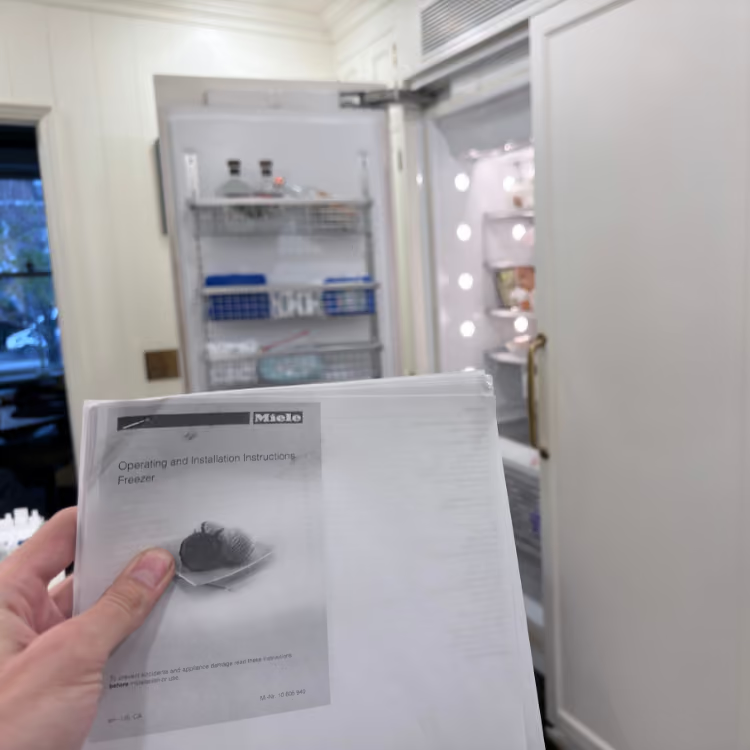
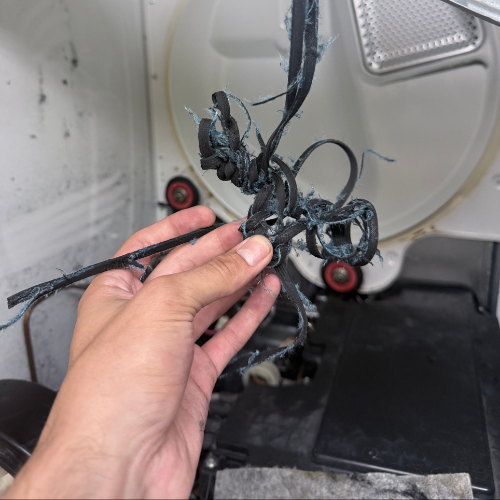

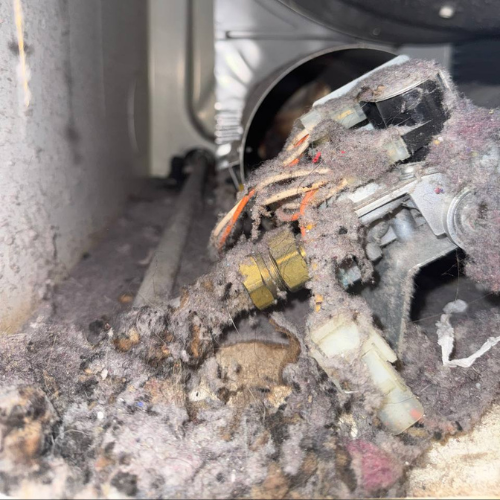

Technician experience standard: 4+ years of hands-on appliance repair per technician; senior technicians bring 8 and 16 years. Miele intake starts with the data plate, platform, program, message, failed stage, and stacked or built-in access. Independent service; no current manufacturer authorization implied.

