
.png)
.png)


Tribeca Appliance Repair in Manhattan | Volt & Vector
Tribeca appliance repair for lofts, condos, built-in refrigerators, dishwasher leaks, laundry vibration, dryer airflow, ovens, ranges, and cooktops.
Tribeca Appliance Repair in Manhattan
Volt & Vector provides appliance repair in Tribeca for refrigerators, dishwashers, ovens, ranges, cooktops, washers, and dryers in Manhattan apartments, lofts, and managed condo buildings. The useful starting point is not just the appliance name; it is how the symptom fits the apartment route. A dishwasher leak under stone counters, a built-in refrigerator warming behind panels, a stacked washer shaking in a laundry closet, or a dryer that heats but leaves clothing damp all require different preparation. Tribeca homes can involve freight windows, service entrances, finished floors, custom cabinetry, and water lines that should not be disturbed casually. We do not ask customers to drag out built-in or water-connected appliances blindly. The right first step is to document the symptom, confirm entry requirements, and get an estimate before repair work begins.
Tribeca Service Context
Tribeca is part of Lower Manhattan's Community Board 1, and official LPC maps show multiple historic-district areas in the neighborhood. For appliance service, that matters because many apartments are inside converted loft properties, renovated condos, or older structures where the route to the kitchen or laundry closet is part of the repair plan. A wide apartment does not always mean simple appliance movement; finished floors, long hallways, service lifts, and custom panels can slow the work if they are not described before the visit.
The most useful local detail is the relationship between symptom and installation. If water is appearing near a dishwasher toe-kick, the priority is containment and cabinet protection. If a refrigerator temperature display is rising, the useful facts are section temperature, door behavior, water or ice connection, and whether the unit is built into panels. If a laundry unit is stacked, the decision is not to unstack it, but to capture the vibration, drain, or airflow symptom clearly enough to plan the work.
Street and property logistics should stay practical. A service entrance, freight reservation, or lobby rule changes the appointment more than a long neighborhood description does. When a COI is required, certificate wording and permitted work hours should be sent with the service request so the appliance issue and the entry issue can be handled together.
Common Tribeca Appliance Repair Situations
Dishwasher Leak Under A Stone Or Panel-Ready Counter
- Visit context: Many Tribeca kitchens place the dishwasher below stone counters, behind finished panels, or near cabinetry that can wick water before the floor looks flooded.
- Appliance symptom: Water appears at the toe-kick, inside the sink base, along a cabinet seam, or after the drain stage. A leak-protection error or a pump that keeps running can also mean water has reached the base area on some models.
- Safe customer action: Stop the cycle, avoid running a test wash, dry visible water, and do not pull the dishwasher forward if the flooring or panel traps the unit.
- What helps booking: Include where water first appeared, whether the sink backs up, a photo of the under-sink drain connection, and any leak-report requirement. For the cabinet-risk side of this problem, use protect cabinets around a dishwasher before another cycle is attempted.
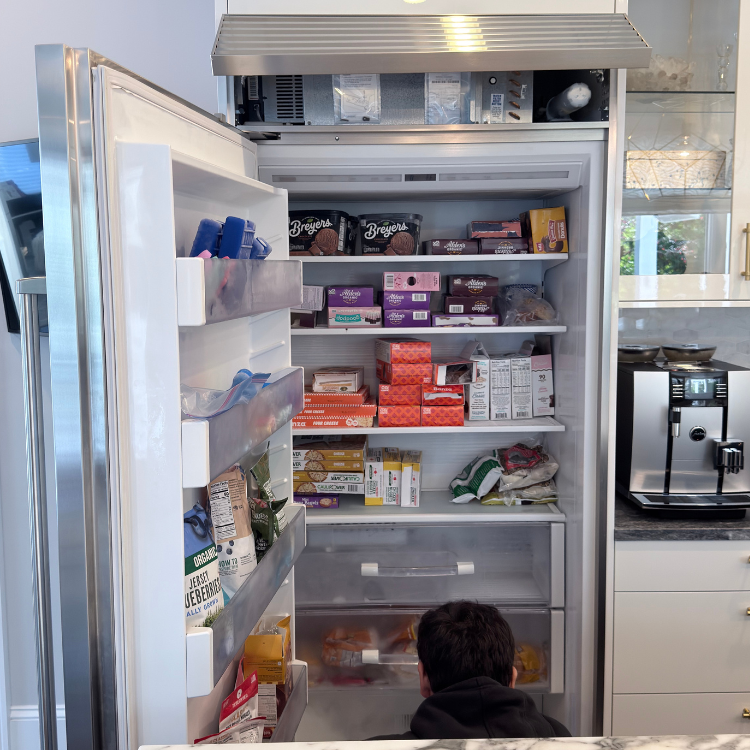
Built-In Refrigerator Warming Behind Finished Panels
- Visit context: Loft kitchens can hide the refrigerator model tag, condenser access, water line, and ventilation path behind panels or tall cabinetry.
- Appliance symptom: The fresh-food section warms, freezer temperature changes, ice production slows, or the display shows a number that does not match food condition.
- Safe customer action: Record the displayed temperature, keep doors closed as much as practical, and avoid sliding the refrigerator out of the opening without a service plan.
- What helps booking: Share the brand, visible temperature readings, whether the freezer is affected, and whether the unit has a dispenser or ice maker. Related cooling guide: refrigerator not cooling diagnosis.
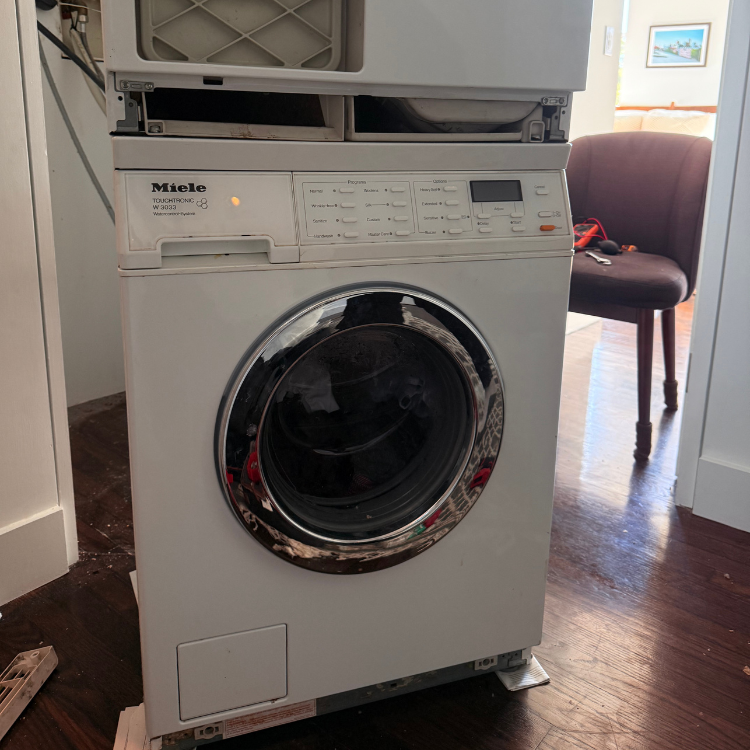
Washer Shaking In A Loft Laundry Closet
- Visit context: Converted apartments may place stacked laundry in a closet where the pan, side clearance, and floor feel solid until high-speed spin starts.
- Appliance symptom: The washer bangs during spin, pauses with wet laundry, walks toward the closet frame, or vibrates only with certain load sizes.
- Safe customer action: Stop the load if the machine hits the wall or shifts position; do not keep restarting high-speed spin to force the cycle through.
- What helps booking: A short video of the spin behavior is more useful than a long description. Note whether the laundry is stacked, on a pan, or recently installed. For repeated spin movement, compare the symptom with washer shaking violently.
Dryer Heats But Clothes Stay Damp
- Visit context: Laundry closets in condos and lofts may use vented, ventless, or combo machines, and the airflow or condenser path is often harder to inspect than the appliance door.
- Appliance symptom: The dryer gets warm but towels stay damp, dry time keeps increasing, a lint or airflow message appears, or a combo unit warms the closet without removing moisture.
- Safe customer action: Clean the accessible lint filter, stop use if the dryer smells hot or shuts down mid-cycle, and do not dismantle a stacked unit to reach hidden airflow paths.
- What helps booking: Identify whether the dryer is vented, ventless, heat-pump, or washer-dryer combo, and note whether the load is warm, cold, damp, or unusually hot at the end. If it is a compact combo unit, start with ventless combo washer dryer not drying.
Oven Or Range Not Reaching Set Temperature
- Visit context: Open loft kitchens often make heat problems visible quickly because the oven is used near living space and cabinetry, not in a separated kitchen.
- Appliance symptom: Preheat takes too long, food cooks unevenly, the oven display reaches temperature but results say otherwise, or a range burner works while the oven does not heat correctly.
- Safe customer action: Stop use if there is smoke, an electrical smell, repeated breaker trips, or a gas odor. Do not remove panels or test live components.
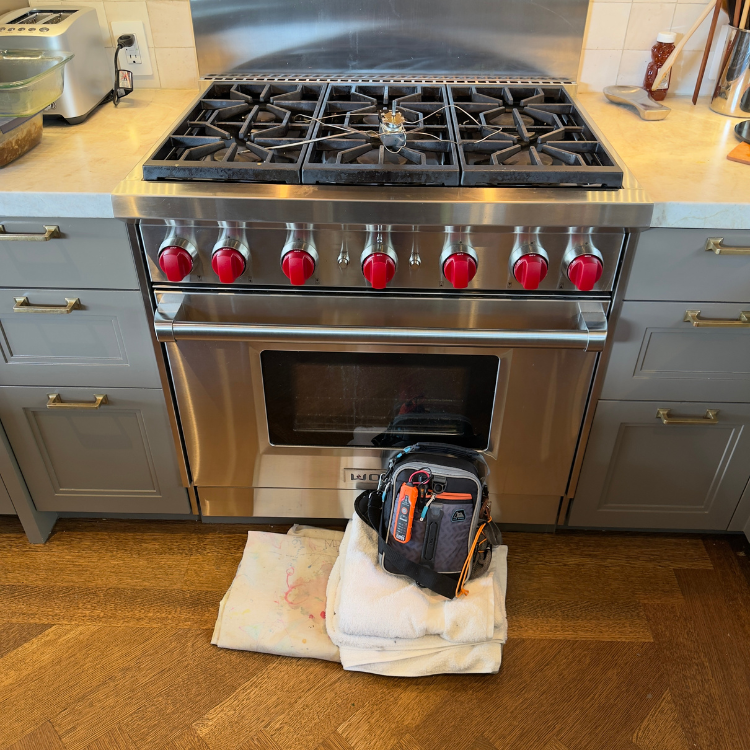
- What helps booking: Tell us whether the issue is bake, broil, convection, surface burner, or display-related, and whether the problem happens from cold start or after the oven is already hot. For oven-specific heating work, the next page is oven repair.
Cooktop Clicking After Cleaning Or A Spill
- Visit context: A cooktop in an open kitchen makes ignition noise easy to hear, but the important distinction is moisture or burner alignment versus a gas-odor situation.
- Appliance symptom: One burner keeps clicking, all burners spark when one knob is used, or clicking continues after cleaning even though there is no gas smell.
- Safe customer action: Keep knobs off, let damp burner parts dry, confirm caps are seated if that is safely visible, and leave immediately if any gas odor appears.
- What helps booking: Note which burner clicks, whether the issue began after boil-over or cleaning, and whether flame appears normal when the burner does light. For clicking with no gas odor, use gas surface burner clicking.
COI And Building Access
For Tribeca properties that require a COI, send the certificate holder wording, management contact, service entrance instructions, and any freight reservation window before the visit is finalized. COI can be provided when required, but the certificate wording has to be exact; guessing it can delay entry even when the appliance symptom is clear.
If the appliance problem involves active water, tell management early enough to protect adjacent units or common areas. That does not mean the customer should move the appliance. It means leak-notification rules can be handled while the repair request focuses on the symptom, model, and installation route.
When To Stop Using The Appliance
Stop using the appliance if there is active water under flooring, repeated breaker trips, smoke, burning smell, extreme dryer heat, violent washer movement, or any sign that a built-in unit is shifting against cabinetry. Repeatedly restarting a failed cycle can make evidence worse and increase damage.
If you smell gas, leave the area immediately and call 911 or the utility from a safe location. Do not test burners, relight pilots, flip switches, use a phone inside the apartment, or investigate the source yourself.
Quick Answers
Do you repair appliances in Tribeca loft and condo properties?
Yes, when vendor entry is allowed and any required COI, service entrance, or elevator instructions are available. Those details should be handled before the appliance is moved or opened.
Should I move a built-in refrigerator or dishwasher before service?
No. Built-in refrigerators, panel-ready dishwashers, and water-connected appliances should stay in place until the movement plan is clear. Photos and symptom notes are safer than forced movement.
What should I do first if my dishwasher leaks in a Tribeca kitchen?
Stop the cycle, dry visible water, protect nearby cabinets if you can do so safely, and avoid running another wash. The timing of the leak in the cycle is useful evidence.
Can a dryer problem come from the apartment airflow path rather than a dryer part?
Yes. Long dry times can come from lint-filter restriction, vent path problems, condenser issues, or combo-unit moisture removal. The load condition at the end of the cycle helps narrow the direction.
What information is most useful for a Tribeca appointment?
Send the appliance type, brand, model label if visible, symptom timing, photos of the installation, and property rules. For leaks or gas odor, safety comes before scheduling details.
Book Tribeca Appliance Repair
For appliance repair in Tribeca, send the symptom, appliance type, model details, installation photos, and property requirements together. Volt & Vector is an independent appliance repair company, uses a diagnostics-first approach, uses OEM parts when appropriate and available, and provides an estimate before repair work begins.
Insured HVAC & Appliance Repair Service in NYC & Brooklyn
VOLT & VECTOR LLC carries Commercial General Liability insurance through Hiscox Insurance Company Inc. Coverage is effective June 6, 2026 – June 6, 2027, with $1,000,000 per occurrence and $2,000,000 general aggregate limits.COI available upon request for homeowners, landlords, property managers, co-op/condo boards, commercial clients, and general contractors.