

.avif)
Lost Jewelry in Appliances: NYC Recovery Guide
Lost a ring or earring in an appliance? Stop use, check safe visible locations and learn when filter access, internal retrieval or a jeweler is needed.
Lost Jewelry: What to Do First
Stop the appliance and do not run another cycle to flush the jewelry out. Wait for movement, hot water and steam to settle; let doors or lids unlock normally. Before searching, disconnect power where it is safely accessible and prevent anyone from restarting the appliance.
- Washer: Check the laundry, visible drum and accessible door-gasket folds. A pump filter is a next step only if the exact manual provides owner access and a safe cooling/draining procedure.
- Dryer: After it cools, check clothing, the drum, removable lint screen and visible drum edges. Do not push a brush or tool down an unseen cavity.
- Dishwasher: Let it cool, then inspect racks, utensil baskets and the tub floor. Remove a filter only as the manual directs; beware of broken glass.
- Garbage disposal: Isolate electrical power first. Never put hands inside. Use long-handled tongs only for a visible, freely accessible object.
- Item hidden, stuck or incomplete: Leave the appliance stopped. Tell service what is missing, where you last saw it and which cycle was running. Recovery cannot be promised.
The Moment You Realize What Happened
Start with the last place you knew the jewelry was present. A ring or chain may still be in a pocket, bedding fold or laundry basket. Note which cycle stage had been reached and whether you heard a metallic sound; those details help narrow the search without restarting the appliance.
The search stops where access becomes unsafe. Hot retained water can spill from a washer filter, dishwasher steam can burn, and a trapped chain can catch behind a moving assembly. Follow only the model's owner-access procedure. Wet electrical parts, uncertain power isolation or a part that needs forcing require building staff or service.
Jewelry in the Washing Machine
Begin with the laundry. Unload only after normal unlock, one item at a time, over a clear surface. Inspect pockets, cuffs, bedding folds and the laundry basket. Use a flashlight to look at the drum and around its visible opening. Do not run the washer to make the item rattle again.
Front-load door gasket. Small objects can sit in the accessible folds of the flexible seal. Inspect the folds visually before touching anything. Remove a loose, visible item only if it can be lifted without pulling the gasket away from its mounting. Do not sweep your fingers blindly through folds containing possible sharp pins or glass, or tug a chain trapped behind the drum edge.
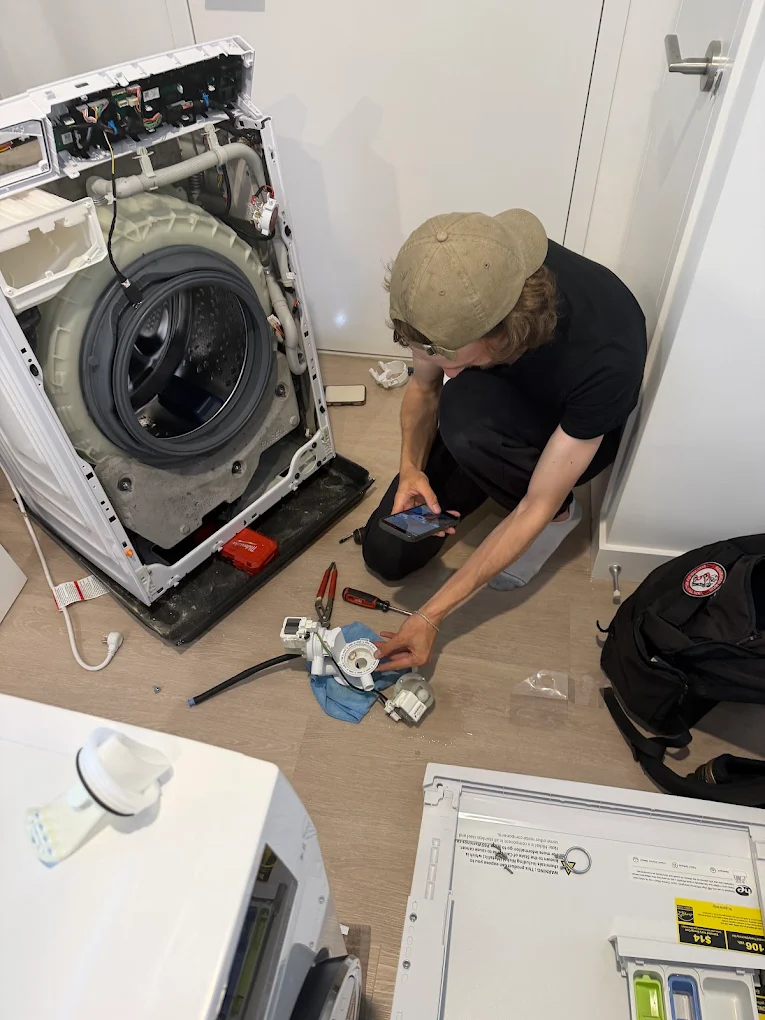
Owner-accessible drain filter. Some washers have a filter that may catch small objects; others require service access. Identify the exact procedure in the model manual before opening anything. The machine must be off, the water cool, and retained water drained into suitable containers using the specified procedure before the cap is removed. Samsung's front-load filter instructions show the cooling and drainage steps and explicitly direct owners to their own manual when the design differs. A front access panel does not mean a full tub can be safely emptied by unscrewing its cap.
Top-load washers. Check clothing, the basket surface and visible spaces around the agitator or impeller. Do not pull an agitator cap, remove an agitator or open the cabinet unless the manual specifically identifies the part as owner-removable for this purpose. A small item may be beneath the basket or in the drain path, but its absence from the visible drum does not establish either location.
If the door is locked or water remains. Do not pry the lock or choose a drain program solely to chase the item. Follow the model's safe access instructions; when those steps are unclear, ask service how to preserve both the load and the missing item. If water appears on the floor, the water-leak response takes priority over the search.
Jewelry in the Dryer
Check clothing first, then the visible drum, removable lint screen and the opening where the screen normally sits. Use a flashlight rather than placing a hand or improvised hook into a cavity you cannot see.
A loose item may lie at a visible drum edge. Whirlpool identifies small objects caught at drum seams as one possible source of scraping. Retrieve only something loose and accessible without stretching a felt seal or forcing the drum. If a chain disappears into a seam, leave it for service.
Do not use a drain brush, compressed air or another cycle to move the item. Those methods can move it farther from the opening, snag it or damage a seal. An item in the blower housing, internal duct or behind the drum requires access specific to the dryer. Tell the technician whether you heard scraping, whether the item is magnetic if known, and whether a chain, clasp or stone is still missing; do not rely on a magnet to find all jewelry metals.
Jewelry in the Dishwasher
Pause the cycle according to the controls. Let spraying stop, open cautiously and allow the interior to cool before searching. With power safely isolated, inspect the utensil basket, rack corners, the visible tub floor and the area around the filter. Lift removable racks only as the manual permits and look before reaching: broken dishware may be present.
Some filter assemblies are designed for owner removal, while other access requires service. Use the exact instructions, keep track of parts and reinstall the filter correctly before any later use. Do not reach blindly into the pump well, pry a cover or remove a spray arm to search without a model-specific owner procedure. An empty filter does not prove the item has left the appliance.
Heat, detergent exposure and impact can affect jewelry differently depending on its metal, stone, setting and any treatment. Do not assume that gold survived unharmed or that a particular stone is ruined. Save any loose fragments and ask a jeweler to inspect the recovered piece before wearing it, especially if a clasp, prong or stone seems loose.
Jewelry in the Garbage Disposal
Switch it off immediately and keep anyone else from operating it. Before retrieval, disconnect its power at a safely accessible plug or turn off the identified disposal circuit. If you cannot confidently isolate it, do not attempt retrieval yourself.
InSinkErator's safety instructions require power off for object removal and prohibit putting hands or fingers into the disposer. Use a flashlight from above. A visible, loose item may be lifted with long-handled tongs or pliers, without forcing it against the grinding mechanism. Leave anything jammed or out of sight to a technician.
Do not press the reset button, operate the unit, manually turn its mechanism or run water to flush out the jewelry while the item remains unaccounted for. A reset is not a retrieval method. If the piece may be in the drain trap, explain that to a plumber; do not dismantle plumbing as the next blind search step.
Retrieve fragments only if equally accessible. A ring may be bent and a chain may have missing links or a displaced stone even when the main piece is found. Keep the disposal off if any metal remains missing or if it hums, jams or sounds different after the incident.
Working With a Technician for Appliance Jewelry Recovery
Describe the job as a lost-item retrieval request and ask whether the provider handles that appliance and access type. Include:
- Appliance: Model-label photo and appliance type.
- Missing item: A photograph or description, including any clasp, link or stone still unaccounted for.
- Last-known stage: When it may have entered and which cycle was running.
- Search so far: Areas checked and objects or fragments already recovered.
- Current condition: Noise, leak, locked door, retained water and whether power is isolated.
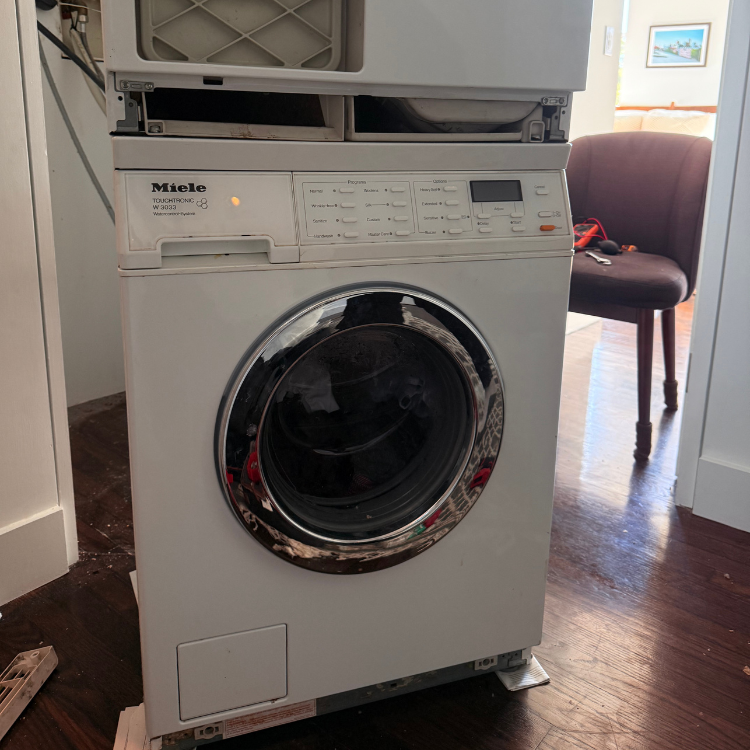
- Access: An installation photo, especially for a stacked unit, built-in appliance or tight closet.
Internal retrieval may involve moving equipment, draining retained water or opening a model-specific assembly. Before work begins, ask about:
- Preparation: Who will provide safe access and handle moving or draining the appliance.
- Charges: The investigation fee and how additional retrieval work is estimated.
- An unsuccessful search: What is charged and how the appliance will be reassembled if the item cannot be found.
Appliance retrieval and jewelry repair are separate jobs. Keep the recovered piece and fragments together in a container. Avoid harsh cleaners or ultrasonic cleaning while the material and settings are uncertain. GIA's care guidance explains why heat, chemicals and treated stones need different care; a jeweler can assess the actual piece.
For prevention, check pockets and fasteners before every load and use appropriate garment bags where the care label allows. The washing-machine item and loading checklist covers the related loose-object risks.
Stop the appliance, search the accessible areas, and keep a missing item from becoming a blind retrieval attempt.