

Miele Dryer Squeaking or Grinding Noise
Separate documented Miele operating sounds from new scraping or grinding by sound, timing, drum motion, heat, load effect, and stop-use signals.
Separate documented Miele operating sounds from new scraping or grinding by sound, timing, drum motion, heat, load effect, and stop-use signals.
Some Miele dryers can make documented rubbing or squeaking sounds from drum guide rollers, while heat-pump operation may add compressor or condensate-pump hum. A new scraping or grinding sound is not safely dismissed when it worsens, follows every drum turn, restricts motion, creates heat or odor, leaves debris, or damages laundry. Stop the dryer, remove the load after it is safe, and record the sound and timing without forcing the drum or opening panels.
Sound alone cannot identify a dryer component. The safe decision depends on what happens with the sound: drum motion, temperature, odor, fabric condition, debris, and whether the machine completes normally.
Stop use when:
Turn the dryer off and allow it to cool. Do not force the drum, remove panels, bypass the door, lubricate through openings, insert tools into gaps, or run repeated cycles to “wear in” a new grinding sound. If smoke or fire is present, leave the area and call emergency services.
Miele documents several noises that can occur during normal operation. Its support material notes that drum guide rollers can produce rubbing or squeaking. Heat-pump models may buzz or hum as the compressor or condensate pump operates. Some cold-start sounds can also diminish after the machine runs briefly.
Those statements are narrow. They do not make every squeak, scrape, or grind normal. The useful test is not “Can this brand make noise?” but “Does this exact sound fit the documented source, timing, and normal motion without heat, odor, damage, or interruption?”
Use the Sound–Timing–Motion–Heat profile:
A soft rubbing or squeak that has always occurred, matches normal drum rotation, and does not worsen or change performance can fit Miele’s roller guidance. A steady heat-pump hum tied to compressor operation is different from a rough grind tied to each drum revolution.
Concern rises when the sound is:
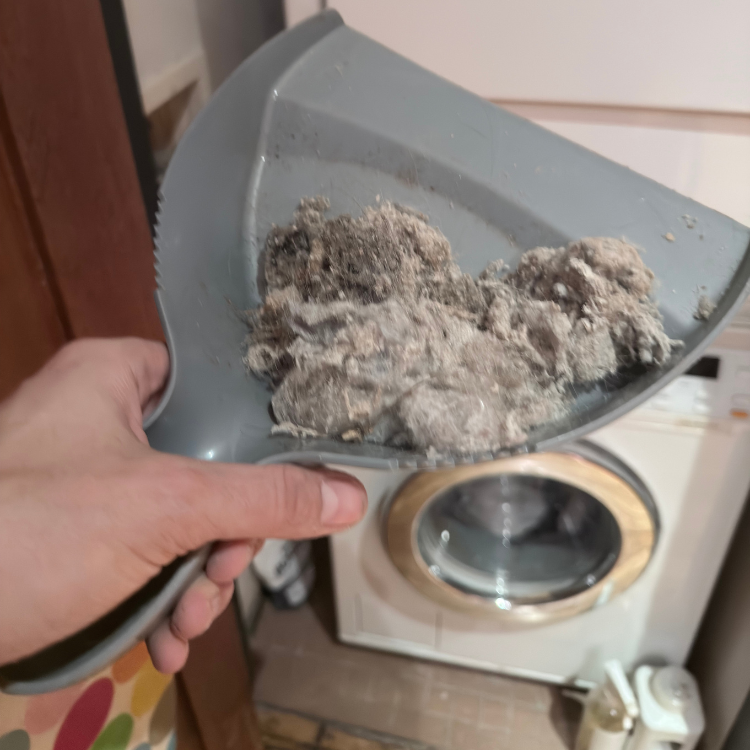
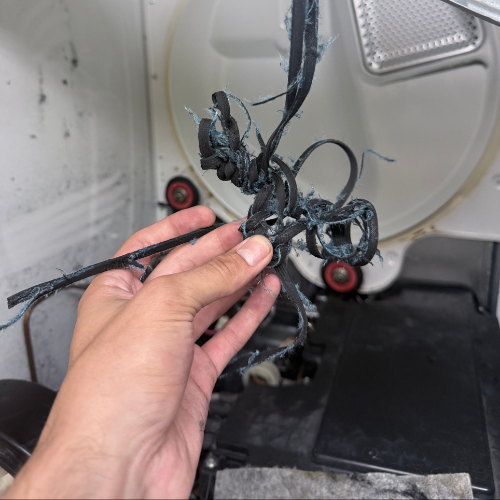
Zippers, bra hooks, coins, drawstrings, buttons, shoes, and hard garment decorations can click, scrape, or strike the drum. A load can also become unbalanced and create rhythmic thumping. These sounds often change or disappear when the load is removed.
That observation is useful only when the dryer is otherwise safe. Do not continue a heated cycle after a burning odor, grinding, stalled drum, or metal debris merely to see whether the load is responsible.
Timing helps separate mechanisms without naming a failed part. A brief sound only at a cold start may fit documented startup behavior. A hum that begins when a heat-pump compressor runs differs from a scrape that repeats with drum rotation. A periodic pump sound can relate to condensate movement on an applicable model.
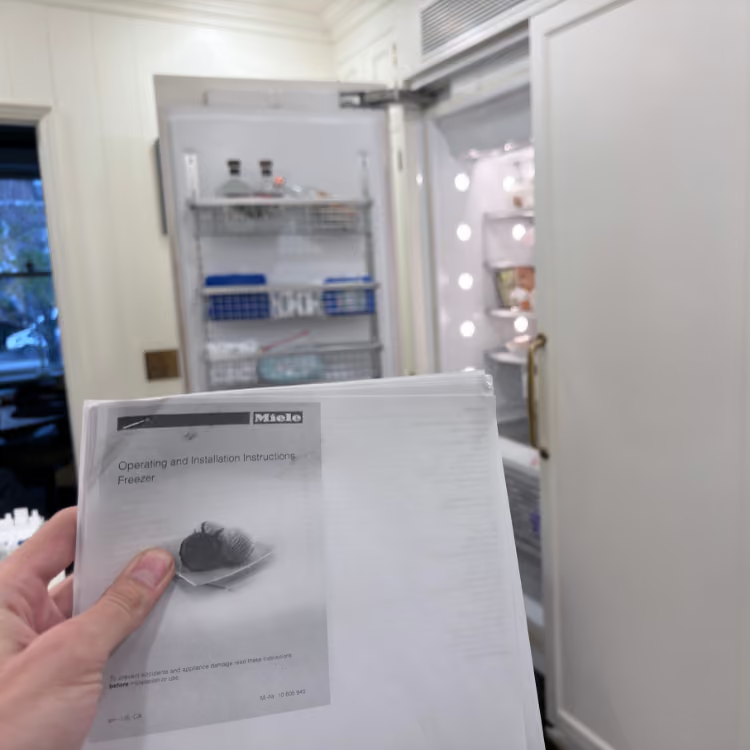
Use the exact operating instructions to confirm whether the dryer is heat-pump, condenser, or another design. Do not infer platform from appearance alone.
Low effort: capture a usable sound profile
Why it works: A short structured record helps decide whether the sound follows rotation, the load, startup behavior, compressor operation, or a safety problem.
Tools/materials: Phone, notes, timer, and flashlight.
What to do:
Common mistakes:
Why it works: Words tied to rhythm and conditions are more reliable than a guessed bearing, belt, roller, fan, or motor diagnosis and help choose the correct next step.
Tools/materials: Written sound prompts and one short recording.
What to do:
Common mistakes:
Why it works: Removable hard objects and garment hardware are common mimics and can sometimes be found without disassembly.
Tools/materials: Laundry basket, flashlight, and gloves only for handling cool laundry.
What to do:
Common mistakes:
Medium effort: compare the sound under safe conditions
Why it works: When no safety signals exist, a brief model-permitted observation without laundry can show whether the load created the sound.
Tools/materials: Exact Miele operating guide, timer, and phone.
What to do:
Common mistakes:
Why it works: Official guidance provides bounded normal explanations for rollers, heat-pump operation, condensate pumping, and some startup conditions.
Tools/materials: Complete model number, official support page, and exact operating guide.
What to do:
Common mistakes:
Why it works: A cabinet touching a wall, hose, shelf, trim, or another appliance can amplify vibration without requiring internal access.
Tools/materials: Flashlight, paper strip, level only if the exact installation guide assigns leveling to the owner, and phone camera.
What to do:
Common mistakes:
High effort: preserve evidence for mechanical diagnosis
Why it works: A sequence-specific record helps reproduce the sound while reducing unnecessary disassembly and part guessing.
Tools/materials: Model/serial photo, audio/video, load description, timing notes, and installation photos.
What to prepare:
Common mistakes:
Why it works: Stacked, closet, and condenser installations can require controlled movement and utility access.
Tools/materials: Wide photos, dimensions, stack information, condensate or exhaust layout, and building rules.
What to prepare:
Common mistakes:
Save:
A useful description is: “New metallic scrape once per drum revolution, present empty and loaded, motion remains steady, no odor, but a fresh shiny mark is visible at the opening.” It preserves the evidence without claiming a part.
Miele documents that drum guide rollers can make rubbing or squeaking sounds. That does not cover a new, worsening, metal-on-metal sound or one paired with drag, heat, odor, debris, or damage.
Miele notes that compressor and condensate-pump operation can produce hum or buzz on applicable models. Confirm the platform and timing in the exact guide.
Miele documents some startup noises that may diminish after a few minutes in certain conditions. A harsh grind, stalled drum, odor, or heat remains a stop signal.
Yes. Hard garment parts can strike or rub the drum. Remove and inspect the load after the dryer is off and cool.
Do not force it. If the drum resists, scrapes, or appears out of position, keep the dryer off.
No. Lubricant can contaminate laundry, collect lint, create odor, and reach surfaces not intended for it.
It suggests a rotational relationship, but not a specific failed part. Record it and include motion, heat, odor, debris, and load effect.
Only a sound that fits the exact documented normal behavior with normal motion, temperature, odor, and laundry may be monitored. A new scrape or grind should not be ignored simply because drying continues.
The load or its weight may influence the sound, but that does not prove the dryer is fault-free. Report the empty-versus-loaded difference.
Record the exact sound, timing, drum motion, heat, odor, load effect, visible marks or debris, model, and installation.
Miele residential requests are considered in Brooklyn, Manhattan below 96th Street, and selected Queens routes; stacked, panel-ready, and built-in access conditions are checked with the exact address.


Technician experience standard: 4+ years of hands-on appliance repair per technician; senior technicians bring 8 and 16 years. Miele intake starts with the data plate, platform, program, message, failed stage, and stacked or built-in access. Independent service; no current manufacturer authorization implied.

