

.avif)
Why Is My Oven Glass Cloudy?
Cloudy oven glass may be surface residue, temporary condensation or deposits between panes. Find the haze safely and check the model's cleaning instructions.
Cloudy Oven Glass: Find the Layer First
Cloudy glass can be accessible grease or cleaner residue, temporary condensation, or deposits between the panes. Haze alone does not prove a failed gasket. Let the oven cool completely before inspecting or cleaning it.
- A mark changes when you clean a reachable surface: continue only with the method approved for your model.
- Fog appears during cooking and clears afterward: it may be normal condensation. Observe the usual cool-down; do not run a high-heat cycle to force it clear.
- The mark remains behind clean surfaces: it may be between panes. Do not insert tools through door vents or dismantle the door.
- Cracked glass, unstable door or damaged gasket: stop using the oven and arrange an assessment.
Before requesting service, photograph the haze with the oven cold and note whether it followed a spill, cleaning product or change in door operation.
Why Oven Glass Gets Cloudy: Locate the Affected Surface
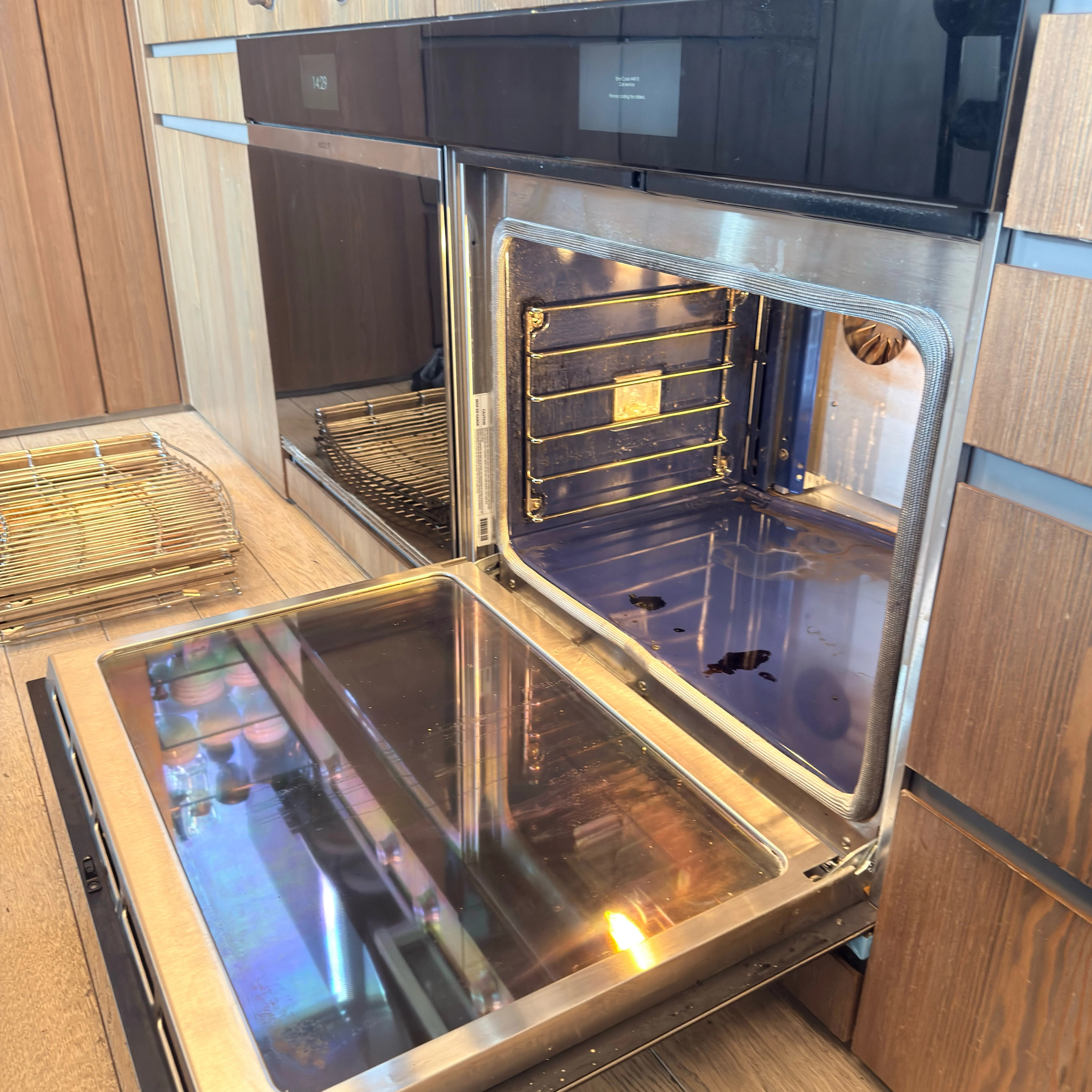
An oven door may contain several glass surfaces, including surfaces you cannot reach without taking the door apart. Wiping the outside will not remove a mark on the inside face or between the panes. Start with a cool oven and identify which reachable surface, if any, holds the residue.
Clean a small accessible area using the model's approved method and compare it with the surrounding glass. If the appearance does not change, stop escalating the cleaner. A remaining mark could be hidden residue, staining or surface damage; its color alone does not settle the cause.
Cause 1: Grease and Other Deposits Between the Panes
Brown or gray streaks can form when cooking vapor leaves deposits on glass. GE explains that vapor carrying grease can pass between oven-door panes and leave streaks as it cools. This can occur without a broken door gasket.
Spills or cleaning liquid entering openings are another clue. Note whether the haze appeared gradually or immediately after a spill. Cleaning the accessible surfaces will not remove deposits on a hidden pane, so repeated scrubbing can add damage without reaching the stain.
Ask whether your model permits any owner access to the affected surface. Wolf directs between-pane door disassembly to trained service. Do not push cloths, wires or scrapers through vents. The repair may be cleaning, a component replacement or another model-specific approach; request the scope before agreeing to a complete door replacement.
Cause 2: Temporary Condensation
Moisture can condense on cooler glass during cooking. Fog that comes and goes is different from a fixed greasy streak. GE describes between-pane moisture as normal for its ranges when cooking moisture-rich foods, with dissipation expected within 24 hours for the products covered by that guidance.
Use that as a model-bound example, not a universal timer. Check the care instructions for your oven, especially a steam or combination model. Record whether the moisture clears during the usual cool-down and whether a permanent mark remains afterward.
Do not run an empty oven at 450°F or start self-clean solely to remove fog. If condensation persists beyond the behavior described for your model, or accompanies poor door closure, ask for assessment rather than repeating a heat treatment.
Cause 3: Cleaner Residue or Surface Damage
A haze first noticed after cleaning may be product residue or damage to the glass or coating. It is not possible to confirm permanent etching simply because a white film remains. Tell the technician or manufacturer which product and tool were used; keep the product label or a photo of it.
Bosch recommends mild soapy water and a soft cloth and warns against abrasive cleaners and pads. Other manufacturers permit different products for particular surfaces. That is why a universal baking-soda paste, vinegar mixture or scraper instruction is inappropriate.
Follow both the appliance instructions and cleaner label. Do not mix products or apply a stronger cleaner just because the first attempt made no difference. If the surface is damaged, ask whether the affected pane is separately replaceable and whether the mark is cosmetic or affects safe use.
Cause 4: Door or Gasket Trouble Alongside the Haze
A damaged or displaced gasket needs attention, but cloudy glass does not establish that fault. Wolf's door glass pack is unsealed by design. This accommodates expansion and contraction and also means liquid from careless cleaning can enter it.
With the oven cold, visually check accessible gasket material for obvious damage or displacement. Do not pull, scrub or stretch it, and never feel around a hot door to locate escaping heat. GE cautions against getting water or cleaner on the door gasket.
Report poor closure, a new uneven gap or a sudden change in movement separately from the haze. Those details help the technician decide whether door alignment or gasket work belongs in the repair scope. If the door drops unexpectedly, use the Wolf door-opening guide for the relevant model distinction.
Brand and Model Differences That Change the Cleaning Method
The useful distinction is the exact door construction and care procedure, not a ranking of which brand gets dirty fastest. A conventional range, steam oven and combination appliance can require different treatment. The model label is the starting point for finding the right instructions.
For example, Wolf's glass-cleaning guidance and Bosch's general glass-care guidance differ on permitted tools and products. Do not carry instructions for a cooktop over to an oven door, or instructions for one oven's exposed glass over to a coated or hidden pane.
When to Clean and When to Arrange Service
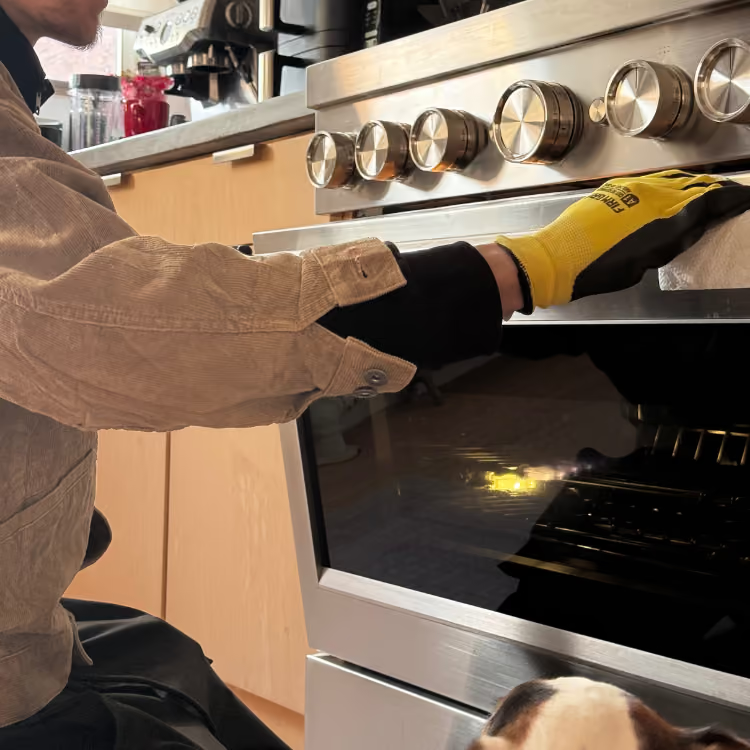
Clean only an accessible surface on an intact, stable door, with the oven fully cool and the model-approved method. Apply cleaner in a controlled way so it does not run into openings. Stop if the approved method is not reaching the mark.
Arrange an assessment for persistent hidden deposits, possible surface damage, visible gasket deterioration or abnormal door behavior. Broken glass or a door that cannot close correctly is a stop-use condition. When requesting service, include the model/serial, cold photos, cleaner history and whether the haze clears after ordinary use. That information helps distinguish a cleaning request from a door repair.
Where the haze sits matters more than how hard you scrub.