


.avif)
Dryer tumbles but has no heat? Separate settings, electric supply, gas ignition and thermal protection, with safe checks and model-specific diagnosis.
Dryer Running but No Heat: Start Here
If the drum turns but the load stays cold on a heated cycle, check the selected program and identify the dryer type. Conventional electric dryers can lose heating power while the motor still runs; gas dryers can tumble without burner heat. A thermal safety device, heater or ignition fault requires model-specific diagnosis.
- Cold from the start: record the cycle, model and any recent power, gas or installation change.
- Warm at first, then cold: record when heat stopped and any warning; repeated shutdown needs service.
- Warm but wet: moisture may not be leaving the clothes. Use the hot-but-wet guide.
- Before another load: clean the accessible lint filter and check only visible, safely reachable obstructions. Do not pull out a stacked or gas-connected dryer.
Burning odor, scorching, gas odor, smoke or a breaker trip changes the next step to stopping use; see the safety instructions below.
Why a Dryer Can Tumble Without Heating
A dryer can keep turning while its heat source is unavailable. On a conventional electric model, the heating supply, element or a protective device may be open. On a gas model, gas availability, ignition or burner control may prevent flame. Cycle selection and airflow also matter: an air-only setting makes no heat by design, while restricted airflow can lead to a protective shutdown. None of these observations identifies a replacement part by itself.
First separate clothes that stayed cold throughout a heated cycle from clothes that became warm but remained damp. A cool load at the end can also reflect the normal cool-down period. If heat was present but moisture remained, use the hot-but-wet dryer guide. If the drum never starts, use the no-start guide.
Identify the Dryer Before Following a Parts List
Use the model label, manual or installation record to identify gas, conventional electric, condenser or heat-pump operation. Do not pull a stacked or built-in dryer out to find the connections. A gas dryer still needs electricity for its motor and controls. A ventless dryer is not automatically a heat-pump dryer: conventional condenser models also exist, and their heating and cleaning arrangements differ.
For a conventional electric dryer, the specified supply matters. GE explains that covered electric models can run without receiving the full heating supply. A model rated for 208/240 V is not defective merely because the building supplies 208 V. The nameplate and installation instructions control; a qualified electrician must investigate a suspected supply problem.
Gas Dryer: Where Heating Can Stop
Gas Availability and the Ignition Sequence
If heat disappeared after an installation, move or building gas interruption, tell the service provider. The dryer may have electrical power but no usable gas supply. Do not reopen a valve that may have been closed for safety, disturb fittings or try to light the burner manually. Once supply is confirmed, diagnosis follows the model's ignition sequence rather than a universal order of replacement parts.
Thermal Fuse or Other Heat Protection
On some gas dryer platforms, an open thermal fuse interrupts the gas-valve circuit while the drum still turns. Other protective devices and wiring arrangements differ. An opened one-time fuse cannot reset itself. The repair must establish why it opened, including exhaust restriction, incorrect venting and heat-control faults where relevant. Replacing a fuse does not establish that the underlying condition has been resolved.
Gas Valve Solenoid Coils
Valve coils are one possible reason a burner fails to establish or sustain heat. Heat that appears initially and disappears later is useful service information, but it does not prove coils have failed. The technician needs to separate gas supply, ignition permission, coil operation and temperature-related interruption. A coil kit should not be ordered solely because the laundry is cold.
Igniter
A failed igniter can prevent the burner from lighting. However, an igniter that never glows may also be receiving no power because another part of the circuit is open. A visible glow is not proof that ignition is otherwise healthy. Record sounds or behavior you have already noticed from normal use; do not remove a panel to watch the burner.
Flame or Radiant Sensor
The flame-sensing arrangement is another part of the ignition sequence on applicable models. Its symptoms can overlap those of a valve or igniter fault. Whirlpool's model-specific service procedures test these components separately; they do not turn “glows but no flame” into a universal coil diagnosis. The useful service result is confirmation of the failed stage, not replacement of several ignition parts because their symptoms resemble one another.
Temperature Regulation and High-Limit Protection
Normal burner operation includes periods without flame. A thermostat, temperature sensor or protective device may also interrupt heat for a fault. Heat stopping mid-cycle therefore needs context: the selected program, load, exhaust condition, warnings and whether heating resumes normally. A high-limit device opening does not automatically mean that device is defective; it may be responding to abnormal temperature.
Conventional Electric Dryer: Where Heating Can Stop
Supply, Cord and Connections
Motor operation does not confirm the full heater supply. Report any recent electrical work, power interruption, relocation or breaker trip. An ON breaker handle and a working drum light are observations, not electrical measurements. Supply voltage under operating conditions, connections and circuit suitability belong to an electrician or qualified appliance technician. Do not test the receptacle with a lamp, adapter or phone charger.
Heating Element
An open heater element can leave the dryer tumbling without useful heat. The element cannot be condemned from cold laundry alone: the technician must also establish whether the control requests heat and whether the correct supply reaches the heating circuit. Element continuity, insulation and connections are service checks. A shorted element can create a different, unsafe overheating condition; it is not simply a “weak heater.”
Thermal Fuse and Heater Cut-Off
These names are not interchangeable. For example, Whirlpool's GEW9200-family service sheet distinguishes a fuse in the motor circuit from a cut-off in the heater circuit. One fault can stop the drum; another can remove heat. The exact wiring diagram determines which behavior applies. Never bypass either device or fit a different temperature rating.
Thermostat, Thermistor, Relay or Wiring
Depending on the model, a mechanical thermostat or electronic temperature measurement controls heater cycling. An open connection, incorrect sensor signal or failed heater relay can interrupt heat even when the element itself is intact. Diagnosis must distinguish the temperature being measured from the command being sent and the heat actually produced. A control board is not the default answer after an element replacement fails.
Heat-Pump and Condenser Dryers
A heat-pump dryer uses a refrigerant circuit to recover heat and remove moisture. It may feel cooler than a conventional resistance-heated dryer, so judging it by door temperature is unreliable. Restricted filters, poor room ventilation, condensate interruption or a heat-pump fault can impair drying. The manual identifies which filters and maintenance openings the owner may use.
A conventional condenser dryer has a different heat source and may have a removable condenser. Some heat-pump models use self-cleaning arrangements instead. Do not transfer a cleaning video, filter interval or hidden-access instruction from one design to another. If accessible maintenance is complete but drying remains poor, diagnosis should confirm airflow, condensate movement and heat generation before refrigerant work or major parts are proposed.
Apartment Exhaust and Access
On a vented installation, the visible connector behind the dryer is only part of the exhaust route. Hidden wall or roof ducting, the termination and any building-managed equipment may need inspection. A clean lint screen or recent cleaning of one section does not verify the whole route. Do not assume a shared exhaust exists; ask building management which system serves this dryer and who maintains it.
If the problem started after the laundry equipment was moved, note that timing. A crushed or disconnected transition duct is worth checking professionally even if the building duct was recently cleaned. Long runs are assessed against the exact installation instructions, including bends and permitted materials, rather than a universal maximum length.
Safe Checks and Information for Service
- Program: record the heated cycle and temperature setting; distinguish Air Dry, cool-down and energy-saving behavior from absent heat.
- Filter: with the appliance stopped and cool, clean the owner-accessible lint filter as instructed and reinstall it correctly.
- Exhaust: look only at a readily visible connector or safely accessible termination. Do not lean out a window, climb or move a gas/stacked dryer.
- Timing: note whether heat was absent from the start, appeared then stopped, or was present despite wet clothes.
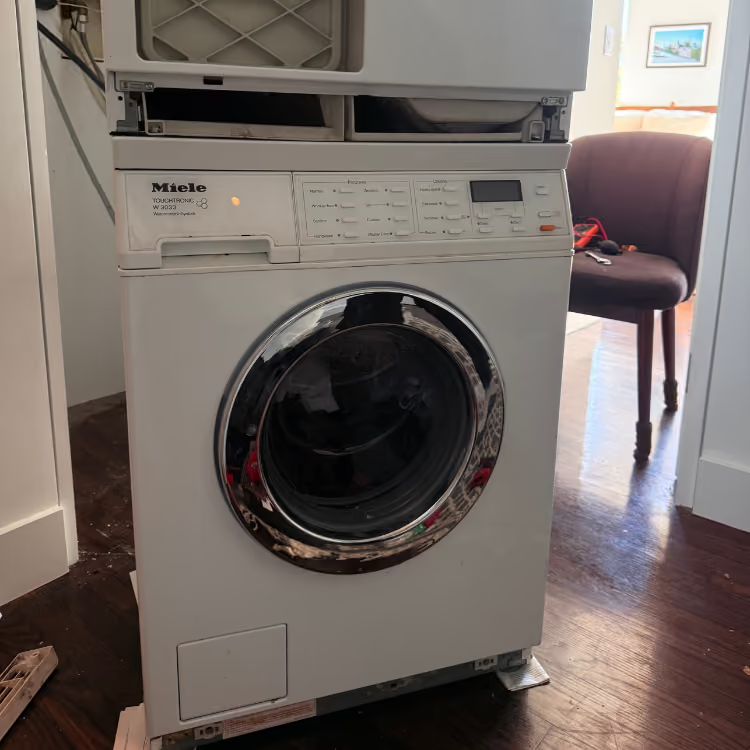
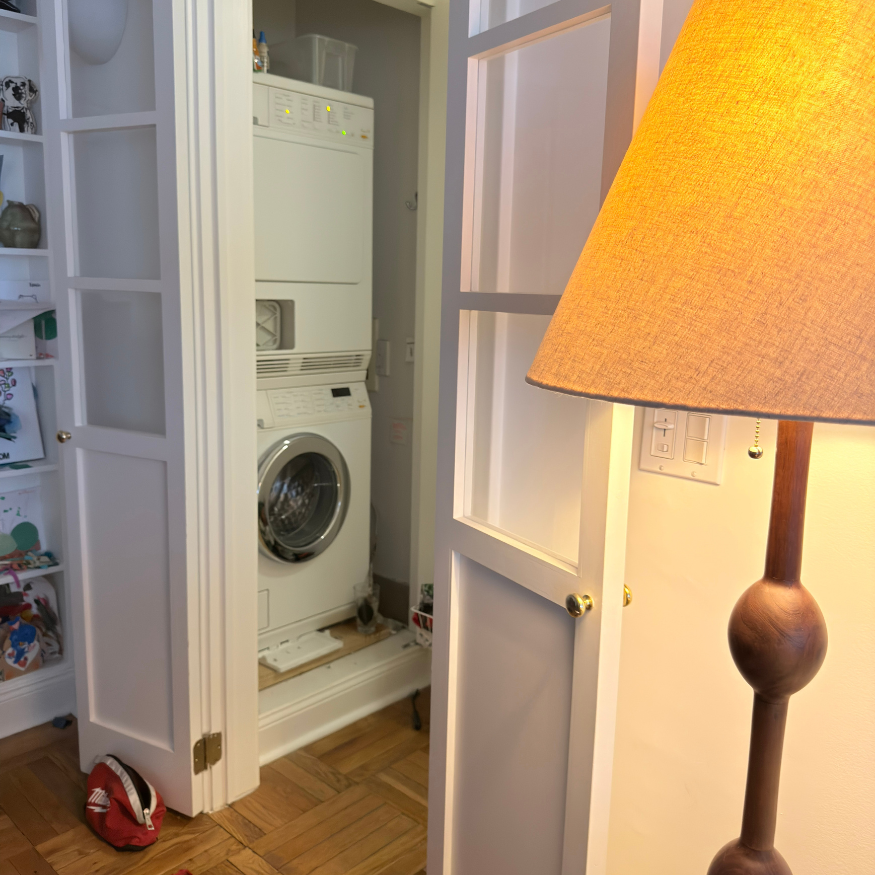
- Visit details: provide the model label, exact warning, recent work and any earlier fuse or heater replacement. Include a closet/stack photo and the building's access requirements.
When to Stop
Stop using the dryer for burning odor, scorching, unusual heat, electrical damage, breaker trips or repeated shutdowns. Do not run extra cycles to reproduce those conditions. For smoke or fire, leave and call 911. For gas odor, leave without operating electrical switches and call the gas emergency service from outside. Do not bypass protection, open cabinets or repeatedly reset a breaker. For persistent no heat without an emergency, request a diagnosis through the existing laundry service page; the symptom alone cannot establish repair cost or whether replacement is preferable.