
.jpg)
.jpg)
.jpg)
.avif)
Homeowner, Park Slope

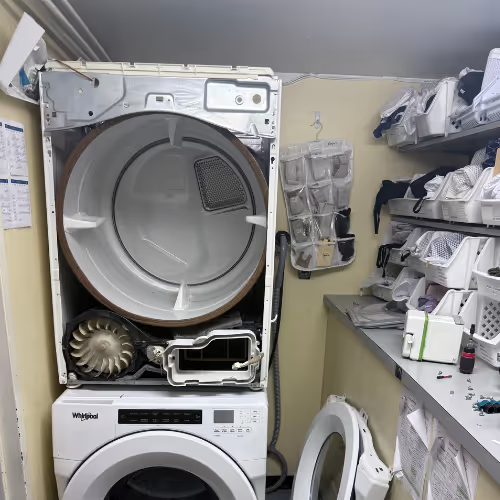
A: Whirlpool electric vented (240V) dryers, gas vented dryers, ventless condensing dryers, ventless heat-pump dryers, stacked laundry centers/laundry towers, and all-in-one washer/dryer combos.
A: Restricted airflow. On vented units it’s usually a crushed/long/blocked vent path. On ventless units it’s restriction in the internal condenser/heat-exchange airflow path or a condensate handling issue that prevents moisture removal.
A: First we confirm the dryer has full 240V supply under load (a missing leg can let the motor run with no heat), then we test the heater circuit, thermal protections, and control-side switching.
A: We verify ignition and flame-proving behavior, confirm safe gas supply conditions, then check for airflow restriction that can trigger overheating protection and interrupt heat during a cycle.
A: Most often it’s sensor/control logic reacting to airflow/overheat conditions, moisture-sensing issues, or temperature sensing drift. We validate sensor inputs (moisture/temp) and confirm the control outputs are correct.
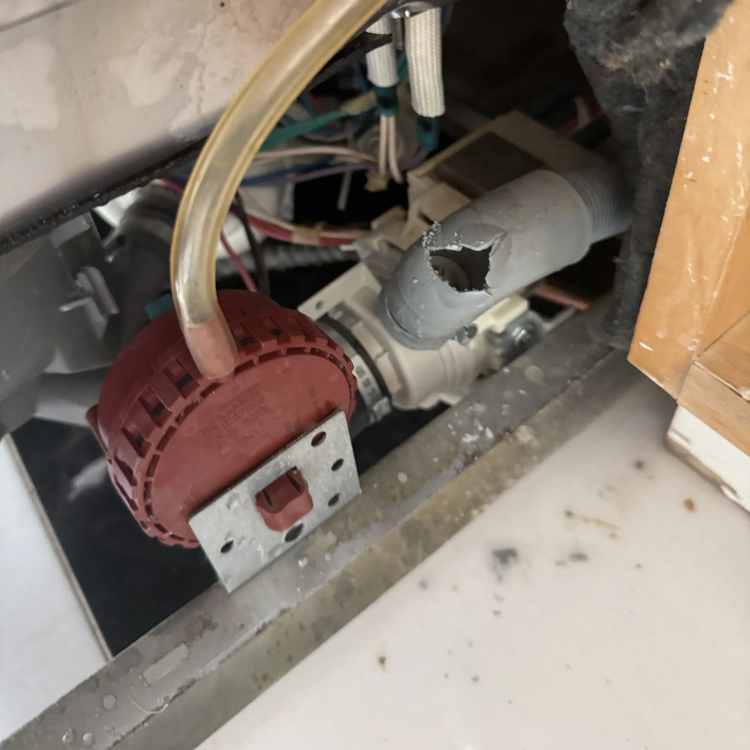
A: Long dry times, no heat/weak heat, overheating shutdowns, drum not turning, loud squeal/thump/grind noises, and (on ventless platforms) water handling/condensate issues.
A: Platform + install type (electric vs gas, vented vs ventless, stacked/tower vs standalone, combo vs separate), then power/gas verification under load, airflow/restriction checks, heat-path testing, sensor validation, and drive-system inspection.
A: Photo of model/serial tag, symptom + when it happens, any error code photo, install details (vented/ventless, gas/electric, stacked/tower, combo), plus a short video if the issue is intermittent.
A: OEM parts when applicable, verified by model/serial before ordering.
A: Burning smell, sparking, smoke, repeated overheating shutdowns, abnormally hot cabinet, or any gas odor (gas units). Stop the cycle and cut power; for gas odor ventilate and shut the gas valve if safely accessible.
.jpg)
Property Manager, Manhattan

Homeowner, Park Slope
We’re an independent repair company; brand names are used for identification only.
That depth in the field supports disciplined diagnostics, consistent documentation habits, and repeatable repair standards on real service calls.
Fact: Minimum 4+ years per tech; senior techs with 8 and 16 years.
Fact: Prior roles included authorized-service environments and warranty-service workflows.
Fact: Reproduce → isolate → measure → confirm root cause → functional test.
Fact: Model/serial + codes + readings + photos + parts path are documented.
Fact: Built-ins, stacked installs, tight clearances, building rules, COI workflows when needed.
Fact: Independent company; no current manufacturer authorization implied.
Property Manager, Manhattan
.jpg)
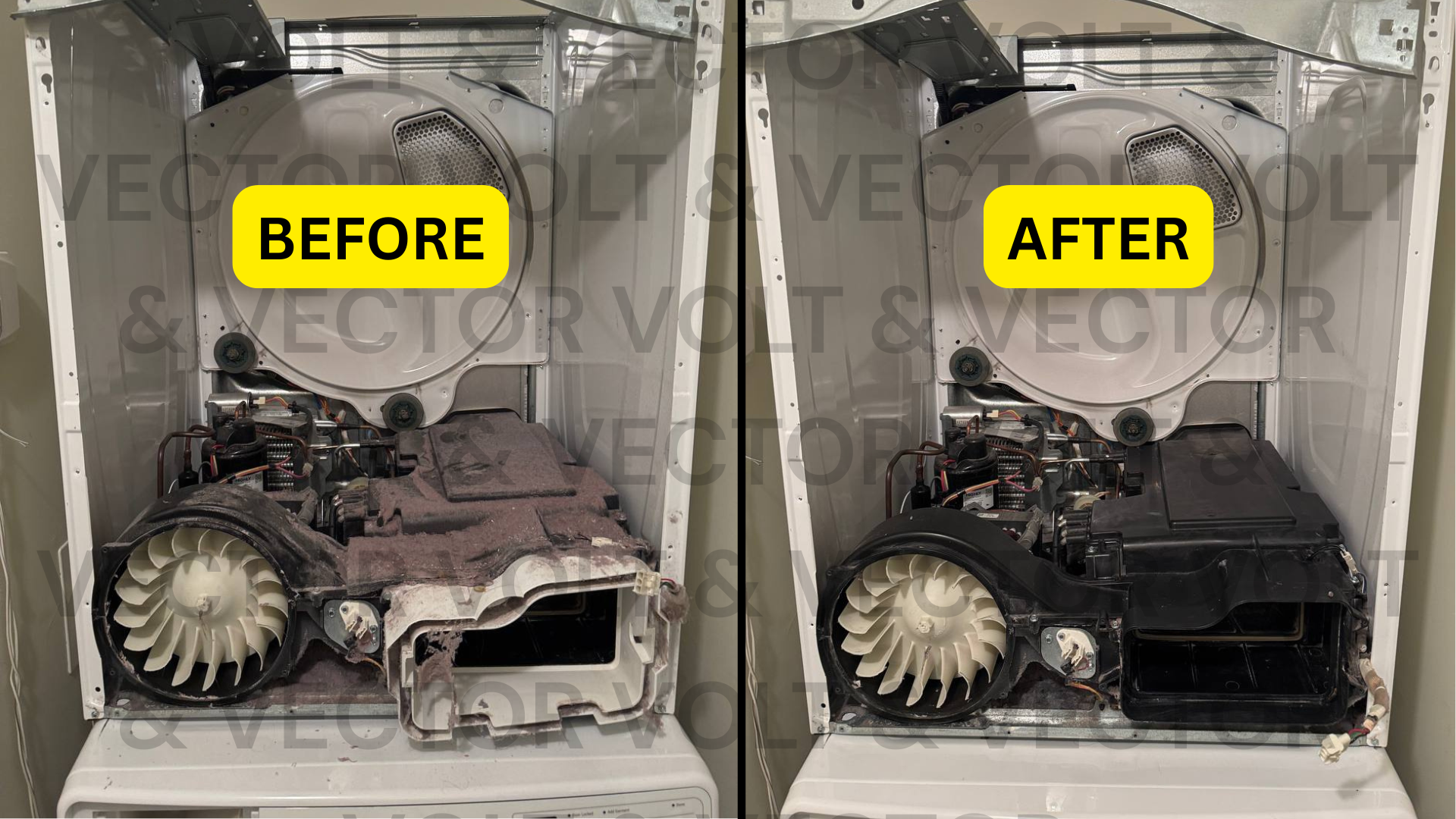
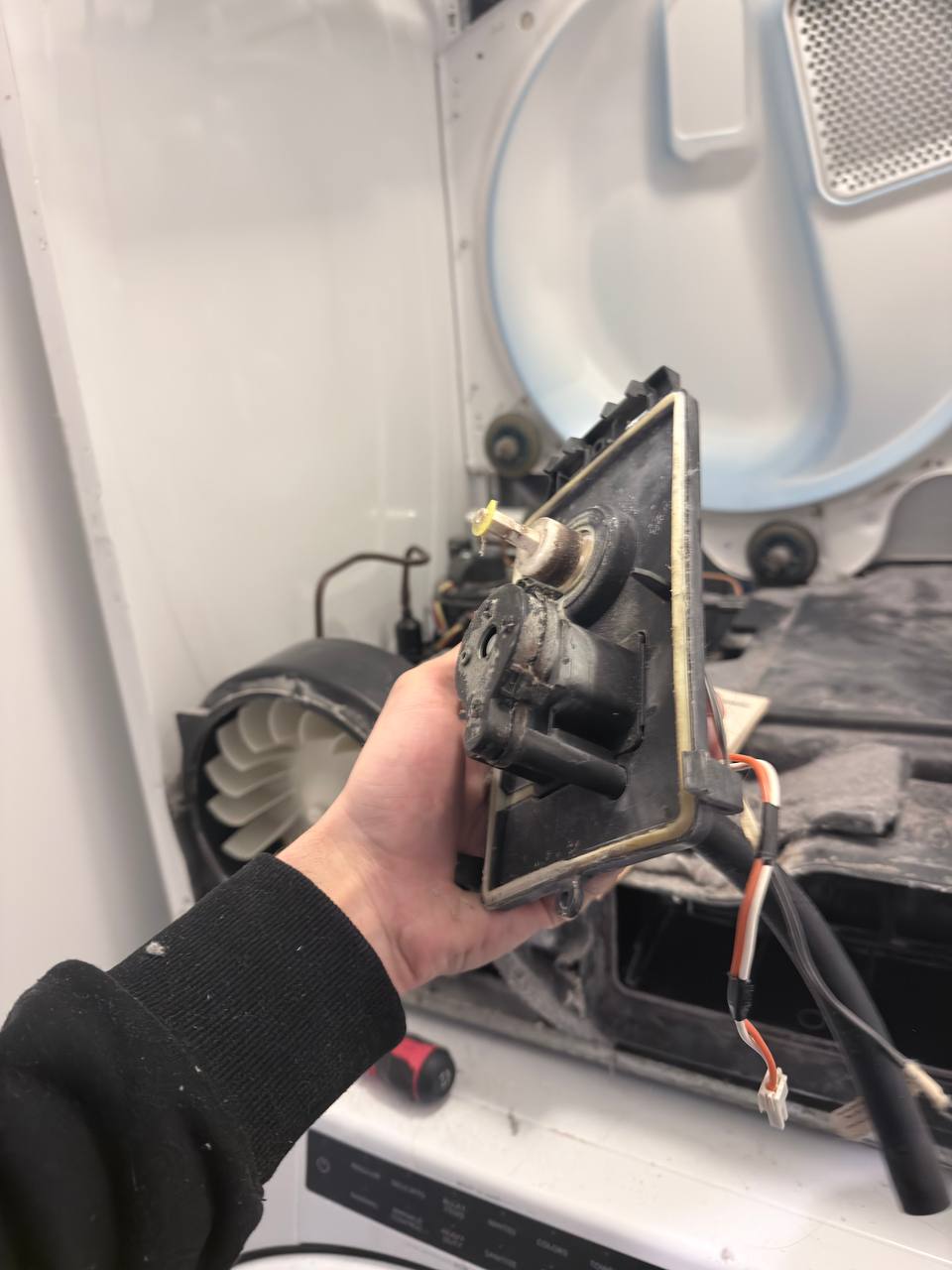
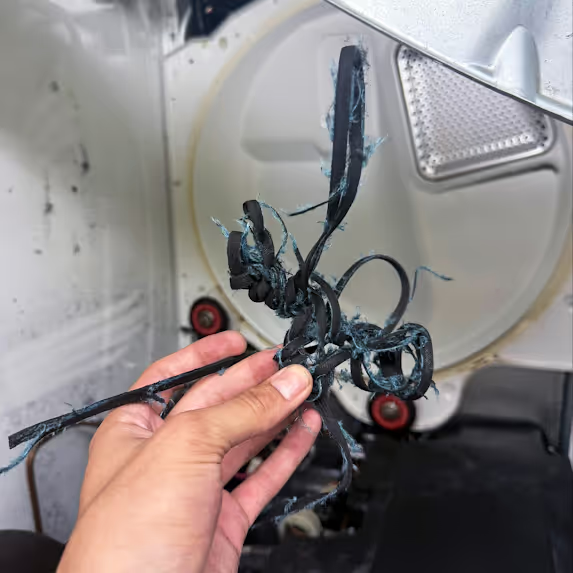
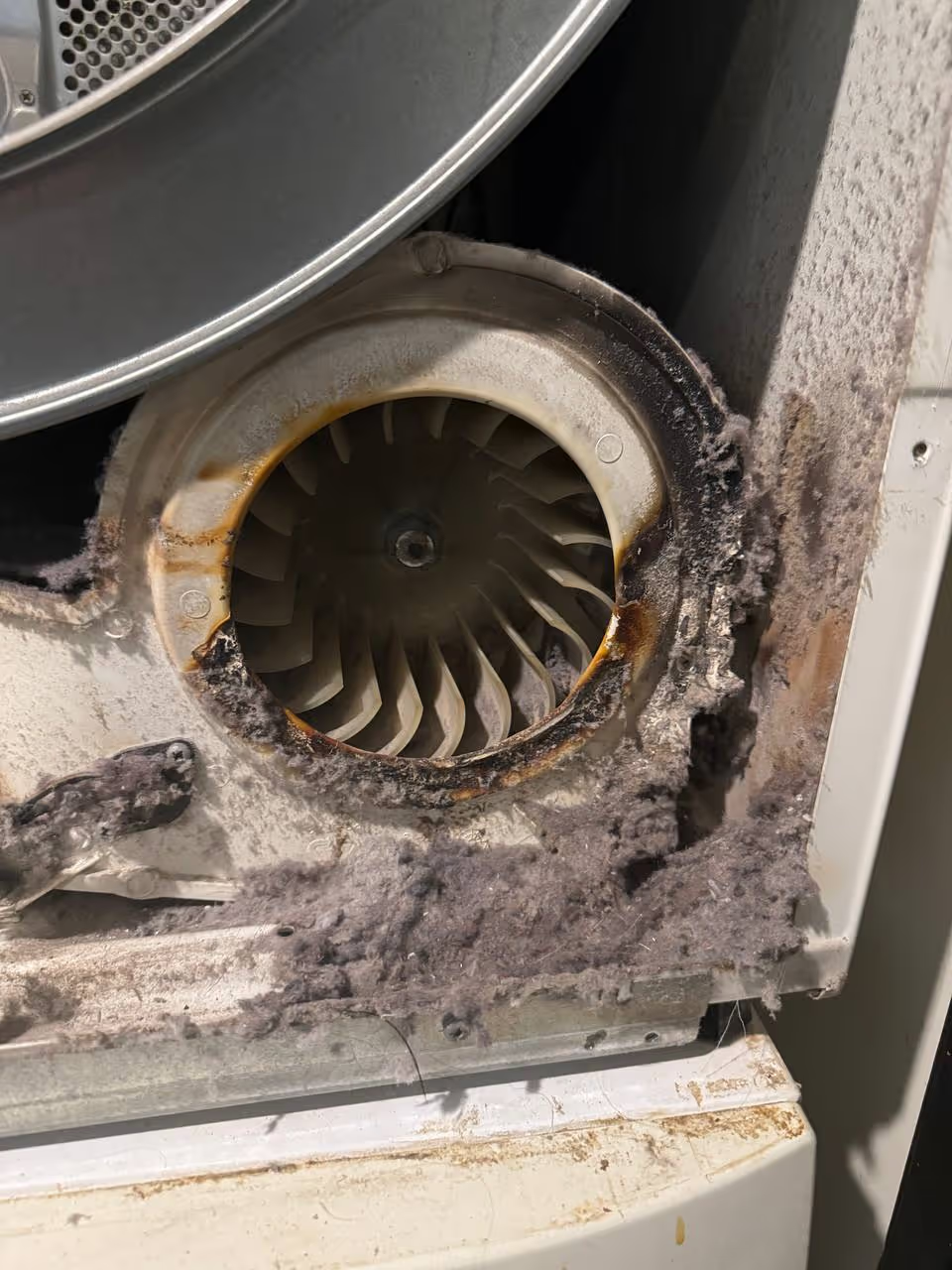
In NYC, the dryer itself is often fine. The failure chain is usually: restricted vent path (crushed duct behind the unit, long run with too many turns, blocked exterior hood) → hot wet air can’t leave → long dry times + overheating behavior → thermal protection opens and the heater gets stressed. Whirlpool explicitly flags restricted airflow with codes like AF / “Check Vent” and points to clogged lint screen/vent, crushed/kinked vent, or too many turns as the driver. (Product Help | Whirlpool)
Whirlpool guidance also points to using 4-inch heavy metal venting (rigid or flexible metal) and avoiding materials that collapse; restricted venting is a direct cause of poor drying. (Product Help | Whirlpool)
Fire safety bodies like National Fire Protection Association also emphasize keeping lint controlled and using metal venting to sustain airflow/drying time. (nfpa.org)
Use these as publishable “Real Case Log” drafts. They’re written like field notes, but they’re composites; swap in your actual neighborhood/date/model/parts from invoices to make them strictly factual.
Homeowner, Manhattan
You’ll receive a text alert ~30 minutes before arrival.a problem or close a sale in real-time with chat. If no one is available, customers are seamlessly routed to email without confusion.



.avif)
Get your appliances fixed today!



.avif)

.png)
.png)
.jpg)