.avif)


.avif)
Electrolux Washer Repair
Identify your Electrolux washer before repair work is planned
Electrolux washer diagnosis starts with exact display wording, model tag, front-load platform, water supply, drain issue, door lock, overfill behavior, suds, leak timing, load movement, and whether a stacked or closet install blocks safe observation.
Send the model tag, full display photo, selected cycle, load type, whether water entered or drained, water level, visible hose/door/filter photos where safe, and wide installation photos. If the washer is stacked, unitized, or built in, document access before moving anything.
Electrolux washer symptom patterns
Electrolux washer complaints can point to different situations from the outside. The diagnosis changes when the same symptom has different model, platform, water, load, code, door, control, or access evidence.
Display-first issue
E11 or long fill; E21, water left inside, or long pump-out; E41 door open or cycle will not start; E42 door lock not recognized.
Water issue
E11 or long fill; E21, water left inside, or long pump-out; E35, overfill, or rising water level; Leak, hose display, or water around washer.
Spin and movement issue
A spin complaint needs load shape, remaining water, floor transfer, cabinet contact, sound, and short movement evidence before it becomes a machine-fault situation.
Door and cycle-state issue
E41 door open or cycle will not start; E42 door lock not recognized.
Access issue
Stacked, closet, or access-limited Electrolux washer.
Electrolux washer common problems and diagnostic differences
Each situation keeps customer action to observation or accessible checks, then states the stop boundary and what the technician confirms.
E11 or long fill
The washer shows E11, takes too long to fill, or pauses because water entry is not normal. Electrolux support identifies E11 as long fill time. The diagnosis changes when: Hot/cold supply, hose orientation, shutoff access, cycle, recent install, pressure, and stacked access change the issue.
Safe checks: Photograph the display and visible supply hoses; record whether water enters. Avoid: Do not loosen fittings, work behind a stacked washer, or keep repeating fill attempts if water leaks. Stop: Stop for active leak, hammering supply, water near power, or returning E11.
Send: Display photo, model tag, cycle, visible hoses, water-entry timing, and access photos. Confirm: Confirm supply, hose orientation, inlet response, pressure, control request, and access. Result: Fill issue; visible evidence first.
E21, water left inside, or long pump-out
The washer shows E21, leaves water in the drum, or takes too long to pump out. Electrolux support identifies E21 as long pump-out time. The diagnosis changes when: Water level, drain sound, hose issue, standpipe height, locked door, suds, and closet access change the situation.
Safe checks: Photograph water level and visible drain issue; note whether the washer attempts to drain. Avoid: Do not pull against a locked door, open hidden hoses, tip the washer, or keep starting drain cycles with water inside. Stop: Stop for standing water, active leak, locked door with water inside, or returning E21.
Send: Display, water level, drain sound, hose issue, model tag, and install photos. Confirm: Confirm pump response, drain issue, hose restriction, water-level feedback, suds, and access. Result: Drain issue; service if water remains or display returns.
E35, overfill, or rising water level
The washer shows E35 or water level appears too high. Electrolux support identifies E35 as pressure sensor indicating overfill. The diagnosis changes when: Inlet behavior, water level, recent installation, drain response, detergent foam, and floor condition change the path.
Safe checks: Stop the cycle and photograph water level, display, and visible hose area from a dry position. Avoid: Do not add cycles, open panels, move the washer through water, or loosen fittings. Stop: Stop for rising water, active leak, water near power, or a door that will not unlock safely.
Send: Water level, display, hose photos, install timing, cycle, detergent, and access notes. Confirm: Confirm fill shutoff behavior, pressure feedback, drain response, leak source, and access. Result: Stop-priority overfill issue.
E41 door open or cycle will not start
The washer shows E41, rejects the door state, or will not begin because the door is not accepted. Electrolux support identifies E41 as the door being seen as open. The diagnosis changes when: Trapped fabric, gasket obstruction, latch/striker condition, water inside, and cabinet clearance change the issue.
Safe checks: Check only visible fabric obstruction and photograph the door area without force. Avoid: Do not pry the door, tape switches, disassemble the latch, or move a stacked washer. Stop: Stop for water inside with locked door, visible latch damage, leak, or returning E41.
Send: Door photo, display, model tag, water level, cycle, and access photos. Confirm: Confirm door closure, latch feedback, gasket obstruction, water state, and control interpretation. Result: Door issue; service if closure evidence does not clear it.
E42 door lock not recognized
The washer shows E42 or the door lock state is not accepted after the door appears closed. Electrolux support identifies E42 as a door-lock device recognition issue. The diagnosis changes when: Water level, lock timing, latch/striker condition, cycle state, and prior interruption change the situation.
Safe checks: Photograph the display, door area, and water level without pulling against the door. Avoid: Do not pull on a locked door, disassemble the latch, open panels, or keep restarting the cycle. Stop: Stop for locked door with water inside, active leak, visible latch damage, or returning E42.
Send: Display photo, latch photo, water level, cycle, model tag, and access photos. Confirm: Confirm lock response, door alignment, water state, latch/striker condition, and control interpretation. Result: Door-lock issue; appliance diagnosis if it returns.
SU dS, foam, odor, or long suds pause
The washer shows SU dS, has heavy foam, or pauses while trying to clear suds. Electrolux support identifies SU dS as too many suds. The diagnosis changes when: Detergent type, detergent amount, load, water hardness, drain behavior, and residue change the issue.
Safe checks: Record detergent type and amount, foam level, water level, and whether water drains. Avoid: Do not add chemicals, mix cleaners, keep running foam-heavy loads, or open panels. Stop: Stop for foam overflow, active leak, locked door with water, or returning suds/drain behavior.
Send: Display, detergent details, foam photo if safe, water level, model tag, and drain behavior. Confirm: Confirm suds state, drain performance, pressure feedback, residue, and cycle behavior. Result: Suds issue; appliance diagnosis if suds/drain behavior returns.
Leak, hose display, or water around washer
Water appears on the floor, the display points to hose orientation, or a leak starts during fill/drain/tumble. Electrolux support separates leaking situations and has a HO SE hose-orientation display where applicable. The diagnosis changes when: Leak timing, hose orientation, door seal, dispenser, drain issue, detergent foam, floor slope, and recent install change the decision.
Safe checks: Stop the cycle and photograph visible water, hose area, door/gasket area, and display from a dry position. Avoid: Do not move the washer through water, loosen hidden fittings, add cycles, or reach behind a stacked unit. Stop: Stop for active leak, rising water, water near powered areas, or repeated leak after drying the area.
Send: Leak photos, model tag, display, cycle, detergent, hose access, and install photos. Confirm: Confirm leak source, hose orientation, fill response, drain path, door seal, dispenser path, and safe access. Result: Water-safety issue.
Stacked, closet, or access-limited Electrolux washer
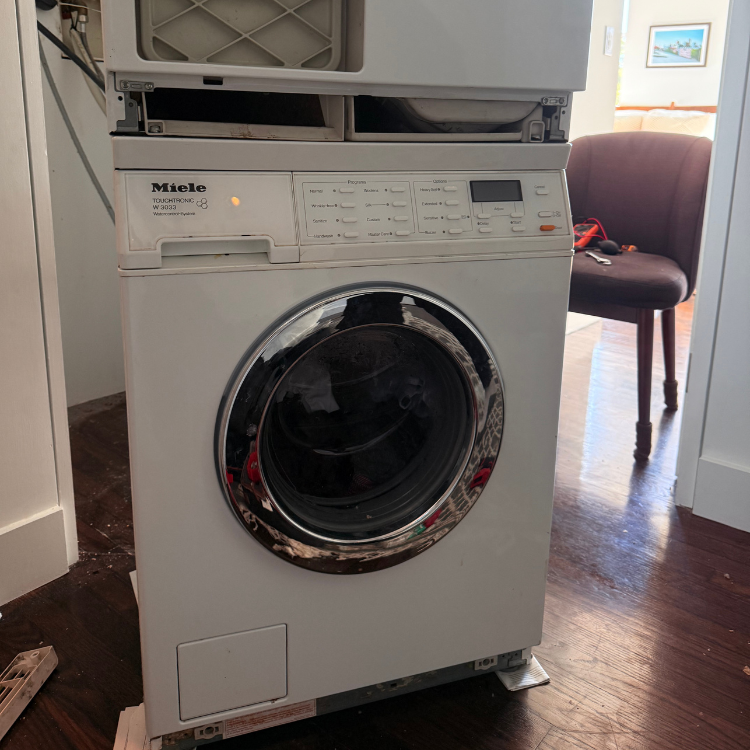
The symptom is clear, but the washer is stacked, inside a closet, under a counter, or blocked by hose and floor constraints. Electrolux code situations depend on exact display and platform, but NYC access can block even visible checks. The diagnosis changes when: Stack kit, closet depth, side clearance, supply shutoff, drain hose, floor protection, and building rules change planning.
Safe checks: Send wide photos of the washer, floor, side clearance, visible hoses, display, and access path. Avoid: Do not drag, lift, twist hoses, or move the washer through water to reach hidden access. Stop: Stop if movement would kink hoses, spill water, damage flooring, or expose water near powered areas.
Send: Install photos, model tag, display, symptom video, building requirements, and access notes. Confirm: Confirm safe access first, then fill, drain, door, overfill, suds, leak, or movement situation. Result: Access planning issue.
Electrolux washer code and symptom atlas
Only documented codes, messages, and symptom patterns belong here. Model, display wording, timing, water behavior, load behavior, and installation still control the final issue.
E11: Long fill issue
E21: Long pump-out issue
E21, water left inside, or long pump-out.
E35: Overfill pressure issue
E35, overfill, or rising water level.
E41: Door-open issue
E41 door open or cycle will not start.
E42: Door lock recognition issue
SU dS: Oversudsing issue
SU dS, foam, odor, or long suds pause.
HO SE: Hose orientation issue
The display points to a hot/cold hose orientation issue. Safe checks: Photograph visible supply hoses and selected cycle without disconnecting fittings.
Stop using the appliance if: Stop for leak, water near power, hammering supply, or unclear access behind a stacked washer. Technician confirmation: Confirm hose orientation, supply temperature, fill response, and access.
LOC: Control lock issue
The control lock is active where the display applies. Safe checks: Photograph display and control state; note whether the washer contains water.
Stop using the appliance if: Stop for locked door with water inside, water near power, burning smell, or repeated no-start after the display clears. Technician confirmation: Confirm display state, lock state, door/water condition, and control response.
Safe Electrolux washer checks before booking
Safe customer work is observation: photograph the display, record the cycle, document the load, inspect only visible hoses, doors, lids, dispenser area, or filter access that the model exposes without moving a stacked or built-in washer.
Do not remove covers, inspect wiring, loosen supply fittings, pull against a locked door or lid, defeat a latch or switch, drag out a stacked washer, reach blindly behind cabinetry, or keep running cycles after a returning fault.
Stop using the washer for smoke, burning smell, active water near powered areas, abnormal drum movement, locked door with water inside, rising water, or a breaker that trips again.
When service is the right next step for Electrolux washer
A visible load, door, control-lock, or cycle correction may resolve a simple situation. Service becomes the right situation when a code returns, water behavior remains unclear, no-start persists, abnormal movement continues, drain/fill cannot be verified safely, or access is blocked by a stack, closet, cabinet, hose issue, drain issue, or building rule.
- Evidence first: Send the washer model, full display, load, cycle, water state, safely visible hose and door details, and installation photos.
- Safe visible checks: the customer can observe a visible item without moving the washer or opening service panels.
- Access requirements: stack, closet, cabinet, hose, drain, floor protection, or building access blocks the issue.
- Appliance diagnosis: repeated code, no-start, no-drain, no-fill, overfill, abnormal movement, or sensor/control behavior remains after safe observations.
- Stop using the appliance: smoke, burning smell, water near power, abnormal movement, locked-door-with-water state, rising water, or breaker trip recurrence.
What to send for Electrolux washer service
- Model tag photo and full display photo.
- Selected cycle, load type, water level, and when the symptom appears.
- Visible supply hose, drain hose, door/lid, dispenser, or filter-access photos where safe and applicable.
- Wide installation photos showing stack, closet, cabinet, floor, door swing, side clearance, and access limits.
- Building access notes: COI request, service elevator, doorman, super access, floor protection, and shutoff access if known.
The visit starts from the issue evidence: fill, drain, spin, door, control state, water level, leak, suds, or access. The repair plan is named after the appliance behavior and installation constraints are confirmed.
NYC apartment and building access notes for Electrolux washers
Electrolux washers in Brooklyn and Manhattan are often front-load units placed in closets, stacked laundry openings, under-counter spaces, or compact utility areas. Access to the door, supply hoses, drain issue, dispenser area, and floor protection can decide the first situation.
If the washer cannot be reached without dragging, lifting, twisting hoses, removing cabinetry, or moving through water, access planning comes first. Send photos of the opening, floor, side clearance, hose area, and building requirements.
Electrolux washer related situations
Use these situations when the symptom leaves the brand-washer situation and belongs to a broader washer, dryer, leak, spin, or movement decision.
- Residential washing machine repair: broader washer issue.
- Residential dryer repair: broader dryer issue.
- Washer not spinning: deeper spin issue.
- Washer shaking violently: floor/balance issue.
- Washer leaking water: water-safety issue.