.avif)
Overheating Dryer: Stop Before Another Cycle
Stop using a dryer that scorches laundry, smells burned, becomes unusually hot, trips its breaker or repeatedly shuts down. Restricted airflow, failed temperature control or unwanted heating are possible; running another cycle is not a safe way to choose between them.
- Smoke or fire: leave the area and call 911. Do not stay to open or unplug the appliance.
- Gas odor or suspected leak: leave without touching appliances or electrical switches, then call 911 or your gas emergency service from outside. Con Edison's gas-safety instructions apply even to a faint odor.
- Abnormal heat without an active emergency: leave the dryer unused for diagnosis; do not handle hot parts or move a stacked/gas-connected unit.
- A thermal fuse was replaced already: save the invoice and part information. The reason it opened still needs confirmation if the symptom returned.
Do not bypass a fuse, repeatedly reset the breaker or run an Air Dry “test.” Normal warmth or a model's cool-down message needs its own manual context, but it does not excuse scorching or burning odor.
What Can Cause a Dryer to Overheat?
Excess heat can result when airflow is restricted, temperature regulation fails, or a heater or burner continues operating incorrectly. A vented dryer can have an obstructed exhaust or internal airflow fault; a heat-pump or condenser dryer can have restricted filters, unsuitable room ventilation or a model-specific heat-control problem. The symptom calls for stopping use and finding the cause, not choosing a thermal fuse from a general parts list.
Warmth during a heated program is expected. Scorching, burning odor, abnormal cabinet heat or repeated protective shutdown is different. Do not deliberately touch the cabinet, start an Air Dry test or run a high-heat cycle to decide whether a suspected overheating fault is real. Use the observations you already have.
How Temperature Regulation and Protection Differ
A dryer may regulate temperature with a cycling thermostat or electronic sensors and controls. Separate high-limit or thermal cut-off devices provide protection on applicable designs. The number, location and wiring of those devices vary; there is no universal three-device circuit for every dryer.
A one-time fuse or cut-off stays open after it operates. A resettable thermostat or motor protector behaves differently. Cooling down and restarting does not make an earlier abnormal shutdown safe, and it is not proof of a “fuse beginning to fail.” The exact device and circuit must be identified. A failed protective component may need replacement, but its condition alone does not explain why temperatures became abnormal.
Restricted Exhaust on Vented Dryers
Lint restriction, a blocked exterior termination or unsuitable vent routing can reduce the movement of moisture-laden air. The dryer may take longer while the load remains damp and parts of the machine become hotter. The CPSC explains the connection between restricted airflow, excessive heat and dryer fires.
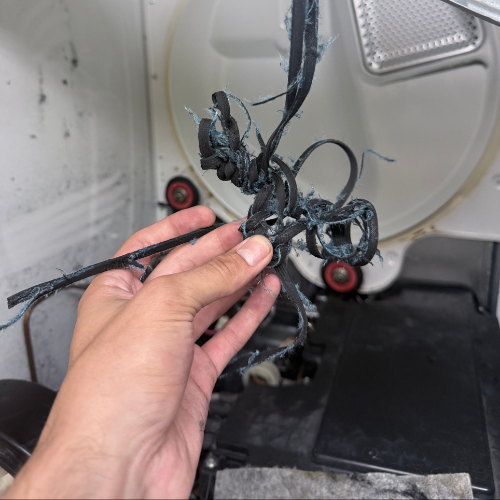
The lint screen is only the first accessible point. A clear screen, a recently cleaned connector or an exterior flap that moves does not verify the complete route. The inspection must cover the connector, concealed duct and termination as applicable. The useful question after cleaning is whether the restriction and operating conditions were actually corrected.
A Crushed Transition Duct After Movement
If unusual heat began after the dryer was installed, cleaned or moved for washer service, preserve that timing. A connector can be pinched when equipment is returned to a closet even if the rest of the exhaust is clear. Do not pull a gas-connected or stacked dryer forward to investigate. Tell the technician about the move and ask for the connection and available clearance to be checked against the installation instructions.
Internal Airflow, Blower and Drum Seals
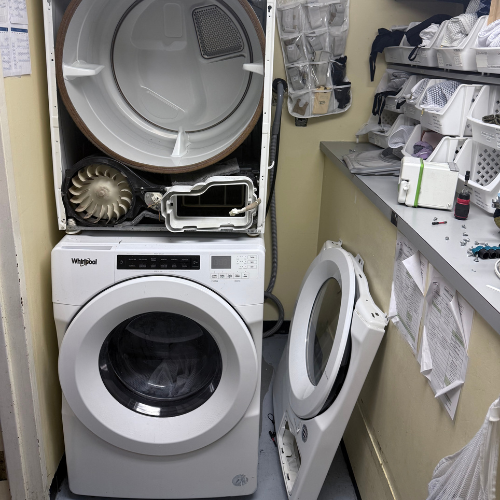
A blower problem or internal lint accumulation can affect airflow inside the cabinet. External vent cleaning does not correct those conditions. An inspection may also need to assess drum seals on designs that depend on them to direct air through the load. Loose felt, rubbing, a new rattle or damaged garments are useful clues, not proof of a particular failed part.
There is no age at which every seal becomes defective, and a new-looking seal does not exclude another internal problem. Cabinet access, blower checks and internal cleaning belong to qualified service. Do not run the dryer with its cabinet opened or protection disconnected.
Temperature Sensor, Thermostat or Control Fault
If the machine's temperature measurement or heat switching is incorrect, heat may not cycle as intended. A thermostat sticking closed is one possibility on a thermostat-controlled model; an electronic design may involve a sensor, wiring or relay. A high-limit device opening may be responding correctly to abnormal conditions rather than causing them.
The technician should compare actual temperature behavior with the model's sensor reading and heat command. That separates an incorrect signal from a heater that ignores the command or airflow that cannot carry heat away normally. Replacing the thermostat simply because it is in the temperature circuit leaves those alternatives unresolved.
Electric Heater or Gas Burner Continuing Incorrectly
A grounded electric element or a heat-control fault can produce unwanted heating, depending on the circuit. If you have already noticed heat on a no-heat program, report it and leave the dryer unused. Residual warmth is possible after a heated cycle, so the observation does not by itself establish an element short. Do not recreate the condition to prove it.
On a gas dryer, burner operation must be assessed against the model's control sequence. Sound alone cannot prove a gas valve is stuck open; normal burner duration depends on operating conditions. The service task is to verify controlled ignition, operation and shutdown, including the gas and electrical components involved. Gas odor is an emergency handled before an appliance appointment.
Heat-Pump and Condenser Model Differences
Ventless does not mean maintenance-free. Heat-pump and conventional condenser dryers use different heating arrangements, filter systems and moisture-removal processes. Use the model label to determine which instructions apply. A heat-pump dryer does not acquire a blocked exterior vent, but its filters, inlet, heat exchanger and room-air requirements still matter.
Miele's illustrated toe-kick-filter instructions apply to models with that arrangement. Whirlpool HybridCare specifies its own secondary-filter care. Bosch's WQB245B0UC manual includes a “Hot” cool-down message that can be normal; it should not be converted into an overheating fault solely from the word on the display. Conversely, visible scorching or burning odor must not be dismissed as normal heat-pump behavior. Record the exact message and model together.
Do not remove hidden panels, pressure-wash coils or apply another brand's condenser-cleaning method. Accessible cleaning cannot establish that a recurring heat warning has been repaired. If the dryer stays warm and wet without abnormal heat or other warning, use the separate hot-but-wet guide.
What a Repeated Fuse or Cut-Off Failure Changes
A repeated protective-device replacement is a reason to review the original diagnosis. Ask which device opened, what operating fault was measured and what was done to correct it. The prior part number and invoice help the next technician distinguish a motor-circuit fuse from a heater cut-off and check whether the correct specification was used.
For example, Whirlpool's model-family service sheets separate those circuits and direct checks of heater and exhaust conditions after a cut-off opens. A new fuse can restore operation without confirming safe temperatures or airflow. Never bypass it, fit a higher-rated device or treat several successful loads as proof that the cause is gone.
Apartment Installation and Building Responsibility
Concealed exhaust, roof access and building-managed ventilation may require management involvement. Establish who maintains each part of the route rather than assuming all apartments share a stack. Send an installation photo, the location of the termination if known, and the scope of recent vent work. If several residents have similar symptoms, include that observation.
An electrician should verify a suspected supply or damaged connection against the dryer rating. A legitimate 208 V supply does not by itself explain overheating or prove shortened component life. An old building is not a diagnosis. Keep this electrical check separate from inspecting the exhaust and measuring heat regulation.
Prevention After the Fault Has Been Resolved
- Lint and filters: remove lint each load and keep every required filter intact, clean and correctly installed. Use the manual's residue-cleaning method.
- Exhaust: arrange periodic inspection and cleaning of the complete vent route. Check the connector material and routing against the appliance instructions; do not exhaust a vented dryer into the apartment.
- Loading: observe fabric-care labels and the program's capacity. Clothes need room to tumble; a universal two-thirds rule does not replace the model's load guidance.
- Ventilation: keep appliance air openings and specified closet/room ventilation clear. Store combustible materials away from the equipment.
- Changes: report a new drying-time increase, heat change, noise or odor. The longer-drying guide and changing-noise guide help describe accompanying symptoms; they do not clear an overheating dryer for use.
Information Needed Before Service
- Identity: model-label photo and whether the installation is vented, condenser or heat pump.
- Observed event: exact message, cycle, where heat or damage was noticed and whether the dryer shut down. Photograph existing damage only when safe.
- Previous work: fuse/cut-off or heater replacement details, vent-cleaning scope and any recent movement.
- Access: stacked/closet configuration and the building contact for concealed exhaust or required access documents.
After any emergency has been handled, the NYC dryer repair page provides the service route. Request confirmation of the fault and corrected operation before returning the dryer to use; a parts replacement alone is not that confirmation.
On applicable vented dryers, Volt & Vector's overheating diagnosis includes exhaust-temperature curves under load and back-pressure measurement at the transition port. Qualified personnel also confirm the outlet supply against the dryer's rating when required. These service measurements distinguish airflow, heat-control and supply findings before parts are ordered. When replacement is required, repairs use OEM thermal components and heating elements and carry a 180-day parts and labor warranty.




.png)