
.avif)


.avif)
Should You Repair or Replace the Cooktop?
Favor repair when the fault is confirmed, the correct parts are available and the rest of the cooktop meets your needs. Favor replacement when a safe repair is unavailable or the complete replacement offers better value for your plans. Compare installed costs; there is no dependable 50% or 65% rule for every kitchen.
- First, safety: stop using cracked glass, uncontrolled heat or a cooktop that trips the breaker. Do not repeatedly reset it.
- Repair quote: identify the confirmed fault, exact part, labor, availability and written repair coverage.
- Replacement quote: confirm the actual cutout, support, utility requirements, installation, removal and any counter work.
- Before paying: ask which costs and dates are confirmed and which depend on opening the appliance or checking the installation.
If you smell gas, leave immediately and call 911 from a safe location. Do not investigate it yourself. Con Edison's gas-leak guidance takes priority over comparing repair quotes.
Why a Built-In Cooktop Needs a Complete Cost Comparison
A cooktop sits in a counter opening that may be harder to change than the appliance itself. Replacement planning can include stone work, cabinet support, access to connections and building arrangements. Those are real considerations, but they should be measured and quoted rather than added as a generic NYC surcharge.
Get the repair and replacement options onto the same basis. A repair price for an installed appliance cannot fairly be compared with the retail price of a new appliance still in its box. Conversely, a difficult old installation does not mean every compatible replacement requires a new counter.
Understanding Cooktop Types and Their Repair Questions
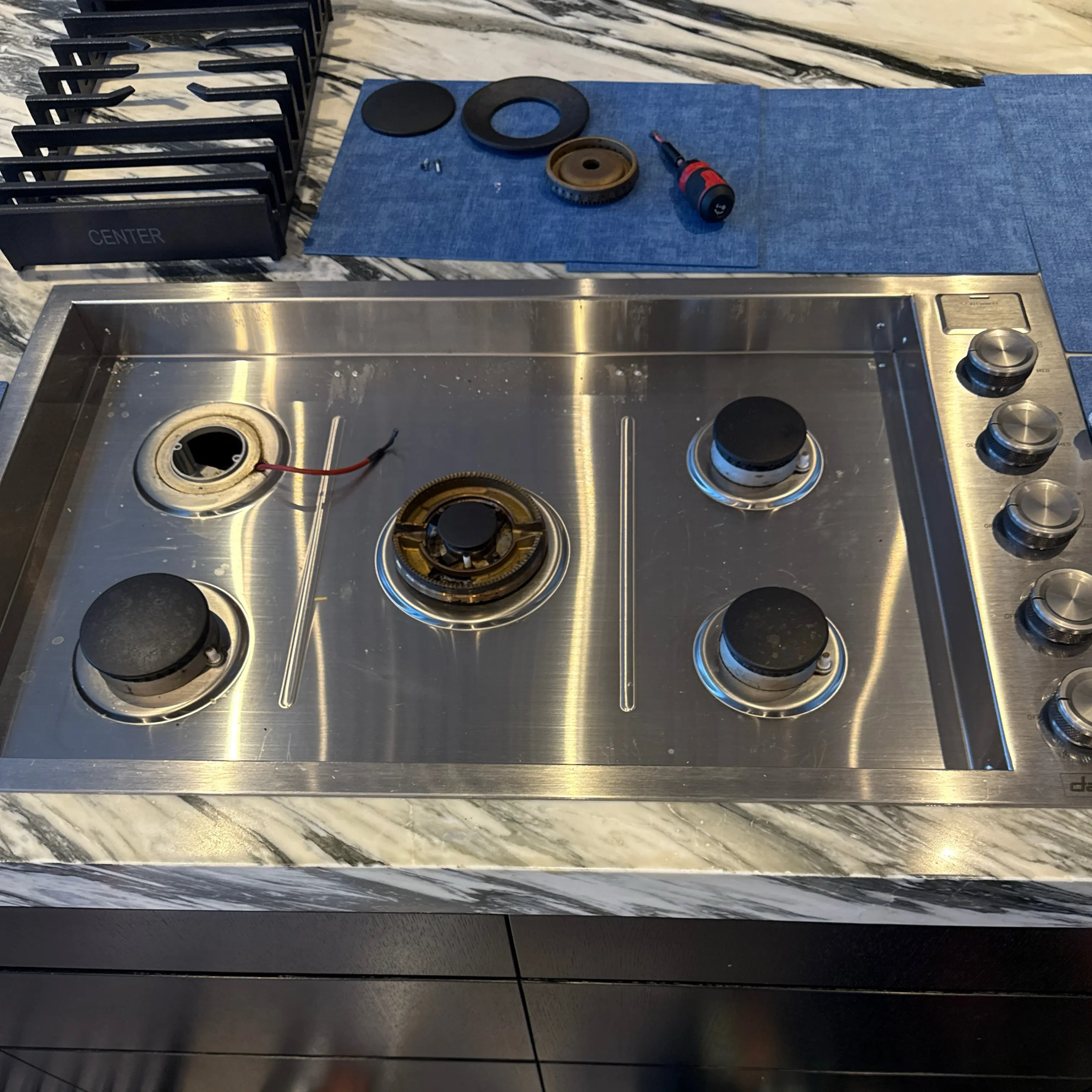
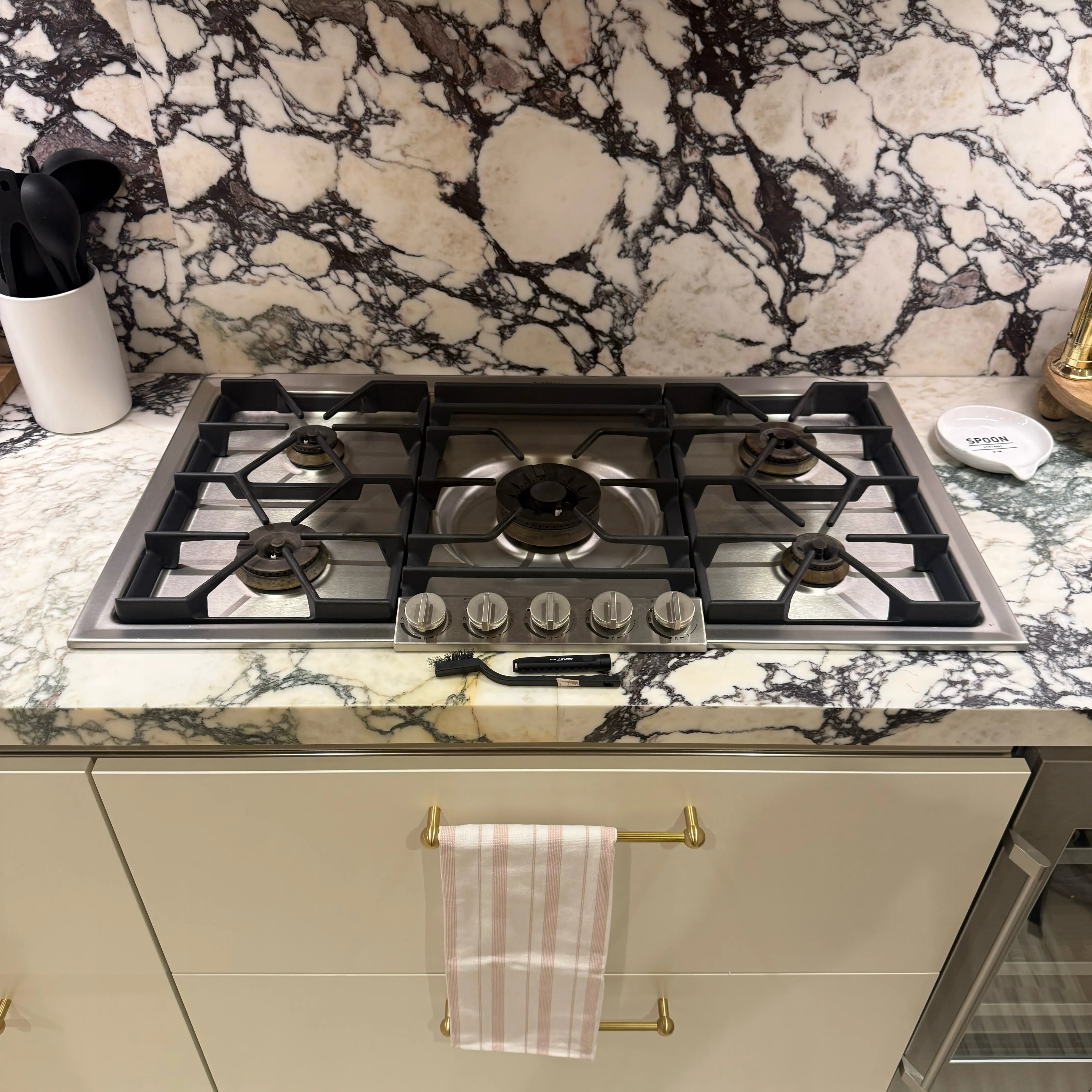
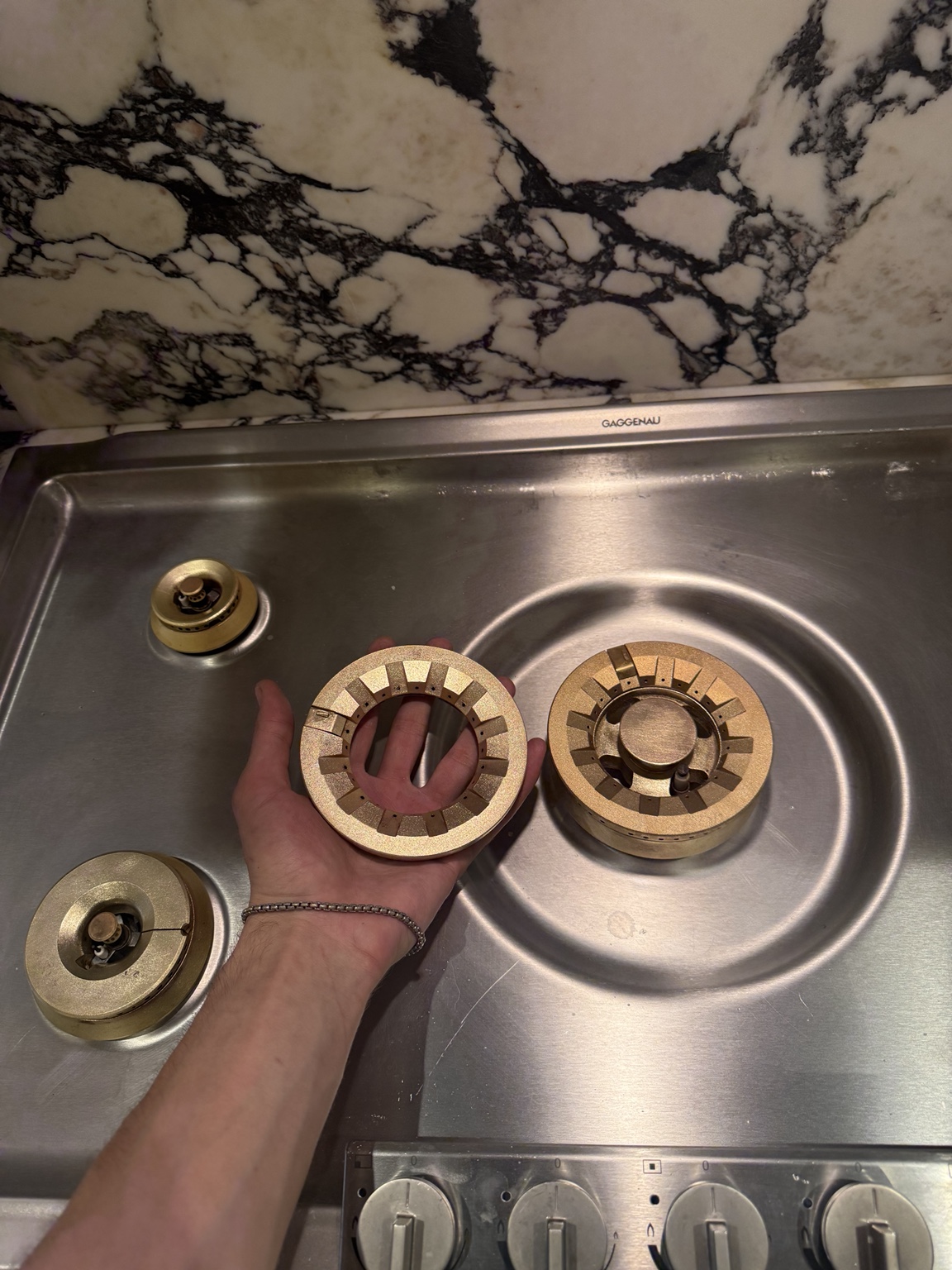
Gas: distinguish a burner that will not ignite from a flame or shutoff problem. Ask whether the diagnosis concerns the ignition system, burner components, controls or gas path, and what evidence supports it. One ignition complaint does not prove that the cooktop needs replacing; a gas-safety concern must be resolved before continued use.
Electric coil: ask whether the affected element, its connection or its control has been confirmed faulty. A familiar-looking replacement coil is not proof of compatibility. Service scope should include any damaged connections rather than only the visible element.
Glass-ceramic radiant: separate the condition of the glass from a heating-zone or control complaint. Intact glass with one affected zone poses a different cost question from damaged glass. GE lists model-specific replacement glass assemblies; this does not establish availability for your model, but it shows why a crack is not automatically the end of the entire appliance.
Induction: ask what has actually been tested before approving a power-board replacement. A zone complaint, cookware-detection problem and supply fault are different findings. Check the exact displayed message and whether one zone or the whole cooktop is affected. A diagnosis should identify the applicable component and any further checks needed after repair.
Earlier guide figures, shown as historical examples rather than October 2026 quotes: Gas: single-burner igniter repair $120–$220 including parts and labor; valve replacement $180–$350 per burner. Electric coil: element $15–$40 for the part only; infinite-switch repair $80–$150. Glass-ceramic radiant: glass replacement $400–$700; element repair $150–$300; control-board repair $200–$450. Induction: coil replacement $180–$300 per zone; power-board repair $250–$550; premium glass $600–$1,400 for glass alone. These are separate component examples, not amounts to add together or a quote for your model. Where inclusions are unspecified, confirm parts, labor, the diagnostic charge and other costs in the current quote.
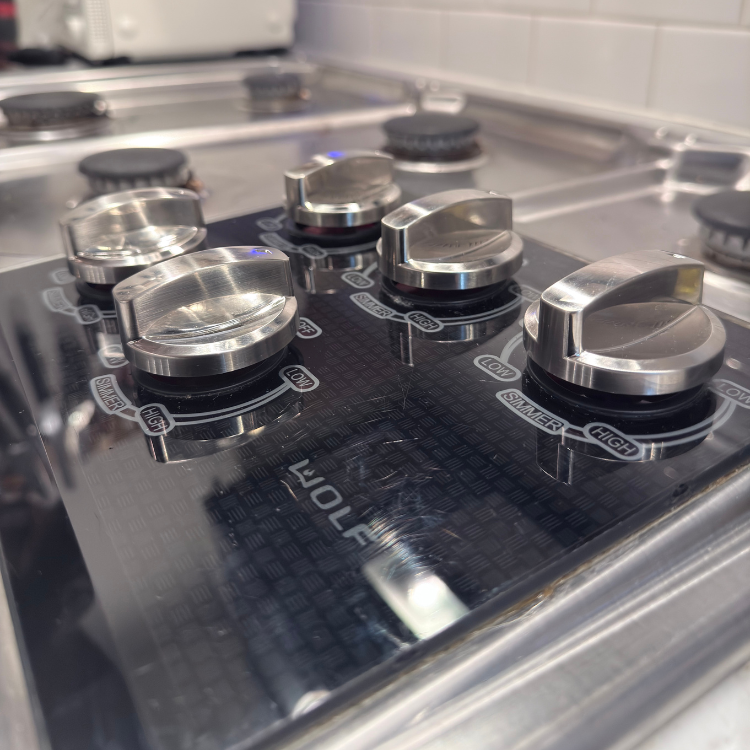
Wolf says not to operate a cracked electric or induction surface. Do not use the unaffected zones while waiting for the glass quote.
The Countertop Integration Factor
Compare the old and proposed model installation drawings, including opening width, depth, corner shape, support and clearance below. Nominal appliance width is not the cutout measurement. Ask an installer to confirm the actual opening without having you lift a connected cooktop.
There are genuine compatible replacements. For example, Wolf documents specific CI304 and CI365 successor pairs with unchanged openings. Use that kind of model-to-model evidence before assuming stone cutting is unavoidable.
If modification is needed, obtain a separate written scope from the person doing it. Clarify who measures, who accepts responsibility for fit and who reinstalls the appliance. For the wider budget, see the NYC appliance replacement planning guide.
Earlier replacement comparisons—historical examples, not October 2026 quotes—used $1,200 for the appliance alone versus $4,000–$8,000 for a complete replacement project with counter work. The guide also used $500–$2,000 for modifying a stone-countertop opening when modification is needed. That is one possible project cost, not an amount to add again if the complete quote already includes it. These examples do not mean that every replacement needs stone work.
Another earlier Wolf induction comparison used a $600 repair, a $1,200 replacement appliance and a $3,000 quartz countertop. The counter figure described the existing counter's value, not a new modification or replacement bill. A separate Wolf gas-cooktop example used $2,800 for a new appliance. These are separate historical comparisons, not compatible-model offers or amounts to add together; use the confirmed repair and complete installed-replacement quotes for the current decision.
When Repair Is the Stronger Option
Repair deserves serious consideration when a specific fault has been established, the required part can be supplied, the existing installation is suitable and the appliance still does the job you want. An expensive replacement project can strengthen that case, but it cannot turn an uncertain diagnosis into a sound repair.
Ask whether the quotation includes only the diagnosed fault or also known secondary damage. Review previous invoices: repeated visits for the same unresolved symptom are different from unrelated repairs separated by years. A technician can explain findings and repair coverage; nobody can guarantee the remaining life of every untouched component.
When Replacement Makes Sense
Replacement becomes more compelling when the necessary part cannot be obtained, a safe repair cannot be completed, several confirmed repairs are needed or you already plan to change the counter and cooking layout. Compare the cost and disruption against your intended ownership period and tolerance for another interruption.
A planned renovation is also a sensible time to evaluate a change in fuel type. Have the relevant installer verify supply and installation requirements before buying. The gas-versus-induction planning guide explains the wider choice; cooktop fit still needs its own model check.
Brand and Model Considerations
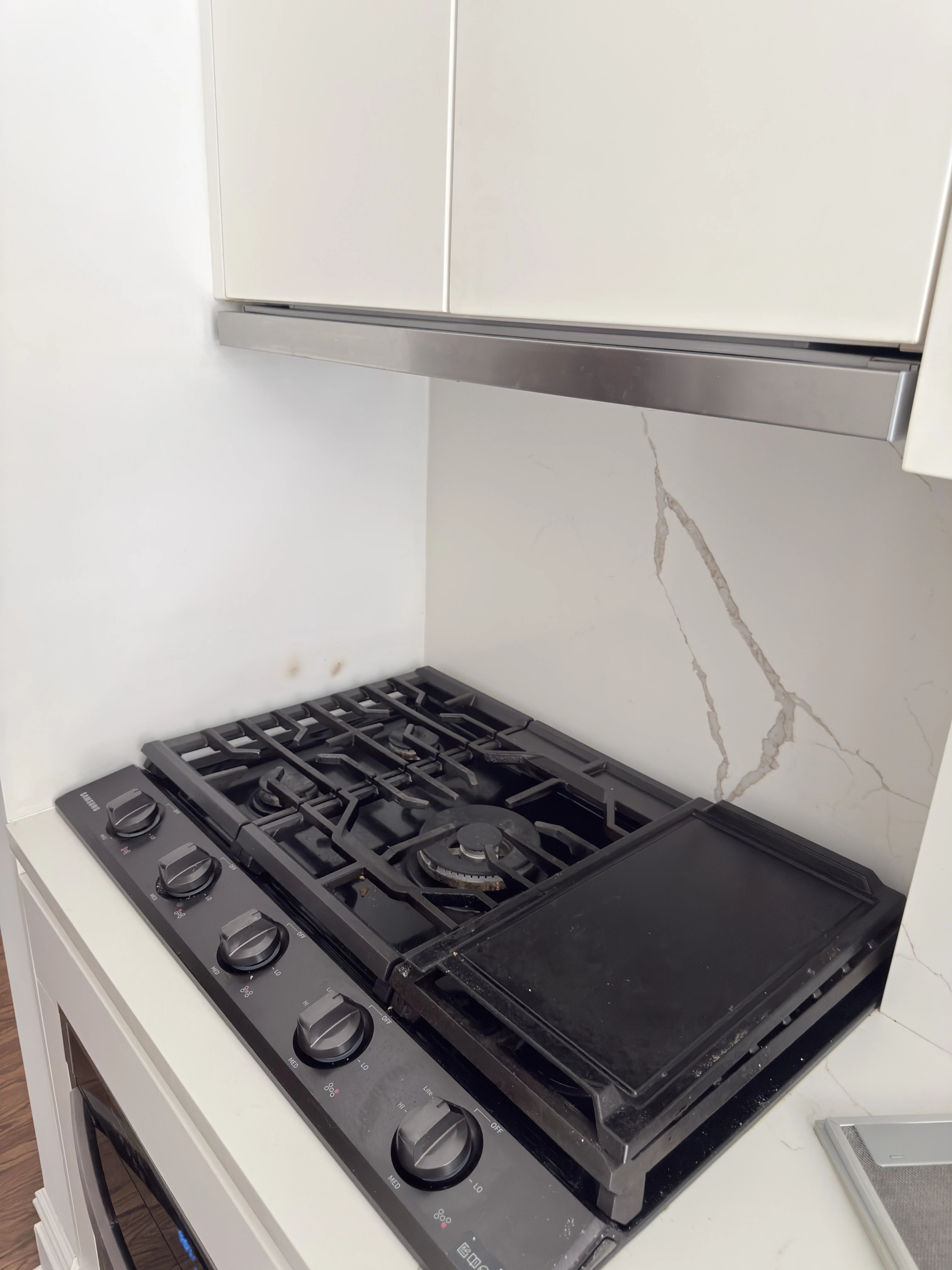
For Wolf, Viking, Thermador, Miele, GE, Samsung or LG, request the same concrete information: full model and serial, exact part number, current availability, required labor and any manufacturer coverage that applies. A premium badge does not guarantee parts availability, and an older appliance is not automatically beyond repair.
Do not approve an expensive repair solely because someone promises a fixed number of extra years. Ask what the inspection established about the present condition and what remains unknown. Keep the diagnosis and quote with the model record so the next decision starts from facts.
What the Diagnosis Should Leave You With
- The fault: what failed, and what observation or test confirmed it.
- The repair: parts, labor, additional known damage and written coverage.
- The alternative: a replacement model with fit and installation scope checked.
- The uncertainty: backordered parts, access problems or further testing still needed.
If either option is missing a material cost or unresolved safety step, ask for that answer before choosing. A comparable pair of scopes is more useful than a percentage threshold.





.png)