

.avif)
What Should Stay Out of the Washer?
Keep loose coins, keys, pins and hardware out. Do not machine-wash items contaminated with gasoline, dry-cleaning solvent or other flammable substances. For foam, shoes, rugs, pet bedding and delicates, check both the item label and washer instructions: some need different care, while others are washable with preparation and an appropriate load.
- Do not use a bag as permission: A mesh bag helps contain washable small items; it does not override a “do not wash” label or a chemical warning.
- Check more than size: The item must be permitted for that washer, fit its stated load limits and have room to move. Bulky or water-resistant items may have special restrictions.
- Before every load: Empty pockets, remove loose hardware, close appropriate fasteners and look for damaged seams or escaping filling.
- If something already went through: Stop for a missing hard object, new scraping, leakage, violent movement or burning odor. Do not run another cycle to flush it out.
- Search only accessible areas: Once stopped, cool and normally unlocked, inspect laundry, the visible drum and gasket. Use a pump filter only through the exact manual's safe access and drainage procedure.
What Goes In: Material, Condition and Load
“Can this go in the washer?” has more than one answer. Loose objects and flammable contamination stay out. A washable garment may need fasteners secured or a mesh bag. A blanket can be machine-washable yet unsuitable for your washer's capacity or cycle. Check the item's care label and the machine's instructions together.
The 25 entries below cover items and loading habits. Some mistakes harm clothing; others can leave debris, interfere with drainage or cause severe imbalance. The practical decision is what to remove, prepare differently or send for appropriate care.
Metal Items: Remove Loose Objects and Secure Hardware
1. Coins and Keys Left in Pockets
Empty every pocket and check folded cuffs before loading. Loose objects can become trapped in places you cannot see or interfere with the drain path. If a key or coin is missing after a noisy cycle, inspect the stopped washer's visible drum and accessible gasket rather than running it again to locate the sound.
2. Underwire Bras
Read the bra's care label first. If machine washing is allowed, secure its hooks and use an appropriate closed garment bag and cycle. An exposed, broken or escaping wire needs attention before washing; a bag is not a reliable repair for damaged fabric. If the label requires hand washing, follow that instruction.
3. Belt Buckles and Metal Fasteners
Remove detachable belts and non-washable trim. Secure permitted fasteners and protect the garment as its label directs. Large rigid hardware needs a separate care decision rather than an assumption that turning an item inside out makes it safe. Ordinary rivets on washable jeans do not automatically mean the washer will be damaged.
4. Bobby Pins and Hair Clips
Remove hair accessories from pockets, hoods and towels before loading. A laundry bag is for an appropriate washable item, not for deliberately washing loose pins. If a sharp clip disappears into the appliance, leave unseen retrieval to service rather than sweeping a hand around a hidden gap.
5. Screws, Nails, and Hardware
Inspect workwear pockets, tool loops and cuffs and remove all hardware. Do not put sharp tools or fasteners through a wash even inside a bag. Work clothes with unknown chemical contamination need a different decision from clothes carrying ordinary dirt; see item 17 before choosing a cleaning method.
Rubber and Foam Items: Check the Filling and Backing
6. Foam Pillows
Identify the filling, not just the cover fabric. Foam, down and synthetic-fiber pillows need different care. A removable cover may be washable even when the insert is not. If the label is missing or the foam is crumbling, keep the insert out and ask its manufacturer how to clean it. Do not assume a pillow cycle permits every filling.
7. Rubber-Backed Bath Mats
Check the backing for cracks, flaking or separation before considering the care label. A deteriorating mat can shed material into the washer; do not wash it simply because it was washable when new. For an intact mat, follow both labels and load guidance. A laundromat's larger machine does not automatically make unsuitable backing acceptable.
8. Sneakers and Shoes
Some fabric shoes are machine-washable; leather, suede, rigid cleats and decorated footwear need different care. Whirlpool's shoe guide starts with the material and shoe instructions. Where washing is permitted, remove loose dirt and prepare the laces, insoles, bag and balancing load as directed. Stop if the washer moves or bangs violently.
9. Rubber Gloves and Latex Items
Check the product instructions instead of treating gloves as ordinary laundry. Material, coatings and the substance handled matter. Household gloves may need rinsing or wiping, while protective equipment can require specific decontamination or disposal. Do not put chemically contaminated gloves into a household washer or prescribe a universal hand-wash treatment.
Fabrics That Shed or Tangle
10. Pet Beds and Heavy Pet Bedding
Check whether only the cover is washable, remove loose pet hair and inspect seams and filling. A large saturated bed may be difficult for the washer to balance even when its cover fits through the door. Use only the item and machine's approved method and load. Ask a laundry provider whether it accepts that particular pet bed rather than assuming all commercial machines do.
11. Chenille and Heavy Pile Fabrics
Read the label and examine loose pile or damaged seams. A fabric that sheds heavily may need special cleaning; a bag does not make it non-shedding. When machine washing is allowed, use the specified cycle and check accessible surfaces for debris afterward. Filter cleaning depends on the washer's design, not a blanket instruction to open one after every chenille load.
12. Heavily Embellished Items: Sequins, Beading, Embroidery
Loose decorations can detach and the garment itself may be damaged by agitation. Repair loose trim and follow its care label. A delicate cycle and bag are options only for embellishments approved for machine washing; glued decorations, fragile beading or specialist-clean labels require a different method.
13. Hosiery and Fine Knitwear Without a Mesh Bag
For machine-washable small delicates, use a properly closed garment bag and the specified cycle. Secure long straps or strings as directed and avoid mixing fragile pieces with heavy hardware. Do not assume a delicate setting makes every wool, silk or fine-knit item washable. Use the care label to choose the cleaning method and a bag to contain small items approved for machine washing.
Materials and Contamination That Need Different Care
14. Leather and Suede
Do not treat leather or suede as ordinary washable fabric. Follow the maker's cleaning instructions or ask a leather-care specialist, particularly when construction includes linings, adhesives or several materials. An explicit machine-washable label on a particular product is different from a generic leather claim. Do not improvise with an ordinary wash cycle when the label is missing.
15. Memory Foam Items: Pillows, Mattress Toppers, Seat Cushions
Keep memory-foam inserts out of the washing machine. Whirlpool's pillow guidance warns that machine washing can break memory foam apart. For toppers and cushions, obtain the maker's care instructions; cleaning a removable cover is separate from soaking the insert. A larger machine is not a solution to an unsuitable material.
16. Down Comforters Larger Than the Machine's Rated Capacity
Down itself is not the sole deciding factor: check the care label, the washer's bedding guidance and its stated capacity. Do not compress an oversized comforter into the drum or reinterpret a dry-load rating as a wet-weight allowance. The load needs the space specified for washing and balancing. If the comforter is too large, use a provider that accepts that material and size.
17. Items with Wet Paint or Chemical Contamination
Keep items contaminated with gasoline, dry-cleaning solvent and other flammable or explosive substances out of the household washer. Maytag's safety instructions explicitly include items previously cleaned, soaked or spotted with these substances. Hand washing with degreaser does not create a universal safe route back into machine washing.
For paint, industrial chemicals or an unknown spill, identify the product and follow its safety and garment-handling instructions. Do not mix cleaners, add solvent to the drum or run a cycle to remove an unidentified flammable residue. If contaminated items already entered the machine, stop use and obtain product-specific guidance before operating it again.
Overloading and Operational Errors
18. Overloading the Drum
Use the manufacturer's load and cycle limits. There is no universal two-thirds rule for every washer, and forcing in a load because the door closes is not a capacity check. Laundry must move as intended. If the machine repeatedly struggles to balance, rinses poorly or leaves a tightly packed load wet, reduce the load according to its instructions.
19. Washing One Heavy Item Alone
A single absorbent or bulky item can distribute unevenly. Follow the machine's guidance for that item and cycle; sometimes an appropriate balancing load is needed, and sometimes the item is not permitted. Stop for violent shaking. Repeatedly restarting spin or holding the cabinet still does not correct the load or installation.
20. Running the Washer Without the Door Seal Checked
Before closing a front-loader, make sure clothing is fully inside and no strap or sleeve crosses the seal. With the washer stopped, inspect visible folds for loose objects and wipe accessible residue as directed. Do not stretch or remove the boot. A cut, trapped wire or leak needs attention before another load.
Fasteners, Soil and Drain Maintenance
21. Zip-Up Items with Open Zippers
Close zippers as the garment instructions direct and check for broken teeth or sharp loose parts. This helps avoid snagging other laundry. Repair a broken zipper or remove an exposed loose part before putting the garment in the washer.
22. Velcro Fasteners
Close hook-and-loop strips and separate them from delicate items they can snag. Remove visible lint from the fastening surface according to the item's care instructions. Check delicate laundry for snags before mixing it with items that have hook-and-loop fasteners.
23. Heavily Soiled Items Without Pre-Treatment
Ordinary washable stains and oil-soaked or chemically contaminated workwear are different cases. Use only a treatment allowed by the garment, washer and product labels. For heavy grease, oil or an unknown substance, obtain specific handling guidance before washing. Do not add a household degreaser unless the product and appliance instructions allow that use. A completed wash also does not prove oil-contaminated items are safe for a heated dryer.
24. Items With Excessive Loose Buttons
Repair loose stitching and damaged buttons before loading. Check cuffs and the drum for anything that detached during a previous wash. A missing button is not proof the pump is damaged, but new rattling or drain trouble after an item comes loose is a change that needs a different explanation.
25. Running the Machine with a Clogged Pump Filter
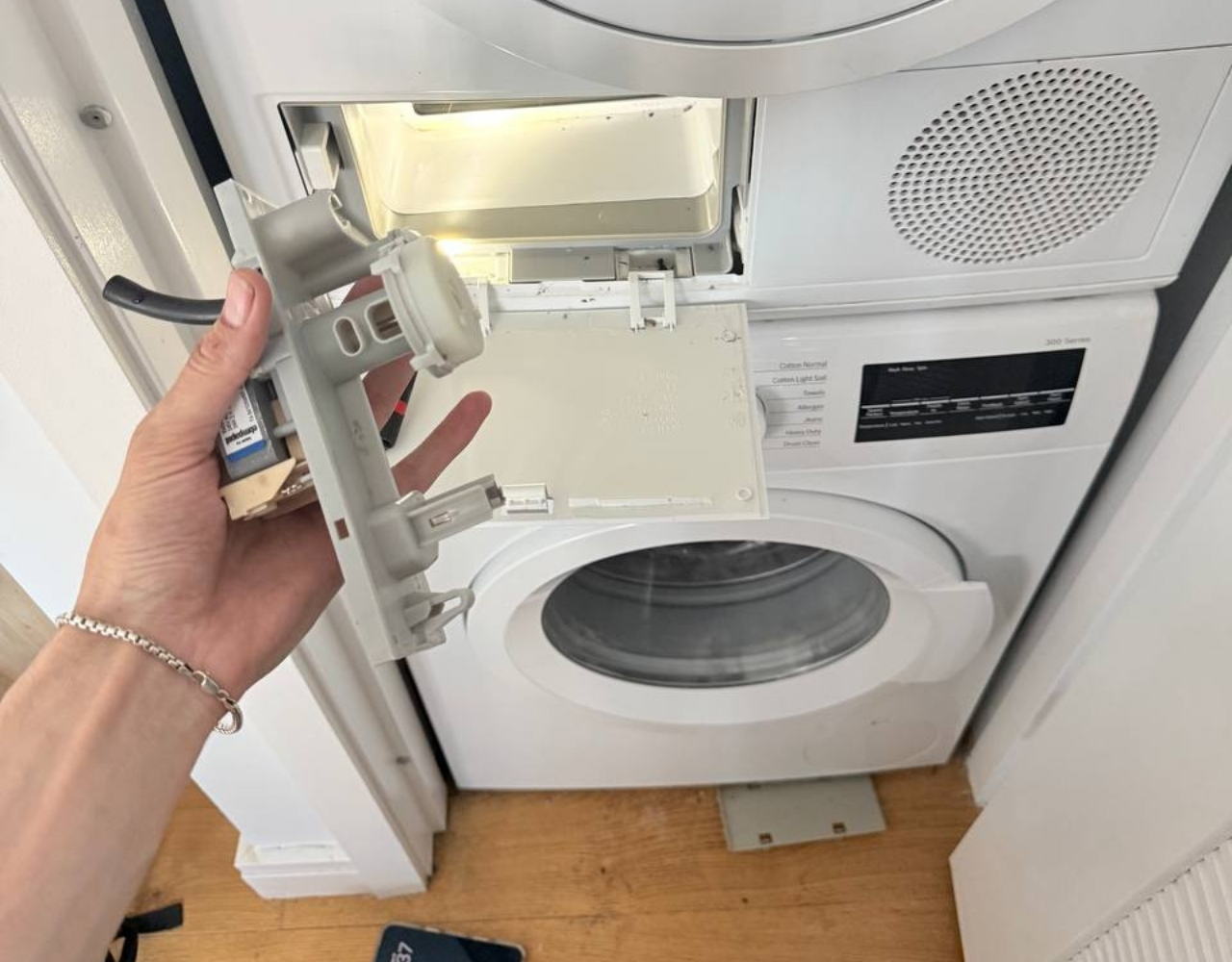
If the model has an owner-cleanable filter, maintain it on the schedule and with the procedure in its manual. Turn the washer off, isolate power safely, let water cool and drain it as directed before opening the cap. Some models have no external filter access. Do not remove panels or force a stuck cap, and do not treat towels alone as a safe way to empty a full tub.
If Something Already Went Through the Wash
- Stop: Wait for the normal unlock. Do not force the door or start another cycle to flush out the item.
- Check: Inspect laundry, the visible drum and accessible seal for the item or fragments. Use filter access only through the model's safe cooling and drainage procedure.
- Check for missing pieces: Account for any missing pieces. Finding a coin in a filter does not by itself establish pump damage; an empty filter does not prove the item has left the machine.
- Leave it stopped: A hard object still missing, persistent scraping, leakage or possible flammable contamination requires further assessment before operation.
The appliance retrieval guide explains the safe search boundary. If the item is accounted for but you are unsure whether the remaining behavior is normal, compare it with the washer behavior guide and the model manual.





.png)