

.ico)

Trusted by 1500+
.png)
Same-Day Wolf Cooktop Repair NYC
.avif)
Same-Day Wolf Cooktop Repair NYC
Wolf Cooktop Repair Service Overview
The Wolf Cooktop platform is known for its professional-grade performance, yet failures often appear simple on the surface. However, they typically stem from complex issues involving control, sensing, airflow, ignition, or load behavior, coupled with installation constraints found throughout NYC, such as tight spaces and specific venting and power requirements.
What we service
- Built-in cooktops
- Seamless panel-ready models
- Gas models
- Induction cooktops
- Vented and condensing models
- Electric cooktops
How we diagnose on-site
- Confirm model and serial numbers
- Live testing under load conditions
- Isolation of failure class
- Electrical verification and measurements
- Sensor validation tests
- Control response confirmation
Safety stop conditions
- Smell of gas
- Breaker trips during operation
- Active water leaks near electrical connections
- Burning or arcing smell
We are an independent service company and require model/serial confirmation for diagnostics.
Quick Answers (Wolf Appliance Repair NYC & Brooklyn)
Wolf Cooktop Repair: Quick Answers
Won’t start / dead
- Power interruption or electrical failure
- Faulty control board
- Damaged power cord
- Tripped circuit breaker
- Safe Check / Stop Condition: Disconnect power immediately if a burning smell occurs.
Cooktop-critical performance failure
- Burners not heating correctly
- Faulty heat sensor
- Control board malfunction
- Over-temp condition
- Safe Check / Stop Condition: Ensure burners are cool and check for gas leaks.
Leaks / smell / noise / breaker trips
- Gas leak near burners
- Water leakage from seals
- Electrical arcing or short circuits
- Excessive noise from motor or fans
- Safe Check / Stop Condition: Shut off gas and power immediately if you smell gas.
For accurate diagnosis, please send a model/serial photo, any error codes, and details about when the failure occurs.
Common Wolf Problems (Repair Intent, NYC & Brooklyn)
Wolf Cooktop Common Problems We Repair
Common failure patterns for Wolf Cooktops often relate to diagnostic patterns of component-level failure that can significantly impact performance.
Power / Control Board
- Unit won’t start (most often: main control board)
- Burners cycling on and off (most often: faulty PCB)
- Display not responding (most often: power supply issue)
Water Supply / Drain System
- Water pooling under the unit (most often: drain blockage)
- Leaks during operation (most often: seal integrity)
Heat / Ignition / Burner
- Burner doesn’t ignite (most often: ignition electrode)
- Temperature inconsistent (most often: temperature sensor)
Airflow / Fan / Venting
- Excessive heat buildup (most often: blocked vents)
- Fan not running (most often: motor issue)
Noise / Vibration / Motor
- Unusual noise during operation (most often: motor bearings)
- Vibration during use (most often: loose parts)
Leaks / Seals / Gaskets
- Gas leak detection near burners (most often: faulty seals)
- Fluid leaks under the unit (most often: damaged gaskets)
Sensors / Thermistors / Feedback
- Error codes showing on the display (most often: faulty thermistor)
- Temperature readings inaccurate (most often: sensor failure)
Sealed System / Refrigeration Load
- Cooktop not maintaining temperature (most often: refrigerant leak)
- Unusual cycling (most often: compressor issue)
For safety, shut off gas and power before any checks related to ignition or electrical components.
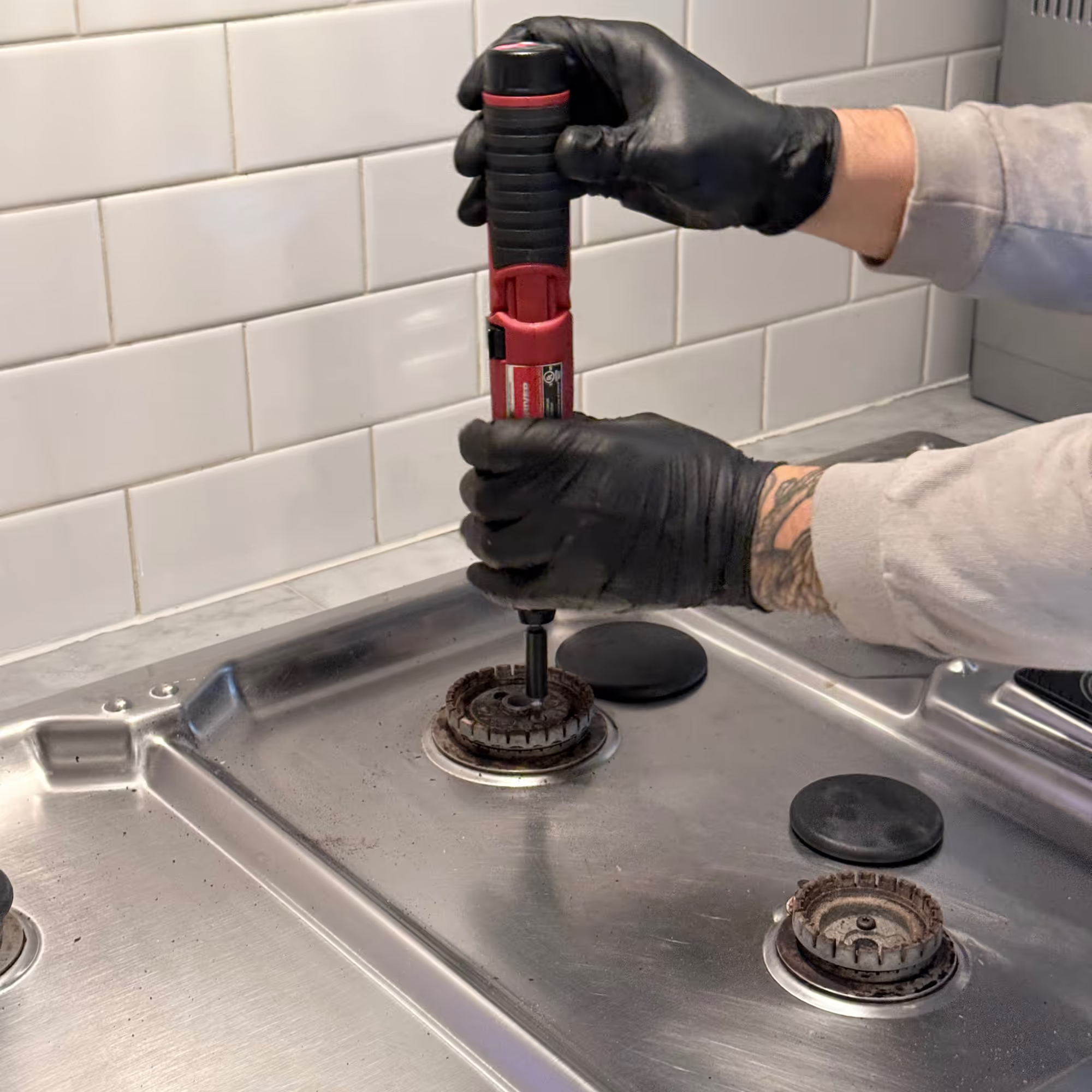
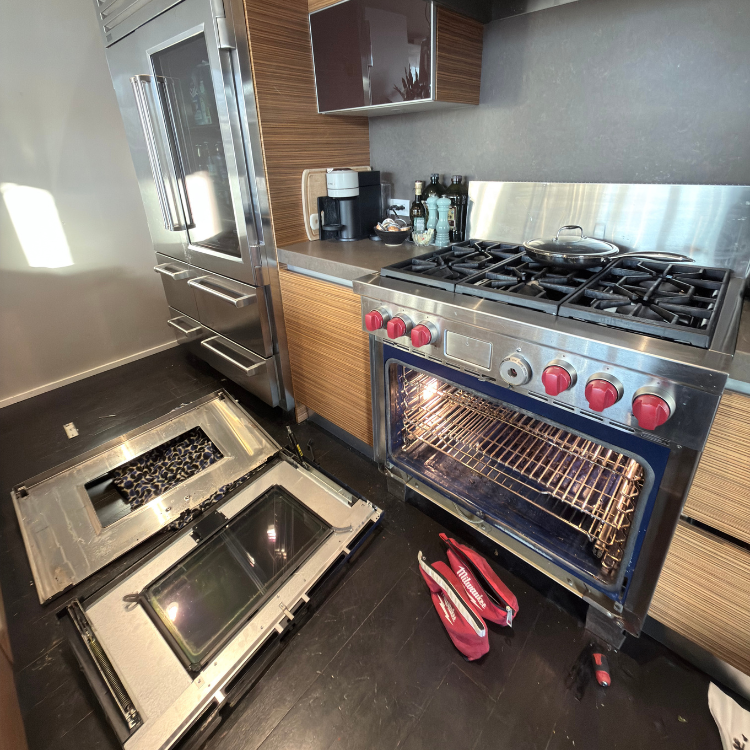
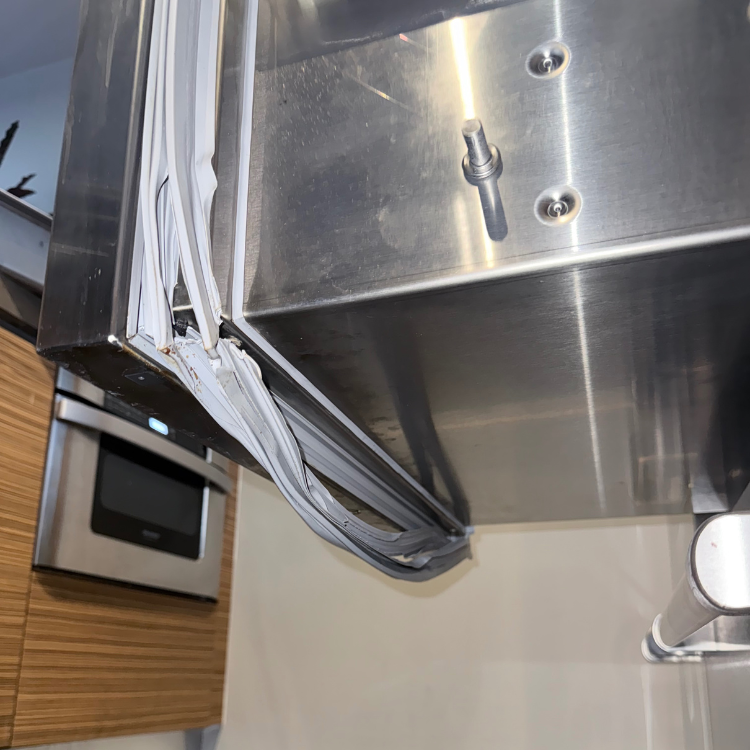
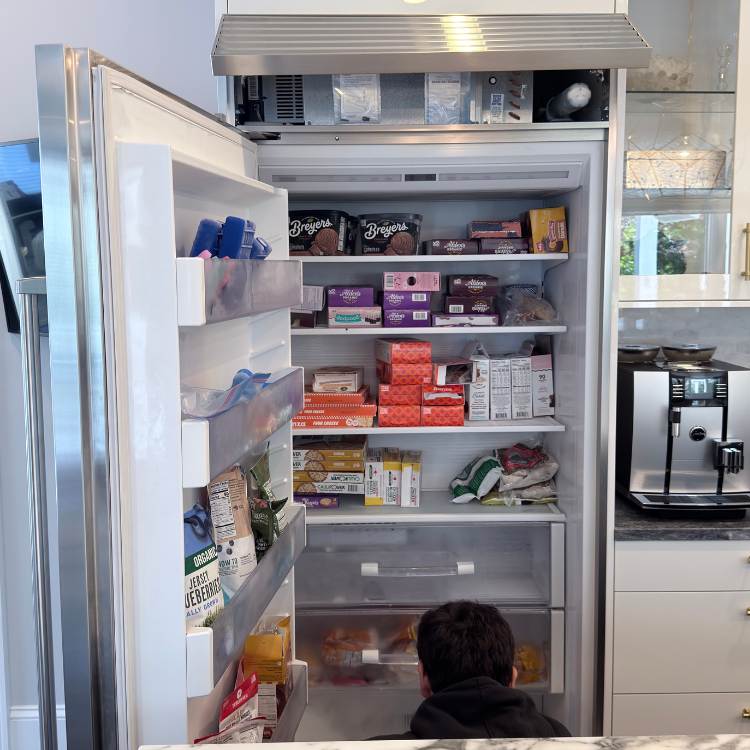
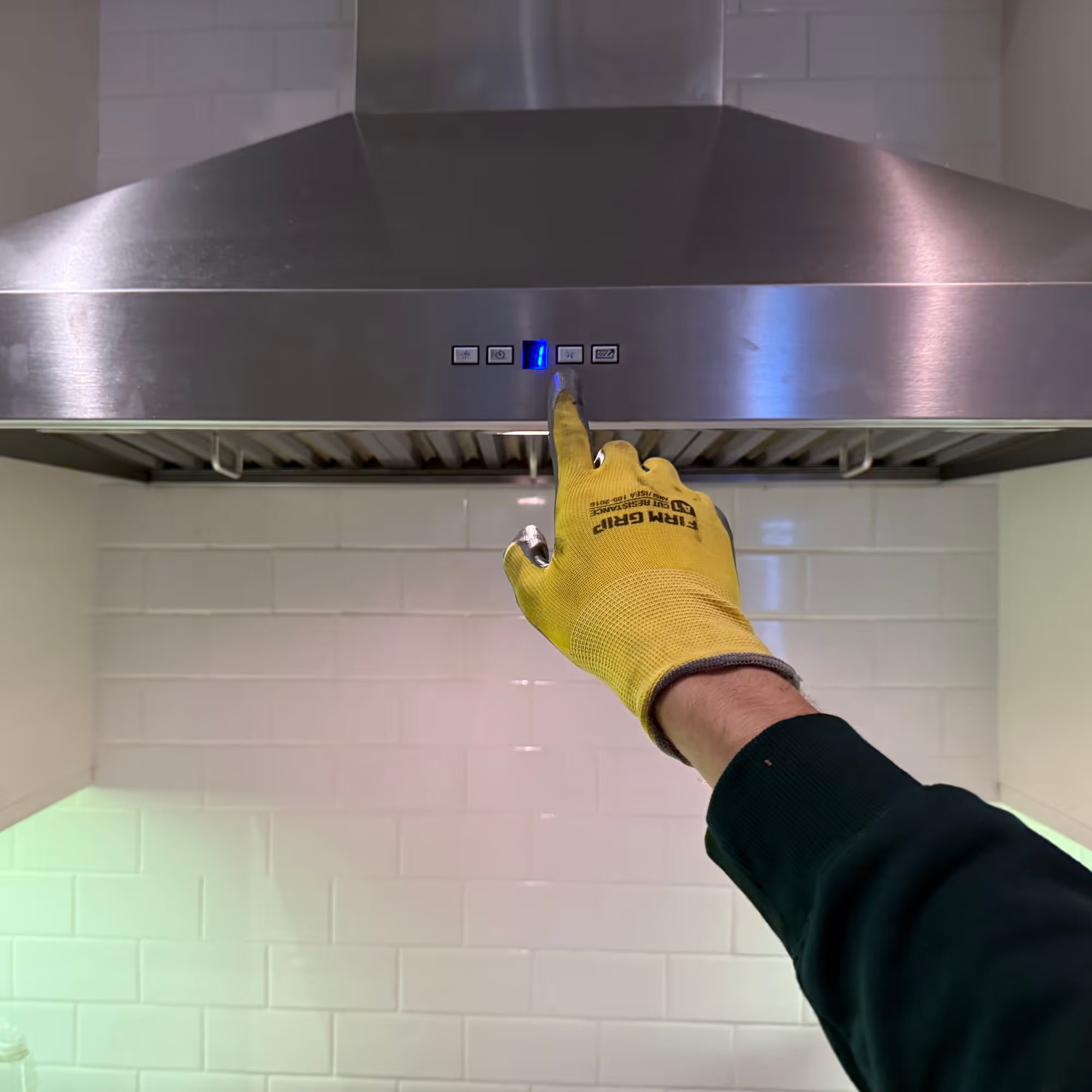
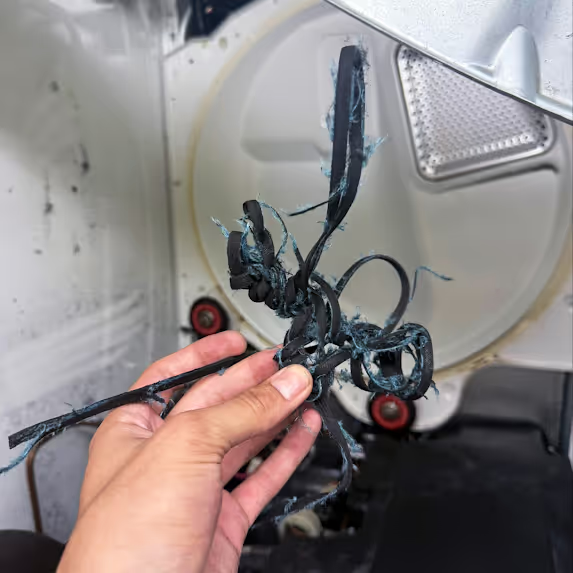
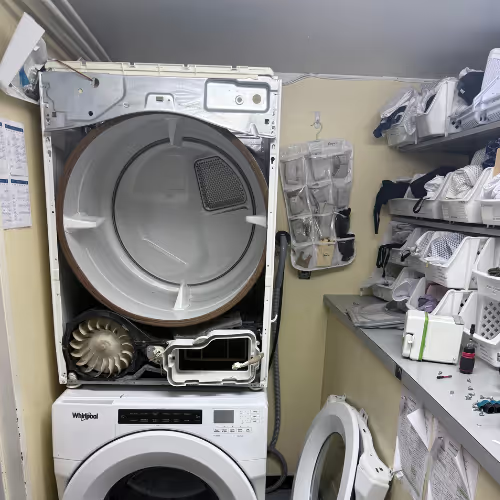
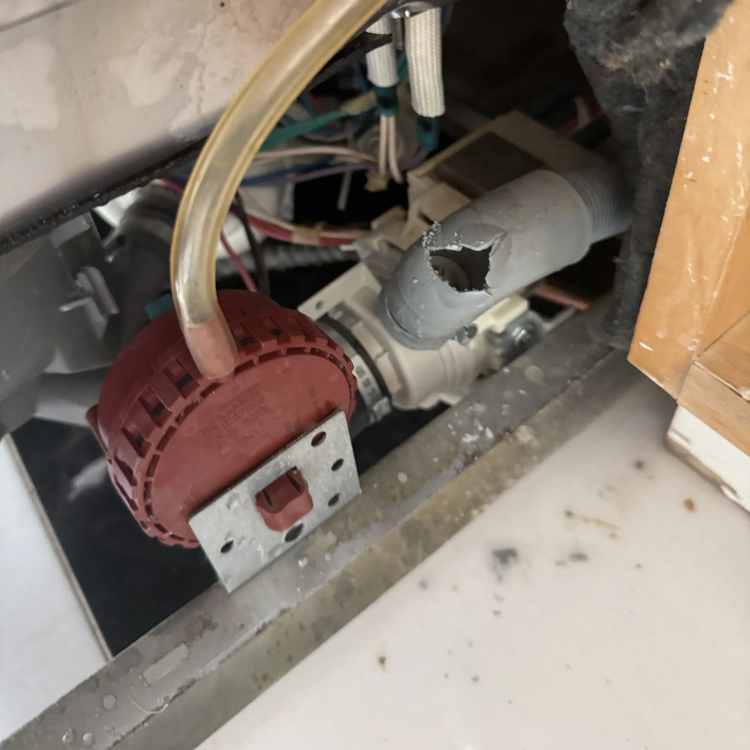
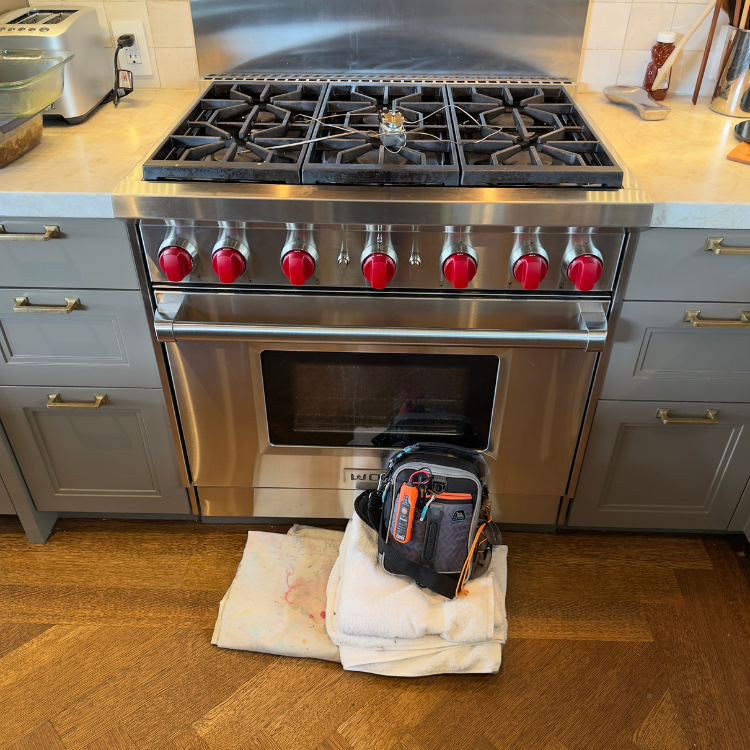
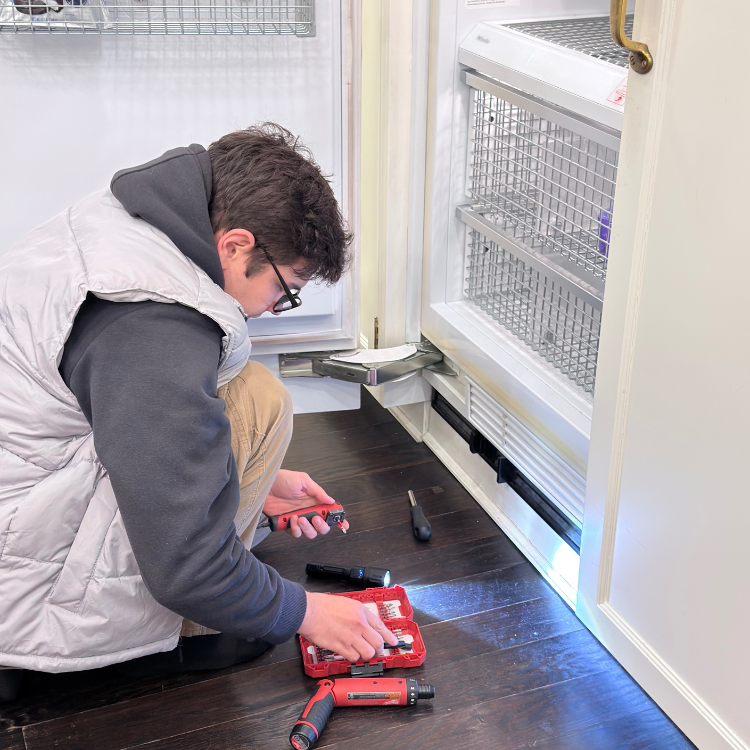
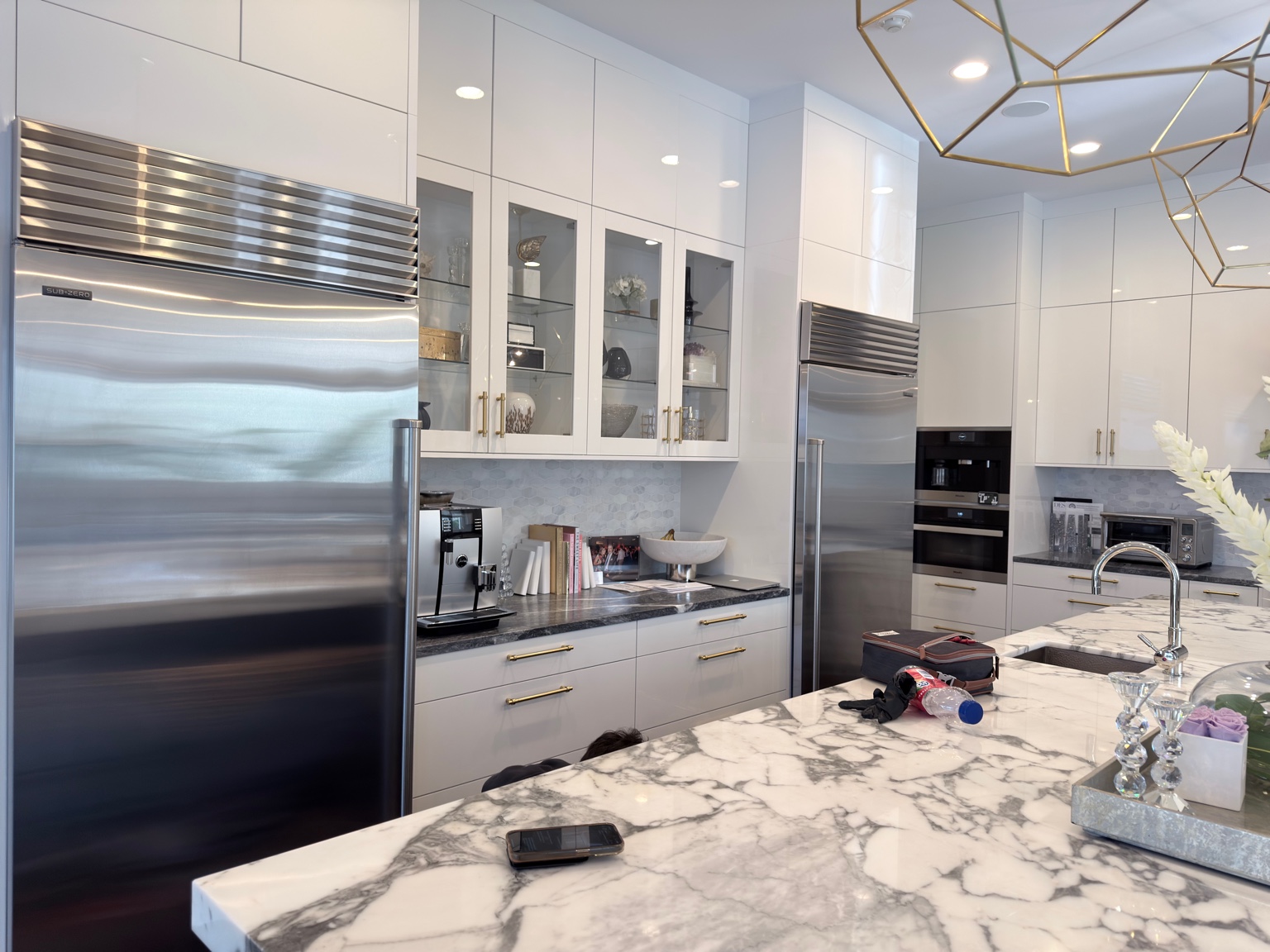
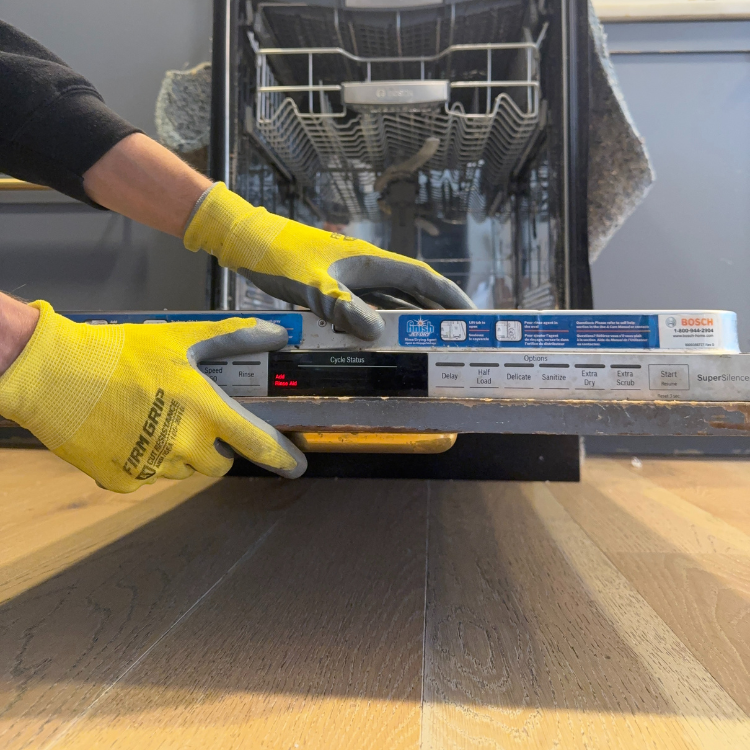
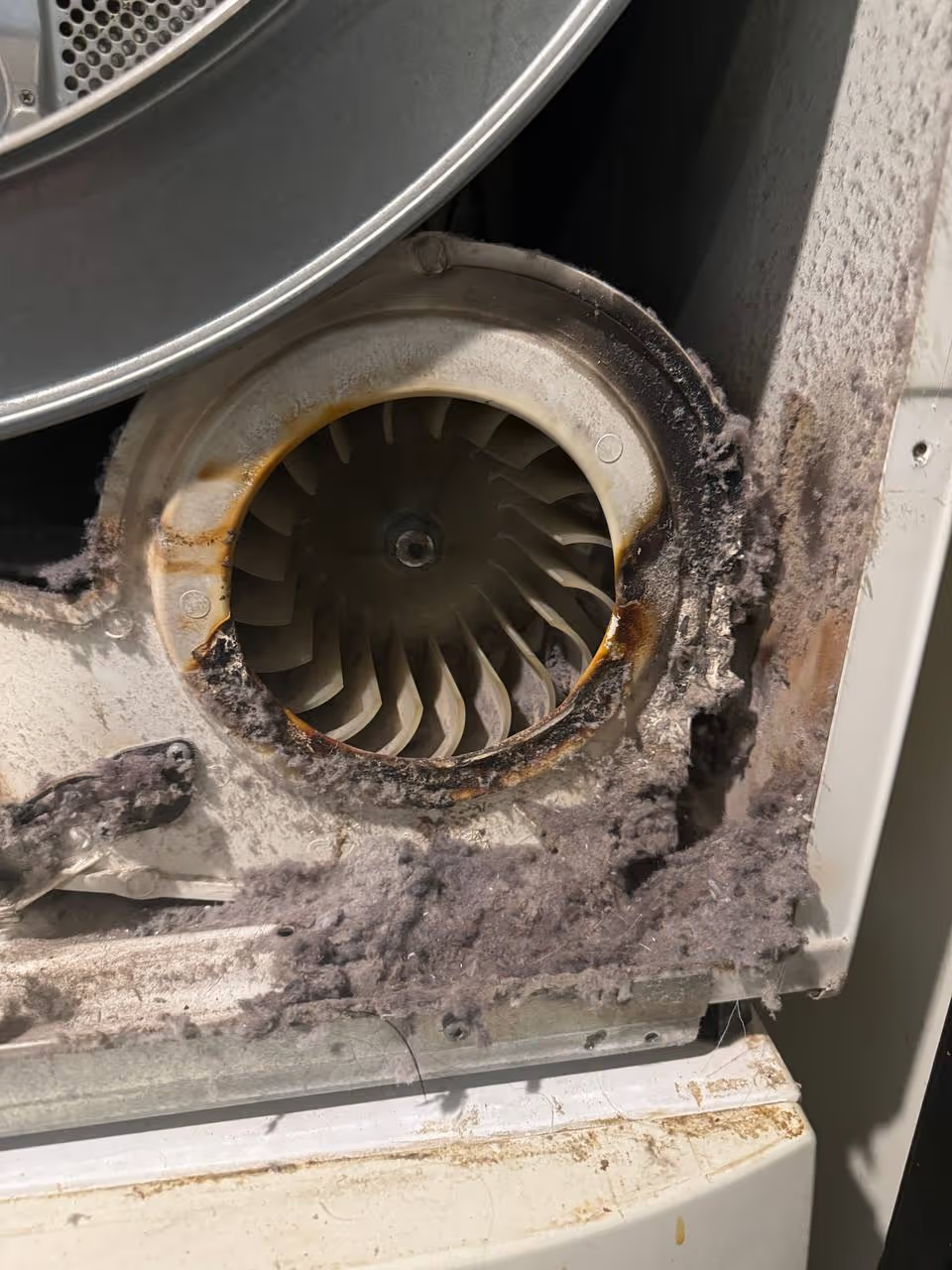
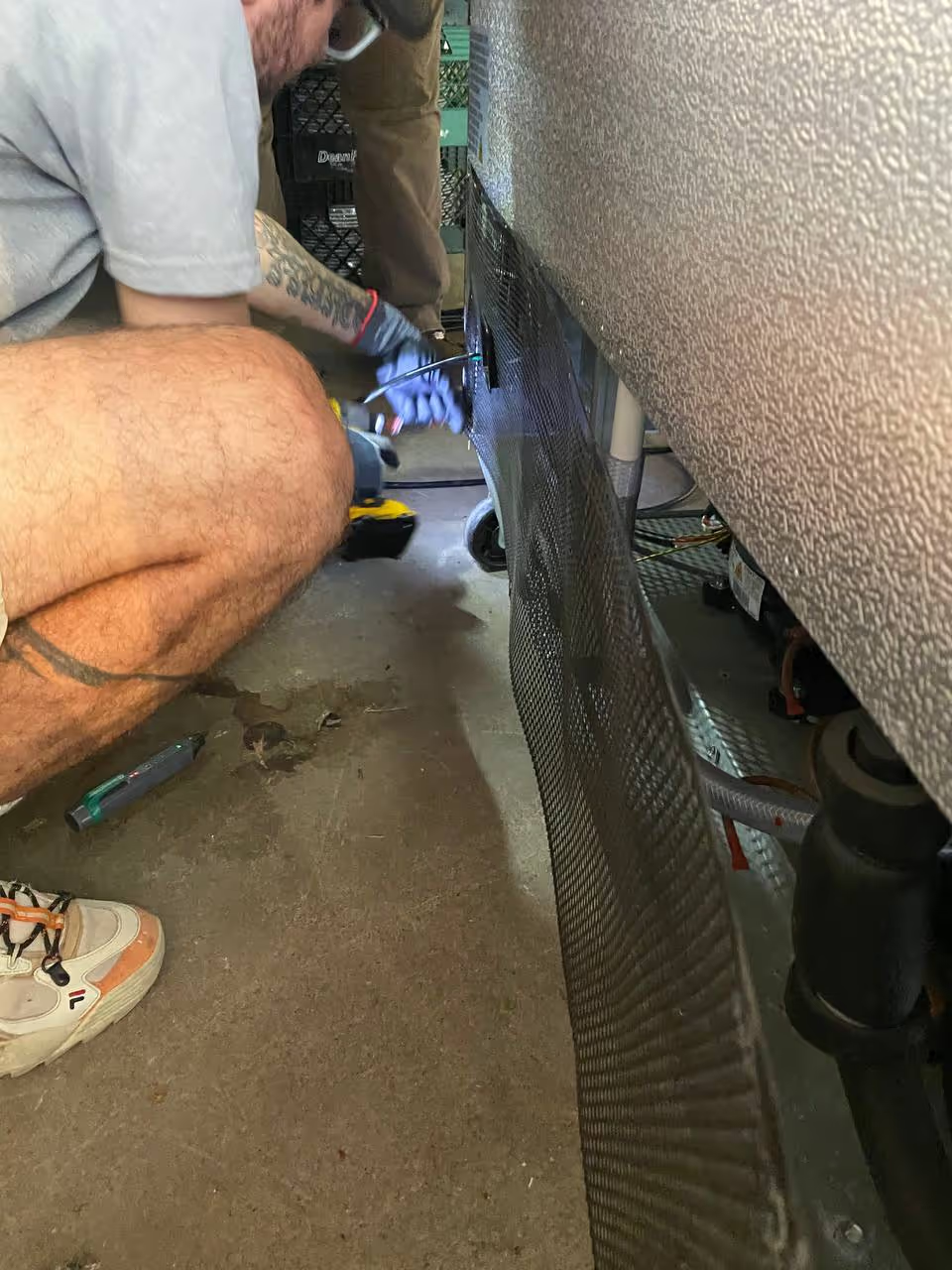
Photos from real jobs: what we found, what we tested, and what we fixed.

.png)

How Wolf Appliance Repair Works in NYC
Why Wolf Repairs Need Platform-Specific Diagnosis
Wolf “cooking appliances” share a brand name, but they don’t share one universal platform. A range, rangetop, cooktop, wall oven, speed oven, steam oven, and hood can use different control generations, ignition systems, sensors, and safety logic. That’s why the model and serial drive the correct test plan and parts match, not just the symptom.
Tip: Take one clear photo of the model and serial tag before the appointment. It prevents wrong-platform parts lookup.
Many Wolf failures are behavior + safety logic, not a single obvious “bad part.” Ignition, flame sensing, thermal limits, cooling management, and door interlocks can trigger shutdowns by design when something is out of range. A platform-specific diagnosis reproduces the issue under load and confirms what the appliance is detecting.
Tip: If it’s intermittent, record a short video showing the full sequence from start to failure (10–20 seconds is enough).
Parts can look similar across models but still be wrong for your exact revision. Skipping platform-specific testing is how you end up with repeat visits: the replaced part wasn’t the root cause, or the correct part wasn’t matched to the exact configuration. Proper diagnosis checks the signal path, outputs, and connections before committing to parts.
Tip: Write down whether the problem happens only when cold, only when hot, or only after 20–30 minutes. Heat-related patterns narrow the fault quickly.
NYC installations add constraints that change what’s possible on the first visit. Tight cutouts, flush installs, and shutoff access can limit safe testing or removal, so platform-specific work includes confirming access and utilities before disassembly.
Tip: Clear the cabinet area and confirm you know where the gas shutoff and breaker are before service. If you ever smell gas, stop using the unit and shut the valve off if accessible.
How Wolf Appliance Repair Works at Volt & Vector (NYC & Brooklyn)
Step 1: Intake and Job Fit
Before we show up, we confirm the job is workable and the service plan matches the appliance.
- We collect the minimum info needed to route the call correctly
- Appliance type (range, rangetop, cooktop, wall oven, speed/steam oven, hood)
- A clear photo of the unit ID tag (model/serial)
- One sentence describing the failure pattern
- We flag common NYC constraints early
- Built-in cutouts, island installs, limited shutoff access, building rules
Step 2: On-Site Evidence and Root-Cause Confirmation
We don’t diagnose Wolf by “common guesses.” We confirm the failure mode on your actual unit.
- Verify operating conditions first (the stuff that creates false failures)
- Reproduce the symptom when possible
- Test the specific system that controls the failure (ignition, heat output, sensing, controls, airflow)
- Document what failed and why it fails (so the fix is tied to evidence, not assumptions)
Step 3: Findings First, Then Approval
You get the result of the diagnosis before any repair work begins.
- What failed (component or subsystem)
- What the correct repair is (and what it isn’t)
- Whether it can be completed now or requires parts
- Any access limits that change the plan (tight cutout, removal requirements, shutoffs)
Step 4: Repair Execution or Parts Plan
Once you approve the plan, we execute cleanly.
- If it’s a same-visit fix, we complete it and re-test the original failure
- If parts are required
- Parts are matched to the exact platform/version
- We schedule the return visit around confirmed parts availability (reduces repeat trips)
Step 5: Verification and Closeout
We end the visit by proving the problem is resolved, not by “it seems fine.”
- Re-check the symptom you called about under normal use conditions
- Confirm stable operation across relevant modes (burners/oven/fan/controls depending on unit)
- Share a clear closeout summary so you know what was done and what to watch for
6. Parts and return visit planning
Some Bertazzoni repairs are one-visit jobs. Others require a return visit because the appliance must first be diagnosed correctly, then matched with the proper replacement part by exact model and configuration.
That is normal for built-in and premium appliance repair.
Why this step matters:
- prevents wasted parts
- reduces repeat failures
- avoids unnecessary labor
- keeps the repair tied to the actual fault
7. Final testing and verification
After the repair, the appliance is tested again.
Final checks may include:
- burner ignition and flame behavior
- oven heat response and temperature function
- dishwasher fill, wash, drain, and drying behavior
- refrigeration operating response
- basic leak or safety verification where relevant
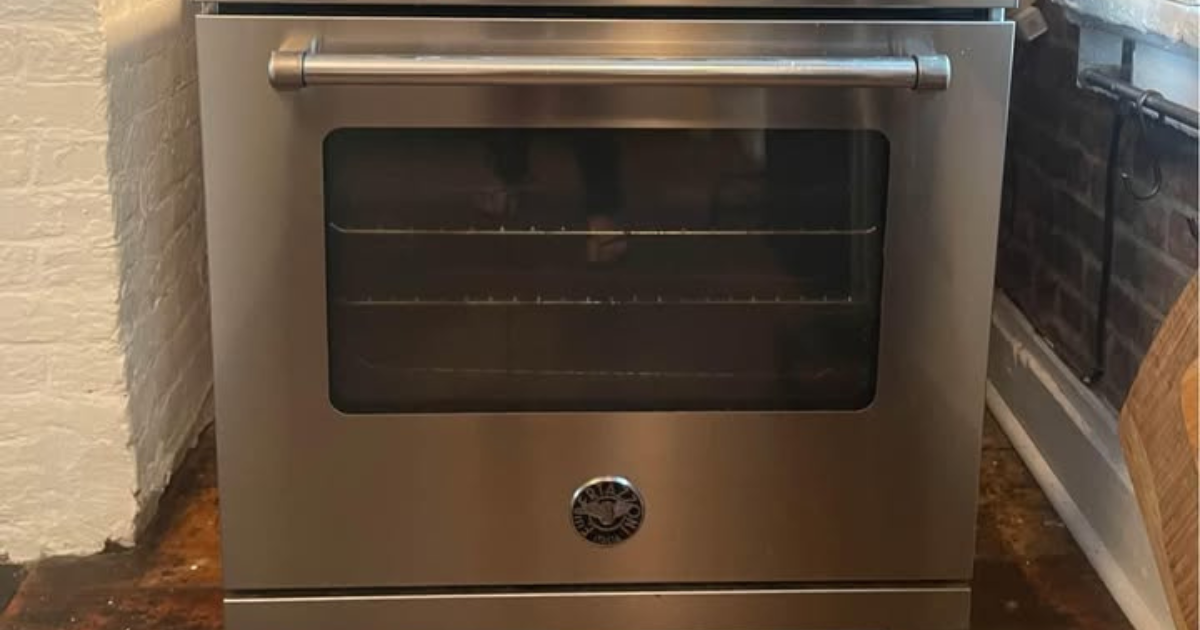
- reassembly and fit check for built-in or panel-ready installations
The repair is not finished when the part is installed. It is finished when the appliance operates correctly and the installation is left properly reassembled.
What Bertazzoni Repair Experience Looks Like in Practice
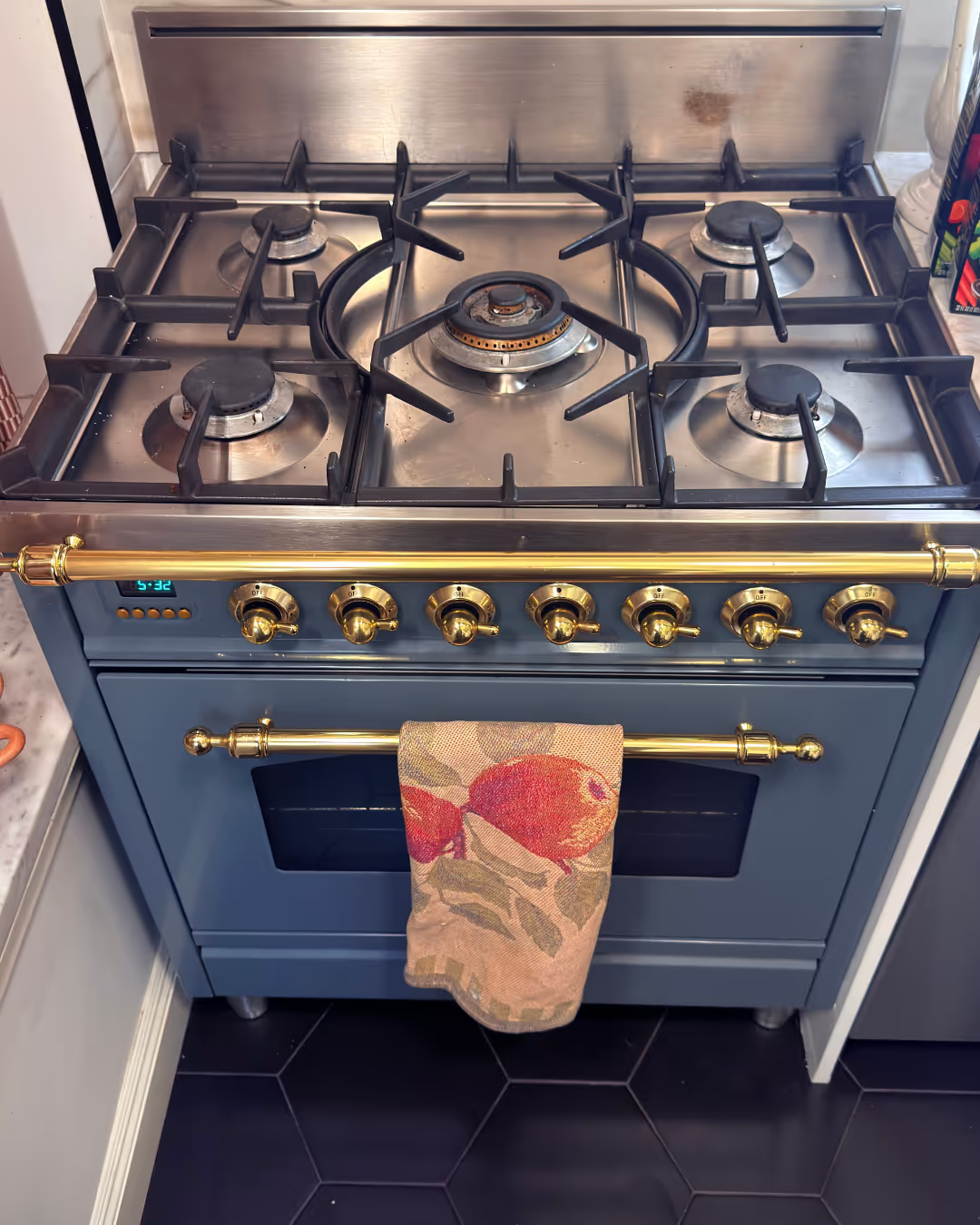
Real Bertazzoni repair experience is not just saying “we work on premium appliances.” It is knowing what commonly fails, what only looks like a failed part, and how installation changes the job.
At Volt & Vector, that means:
- recognizing Bertazzoni-specific cooking, refrigeration, and dishwasher symptom patterns
- understanding how Brooklyn and Manhattan installations change diagnosis
- working carefully around finished cabinets, counters, panels, and tight clearances
- avoiding unnecessary part-guessing
- using a diagnostics-first process before recommending repair
Bertazzoni repair should be handled as a system: appliance, installation, access, and failure path together.
.avif)
Property Owner, Lower Manhattan
Homeowner, Manhattan
Property Owner, Lower Manhattan
Property Owner, Brooklyn

Homeowner, DUMBO

Property Owner, Brooklyn
Homeowner, Downtown Brooklyn

.avif)
Homeowner, Clinton Hill
Homeowner, Clinton Hill
Homeowner, Clinton Hill
Homeowner, Clinton Hill
Homeowner, Clinton Hill
Homeowner, Clinton Hill
Property Manager, Manhattan
Popular Brands