Expert washer gasket replacement services in NYC. Ensure your washer operates efficiently and prevents leaks with our professional service.
Washer gasket replacement usually means replacing the front-load door gasket, also called the door seal, door boot, or bellows. This rubber part seals the gap between the washer door and outer tub so water stays inside. Service is commonly requested when the rubber is torn, leaking, warped, holding debris in the folds, or has ongoing odor and mildew buildup that needs professional evaluation.
The washer gasket is the flexible rubber seal mounted between the front opening of a front-load washer and the outer tub. Its main job is simple: keep wash water, detergent solution, and wet laundry inside the machine while the drum turns and spins. GE, LG, and Whirlpool all describe this part as the sealing component that prevents leaks at the front of the washer.
In real service language, the same part may be called:
• Door gasket
• Door seal
• Door boot
• Boot seal
• Bellows
• Rubber door seal
Manufacturers and OEM parts suppliers use more than one of these names. Whirlpool uses “seal” and “bellows,” GE uses “door boot seal gasket,” and LG uses “door boot gasket” or “door boot seal.”
A washer door gasket is not cosmetic. It is part of the water barrier at the front of the machine. If the rubber is torn, if debris is trapped where the door glass meets the seal, or if the gasket no longer seals correctly, front leaks can start. The folded shape also creates places where moisture, lint, pet hair, residue, and foreign objects can collect, which is why odor and mildew complaints often start there.
Not every washer gasket is the same, and this is why exact model matching matters.
• Some are plain door boots without a lower drain hole
• Some include a bottom drain hole or drain port
• The shape, lip profile, and attachment points vary by model
• The correct replacement may depend on model series and even production date
LG’s official parts documentation shows that some front-load door boots do not have a drain hole, while later versions of similar models do. That is one reason a gasket should never be ordered by guesswork alone. Refer to the owner’s manual/model-specific specs

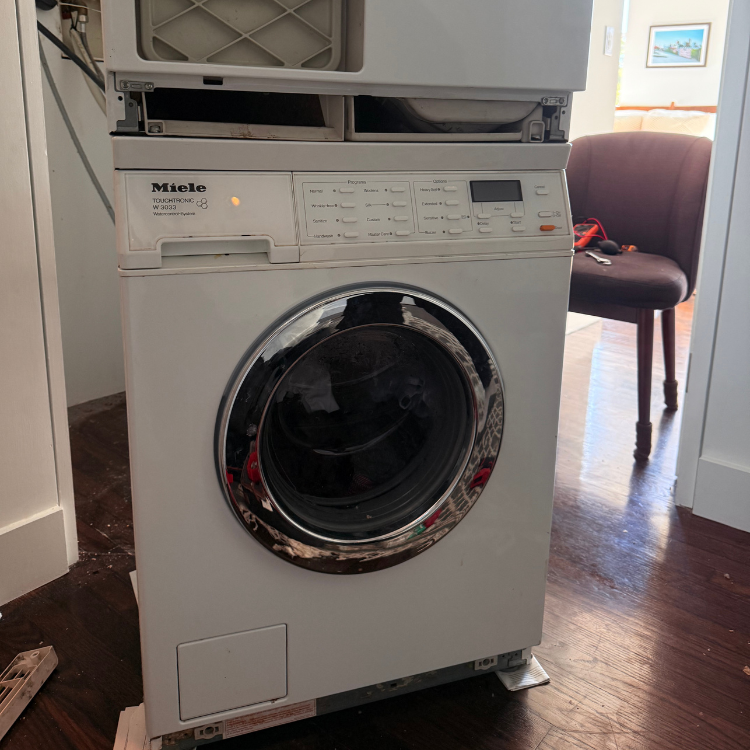


Expert washer gasket replacement services in NYC. Ensure your washer operates efficiently and prevents leaks with our professional service.
Washer gasket replacement is typically a service issue when one or more of these conditions are present:
• Visible tear, split, hole, or rubber separation
• Water leaking from the front during wash or spin
• The door area no longer seals cleanly against the gasket
• Debris or buildup keeps collecting deep in the folds
• The gasket is heavily stained, slimy, or mold-prone and needs professional assessment
• The washer is being turned over for a new occupant and the seal condition is unacceptable for move-in use
Official manufacturer guidance confirms that torn boots can leak, dirt on the sealing surfaces can cause poor sealing, and trapped buildup under the folds should be inspected and addressed.
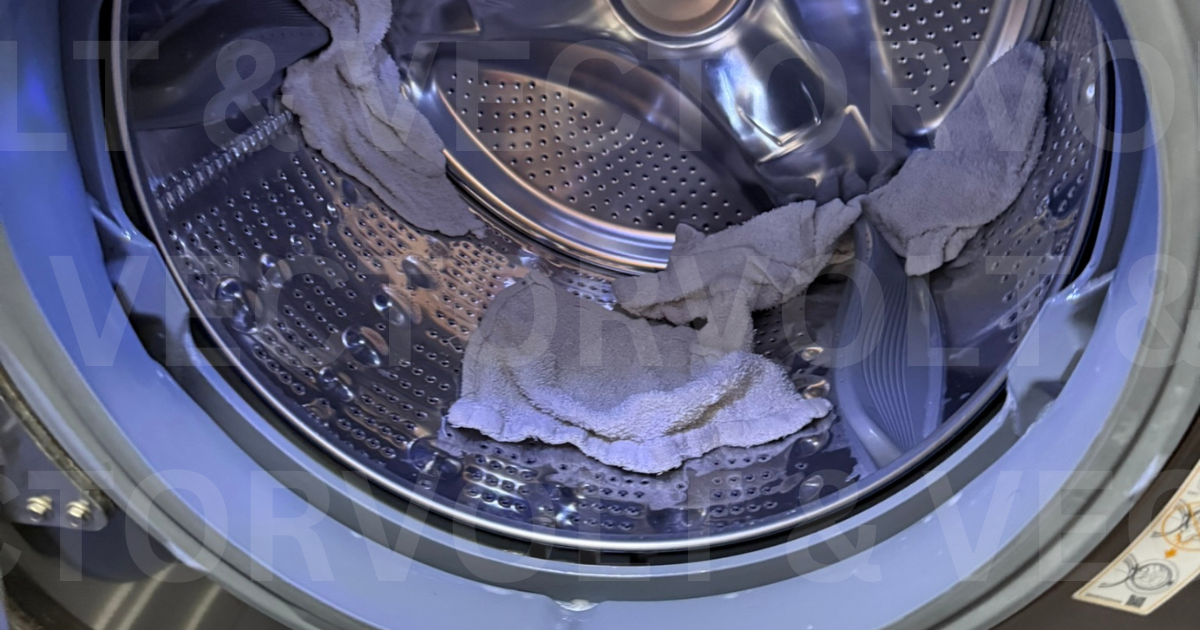
Moisture control is the key issue with gasket mold. EPA guidance states that mold growth indoors is controlled by controlling moisture, and both EPA and NYC Health note that mold exposure can cause or worsen allergy and asthma symptoms in sensitive people. For that reason, a visibly moldy gasket should not be treated as a minor “looks bad only” problem, especially in homes with children or anyone sensitive to mold.
There is also a separate child-safety point: front-load washers should never be treated as play spaces. Consumer Reports, citing CPSC awareness of incidents involving young children, warns parents to keep young kids safe around front-load washers. So if a gasket is moldy, dirty, or being inspected for service, the right move is simple supervision and no child contact with the washer opening or gasket folds.

Manufacturers repeatedly point to the same pattern: moisture stays in the folds, residue stays on the rubber, and the door stays closed too often. Samsung advises leaving the washer door and detergent drawer open after every wash, and Whirlpool and LG both note that moisture and residue around the seal promote mildew and odor. That does not mean every moldy gasket must be replaced, but it does explain why gasket areas become a recurring service complaint.
A new move-in apartment is one of the best times to inspect the washer gasket professionally. The reason is practical, not theoretical: the folds of the gasket can hide standing moisture, soap residue, lint, coins, hair, and black spotting from the previous occupant, and those conditions may not be obvious until the first few loads smell bad or the front starts leaking. Whirlpool’s support material specifically tells users to pull back the seal and inspect underneath for stained areas, buildup, and foreign objects.
For a move-in turnover, gasket replacement makes sense when the rubber is physically damaged, not sealing correctly, or the condition of the seal is poor enough that the next occupant should not inherit the problem. A clean-looking washer face does not prove a clean gasket fold.

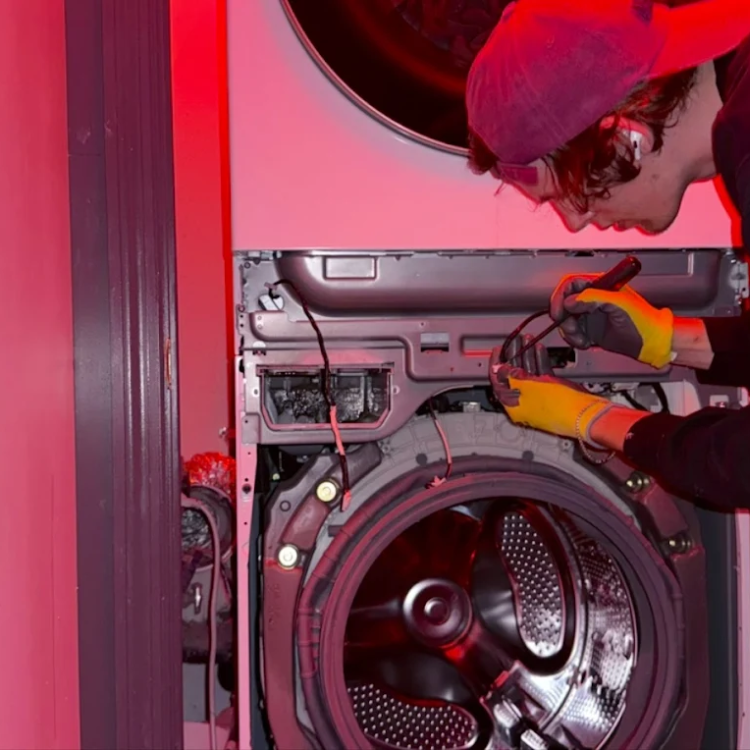
This is not a DIY page. Service for washer gasket replacement is usually centered on correct identification, correct diagnosis, and correct parts matching.
A professional service visit typically focuses on:
• Confirming the exact model and revision
• Identifying the correct gasket style for that washer
• Checking whether the complaint is a tear, leak path, warped rubber, trapped debris, or chronic mildew buildup
• Inspecting whether the gasket style uses a drain hole or drain port
• Replacing the gasket only after the correct part match is confirmed
• Verifying that the door closes and seals correctly after replacement
Because gasket designs vary and sealing problems can be caused by more than one front-of-machine condition, the job should be model-specific rather than generic. Refer to the owner’s manual/model-specific specs.
To avoid ordering the wrong gasket, send:
• Full model number photo
• Clear photo of the washer door area
• Close photo of the damaged or moldy gasket
• Short note explaining leak, odor, tearing, or black spotting
• Photo of any standing water in the lower fold
• For a move-in apartment, note whether the washer was inherited from the prior occupant
This matters because some gaskets are visually similar but not interchangeable. Refer to the owner’s manual/model-specific specs.
Stop using the washer and schedule service when:
• The gasket is torn or split
• Water leaks from the front
• The door is not sealing cleanly
• There is heavy residue or visible mold deep in the folds
• The washer is in a home with children and the front-load door area is being left open or treated casually
A torn or poorly sealing door boot is not a “watch it for now” condition if the machine is already leaking.


Expert washer gasket replacement services in NYC. Ensure your washer operates efficiently and prevents leaks with our professional service.
It is the front-load washer’s rubber door seal. Its job is to create the watertight barrier between the washer door and tub opening so water does not escape during operation.
Yes. Manufacturers and parts sellers commonly use door gasket, door seal, door boot, boot seal, and bellows for the same part family.
Replacement is commonly considered when the gasket is torn, split, leaking, deformed, holding dirty water, or in poor sanitary condition from heavy residue or mold buildup. Whirlpool states that a damaged or worn gasket can be the culprit behind front-door dripping or leaking.
Yes. Whirlpool explicitly notes that dirt or deposits around the seal or door-glass contact area can prevent a proper seal and cause leaks.
Because lint, pet hair, soil, and small trapped items can collect under the bellows. Whirlpool says buildup in that area can allow water to remain in the seal after the cycle.
No. Model match matters. LG documents that some door boots do not have a drain hole while later revisions do, which shows why exact model and production break are important before ordering parts.
Because the gasket folds can hide residue, standing water, foreign objects, and mold from the prior occupant. A washer can look acceptable on the outside and still fail the turnover standard at the seal. Whirlpool specifically advises checking under the folds for soil and foreign objects.
Yes. EPA and NYC Health both warn that mold exposure can worsen allergy and asthma symptoms, and front-load washer openings should also be treated carefully around young children.
That depth in the field supports disciplined diagnostics, consistent documentation habits, and repeatable repair standards on real service calls.
Fact: Minimum 4+ years per tech; senior techs with 8 and 16 years.
Fact: Prior roles included authorized-service environments and warranty-service workflows.
Fact: Reproduce → isolate → measure → confirm root cause → functional test.
Fact: Model/serial + codes + readings + photos + parts path are documented.
Fact: Built-ins, stacked installs, tight clearances, building rules, COI workflows when needed.
Fact: Independent company; no current manufacturer authorization implied.
You’ll receive a text alert ~30 minutes before arrival.a problem or close a sale in real-time with chat. If no one is available, customers are seamlessly routed to email without confusion.
.avif)
Homeowner, Manhattan
Property Owner, Lower Manhattan
Property Owner, Brooklyn

Homeowner, DUMBO

Property Owner, Brooklyn

Homeowner, Downtown Brooklyn

.avif)
Homeowner, Clinton Hill

Homeowner, Clinton Hill
Homeowner, Clinton Hill
Homeowner, Clinton Hill
Homeowner, Clinton Hill
Homeowner, Clinton Hill
Property Manager, Manhattan




.avif)

.png)